

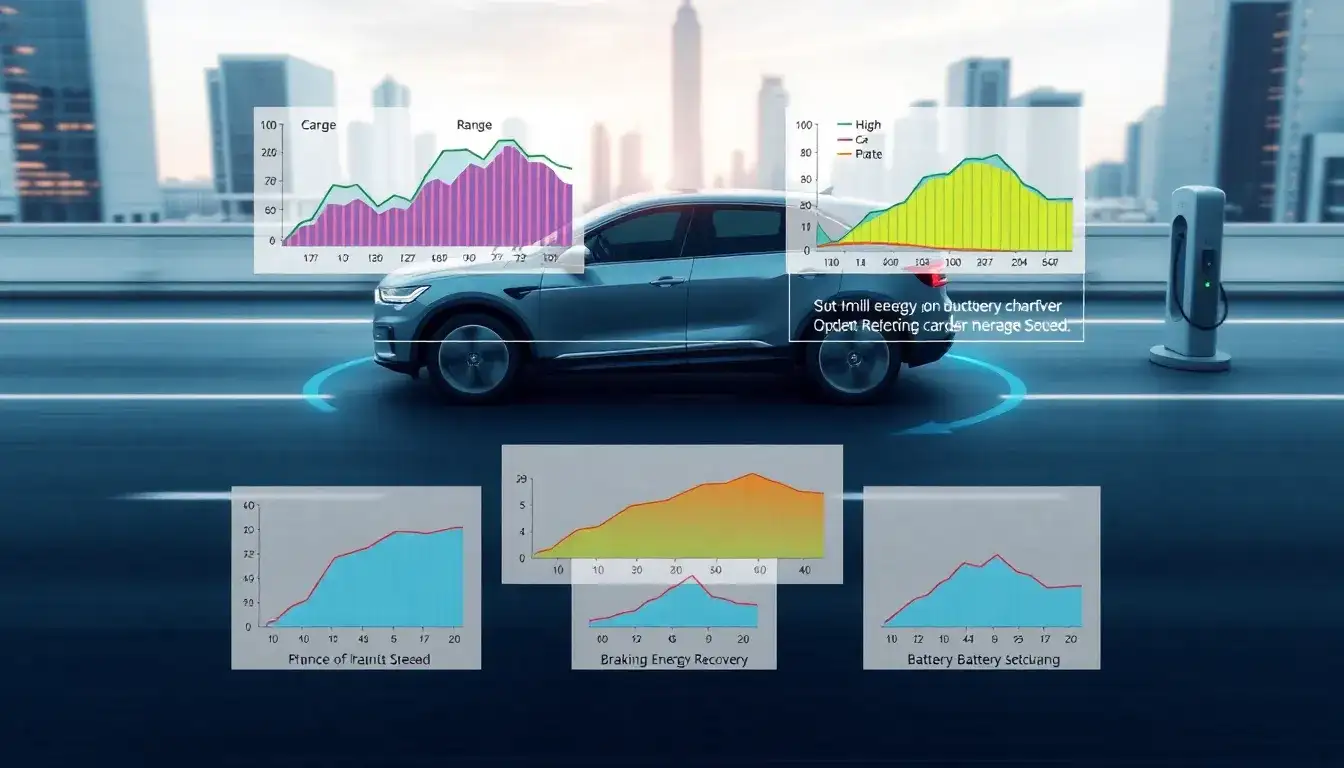
Here’s how different C-rates influence EV performance:
Charging Performance
- Faster charging (1C-3C+) enables full charges in 20-60 minutes but generates excessive heat, risking reduced battery lifespan and dendrite formation.
- Slower rates (0.2C-0.5C) require 2-5 hours but minimize thermal stress, preserving state of health (SOH) and safety during overnight/home charging.
Discharge Performance
- High discharge rates (>3C in racing EVs) deliver instant torque and acceleration, but reduce usable capacity and generate heat that demands advanced cooling.
- Low discharge rates (<1C) maximize usable range for daily driving by reducing energy losses and mechanical stress.
Battery Life Impact
- Frequent fast charging accelerates degradation due to chemical instability, particularly in NMC/NCA batteries, reducing charge retention over time.
- Optimal C-rates balance performance needs with longevity, as heat from high C-rates permanently damages battery chemistry.
Technical Considerations
- Cathode loading (2.5-5 mAh/cm² in commercial EVs) influences current density, requiring precise engineering to achieve high C-rates without short-term degradation.
- Formula EV applications prioritize high-power energy delivery over maximum capacity, accepting reduced cycle life for competitive performance.
| C-Rate | Charge/Discharge Time | Key Impact |
|---|---|---|
| 0.2C | 5 hours | Maximizes lifespan, minimizes heat |
| 1C | 1 hour | Baseline for moderate performance |
| 3C+ | <20 minutes | Performance-focused, higher degradation |
Original article by NenPower, If reposted, please credit the source: https://nenpower.com/blog/how-do-different-c-rates-affect-the-overall-performance-of-an-electric-vehicle/

