

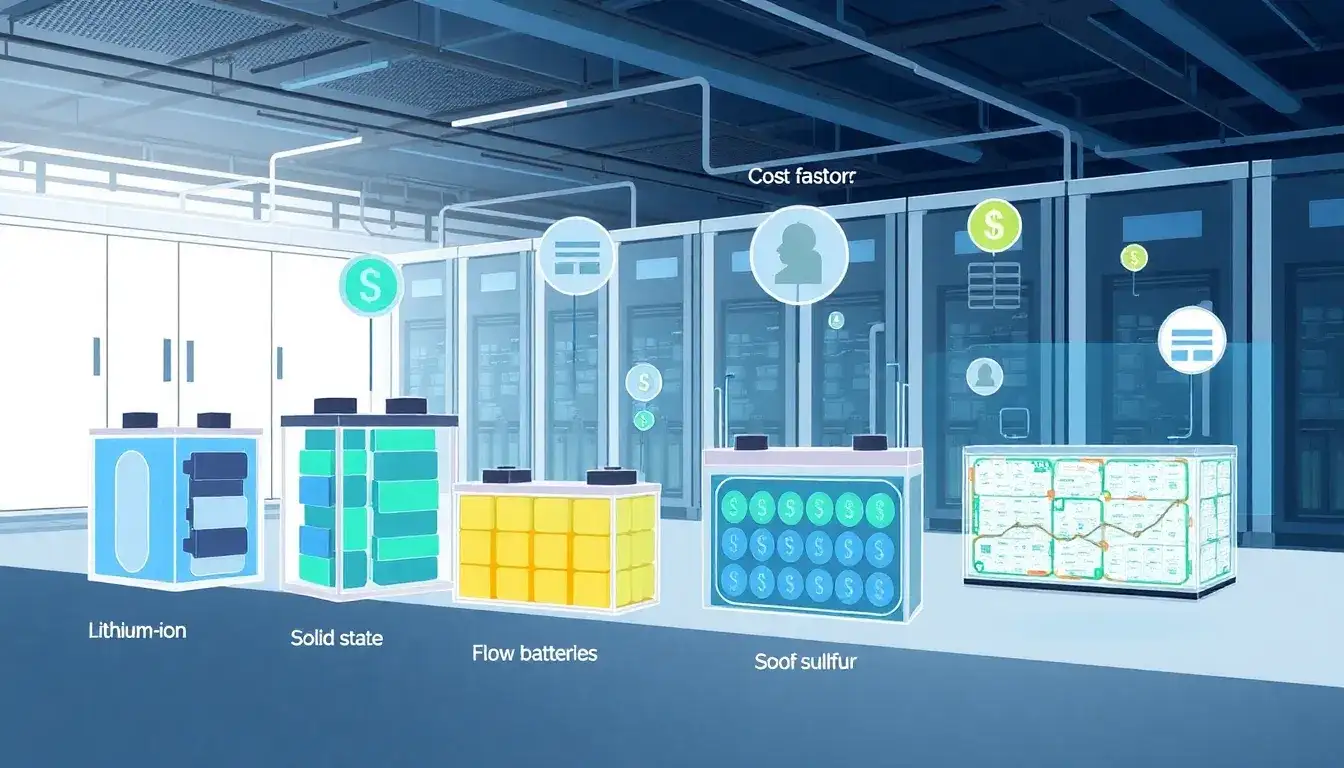
Different battery technologies significantly impact the overall cost of energy storage systems, affecting the initial investment, operational costs, and long-term expenses. Let’s explore some of the key technologies and their financial implications:
Battery Technologies and Their Cost Impacts
Lithium-Ion Batteries
- Initial Cost: Lithium-ion batteries are the dominant technology but have relatively high upfront costs, with an average capex of $304/kWh for four-hour duration systems.
- Performance: They offer high energy density and cycle life, making them suitable for short-duration applications.
- Cost Trend: Economies of scale, particularly from the electric vehicle sector, drive cost reductions, but costs may not fall as quickly in other technologies.
Lead-Acid Batteries
- Initial Cost: Generally less expensive upfront than lithium-ion, with costs ranging from $50 to $100 per kWh.
- Performance: They have a lower energy density and shorter cycle life compared to lithium-ion, requiring larger footprints for similar capacities.
- Cost Impact: Cheaper initially but may require more frequent replacements, affecting total cost of ownership.
Flow Batteries
- Initial Cost: High upfront costs, ranging from $200 to $500 per kWh, due to complex technology.
- Performance: Offers long cycle life (up to 10,000 cycles) and relatively high efficiency.
- Cost Impact: Despite the high initial investment, flow batteries can have a lower total cost of ownership due to longevity and low maintenance needs.
Sodium-Ion Batteries
- Initial Cost: Expected to be lower than lithium-ion batteries due to the use of abundant materials.
- Performance: Lower energy density compared to lithium-ion but has potential for cost savings and improved safety.
- Cost Impact: Sodium-ion batteries are poised to capture a larger market share as manufacturing scales and costs decrease.
Thermal and Compressed Air Storage
- Initial Cost: Cheaper than lithium-ion batteries for long-duration applications, with thermal storage at $232/kWh and compressed air at $293/kWh.
- Performance: Suitable for long-duration energy storage, often surpassing lithium-ion in cost-effectiveness beyond eight hours.
- Cost Impact: These technologies are becoming more competitive outside of China, offering economies of scale and long-duration efficiency.
Factors Affecting Overall Cost
- Initial Investment: The upfront cost of the batteries themselves is a significant portion of the overall cost.
- Operational and Maintenance Costs: Lower maintenance technologies like flow batteries can reduce long-term costs.
- Performance and Lifespan: Technologies with longer lifespans or more durable components can save on replacement costs over the system’s lifetime.
- Environmental Factors and Policy: Favorable policies and geographical advantages can influence cost competitiveness, as seen with China’s mature LDES industry.
In conclusion, when selecting a battery technology for energy storage, it’s crucial to consider not only the initial cost but also operational costs, performance characteristics, and potential long-term savings based on durability and efficiency. The choice of technology can significantly affect the overall financial viability and sustainability of energy storage systems.
Original article by NenPower, If reposted, please credit the source: https://nenpower.com/blog/how-do-different-battery-technologies-impact-the-overall-cost-of-energy-storage-systems/

