

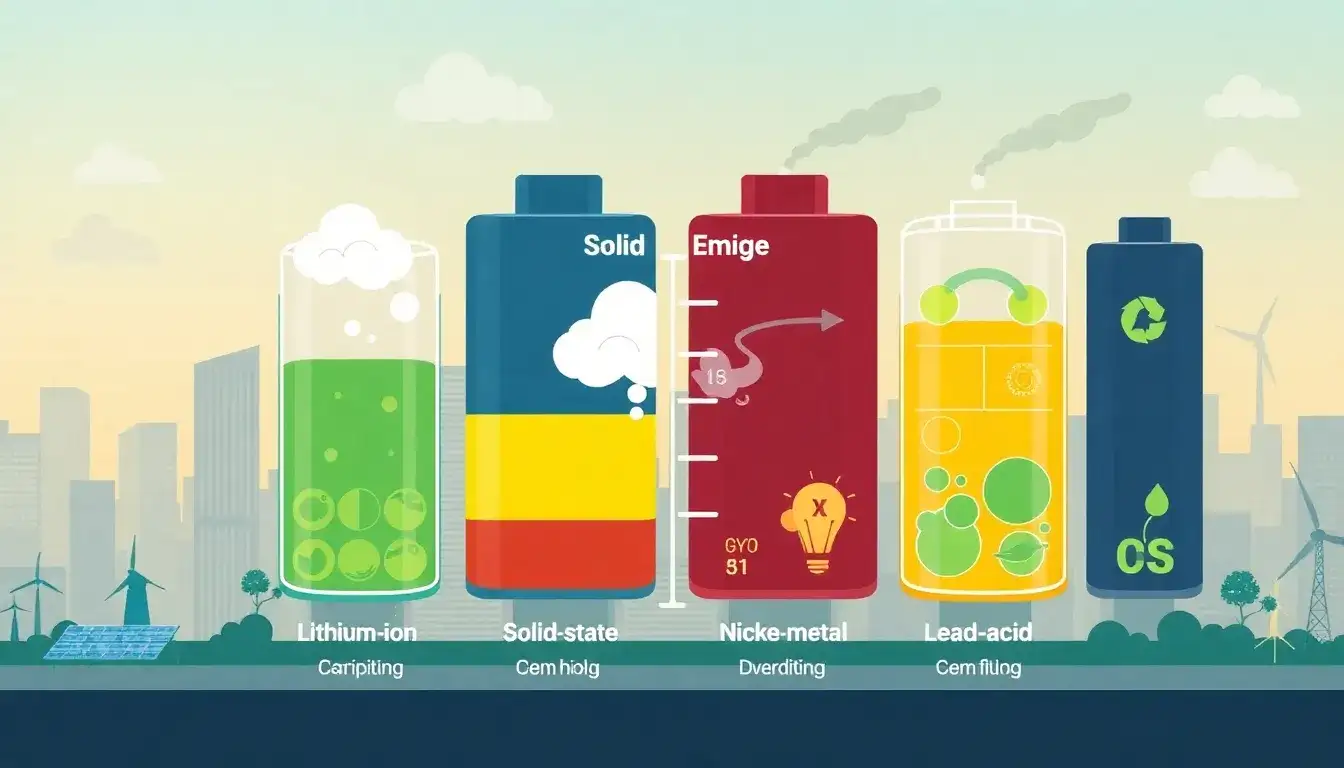
Battery technologies vary significantly in terms of emissions, primarily influenced by their manufacturing processes and materials. Here is a comparison of different battery technologies:
1. Lithium-Ion Batteries
Lithium-ion batteries, widely used in electric vehicles and other applications, have varying carbon footprints depending on the manufacturing location and process. They emit between 2.4 and 16 metric tons of CO₂ during production. However, when considering the entire lifecycle, these batteries generally contribute less to greenhouse gas emissions than traditional combustion engines, especially when powered by cleaner energy sources.
2. Nickel-Manganese-Cobalt (NMC) Batteries
NMC batteries are common in electric vehicles due to their high energy density. However, they have a higher environmental impact compared to some other chemistries due to the extraction and processing of nickel and cobalt.
3. Lithium-Iron-Phosphate (LFP) Batteries
LFP batteries have a lower carbon footprint than NMC batteries, with an emissions intensity of approximately 55 kgCO₂eq/kWh for each kilowatt-hour of capacity. This lower impact is largely due to the simpler cathode production process. However, LFP batteries have lower energy density, requiring larger and heavier designs to achieve the same capacity as NMC batteries.
4. Recycling and Future Trends
Recycling plays a crucial role in reducing emissions by decreasing the demand for primary materials. This can lead to a reduction of 17–61% in emissions. Future trends focus on developing more sustainable battery chemistries and manufacturing processes to minimize environmental impacts.
Summary of Key Points
- Manufacturing Emissions: Vary widely depending on battery type and production location.
- Lifecycle Emissions: Electric vehicles with batteries generally have lower lifecycle emissions than combustion engine vehicles.
- Chemistry Differences: LFP offers lower emissions but has lower energy density compared to NMC.
- Recycling Impact: Can significantly reduce emissions by minimizing primary material use.
Original article by NenPower, If reposted, please credit the source: https://nenpower.com/blog/how-do-different-battery-technologies-compare-in-terms-of-emissions/

