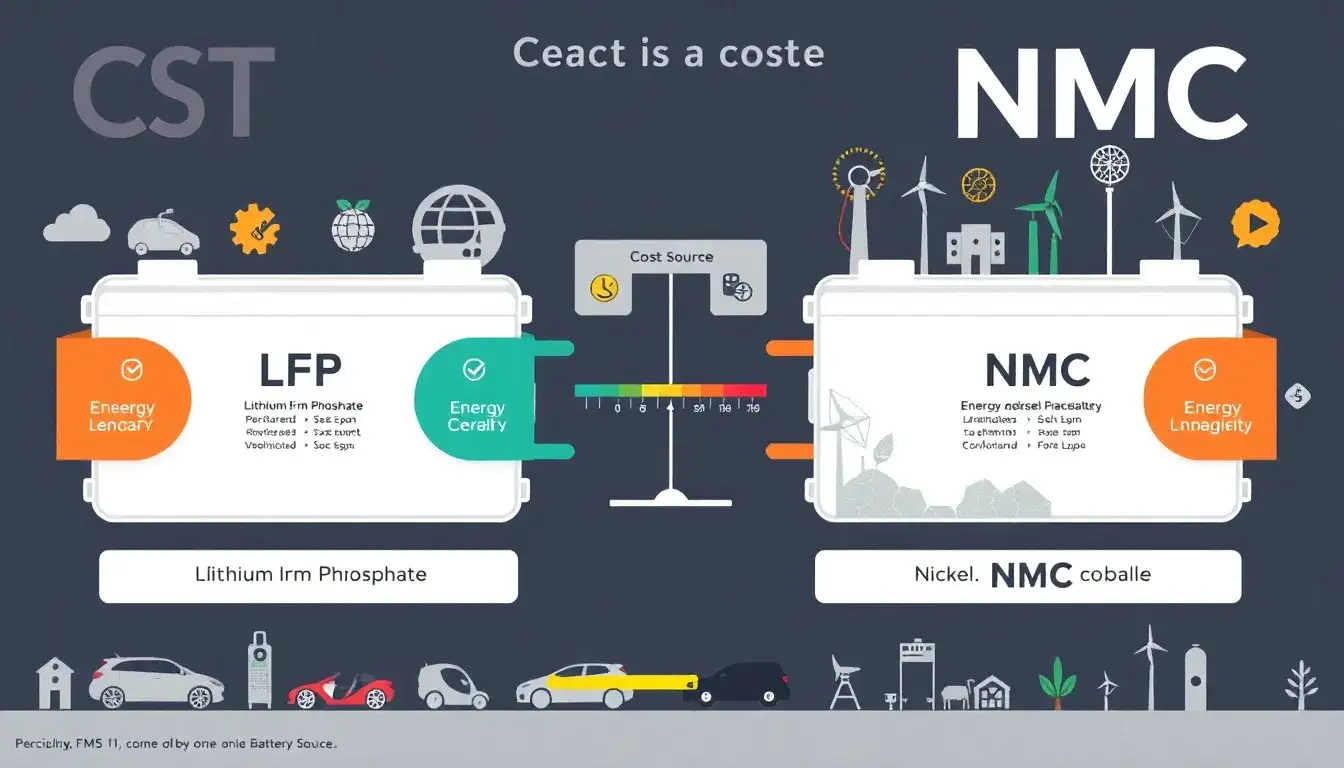
Different battery chemistries, such as Lithium Iron Phosphate (LFP) and Lithium Nickel Manganese Cobalt (NMC), significantly impact overall battery costs due to variations in material costs, energy density, and application suitability. Here’s how these chemistries affect costs:
LFP Batteries
- Lower Material Costs: LFP batteries use iron, which is generally cheaper than the cobalt and nickel used in NMC batteries.
- Longer Cycle Life: LFP batteries typically provide 3,000 cycles or more, leading to reduced operational costs over their lifespan compared to NMC’s 1,000 to 2,000 cycles.
- Cost per kWh: LFP batteries are usually priced lower than NMC batteries, often around $120/kWh compared to higher for NMC.
- Safety Profile: They have a more favorable safety profile, reducing the need for additional safety measures that can add cost.
NMC Batteries
- Higher Energy Density: NMC batteries offer higher energy density than LFP, making them ideal for applications requiring more energy in less space, such as electric vehicles.
- Higher Material Costs: The use of cobalt and nickel increases costs compared to LFP.
- Cost per kWh: Generally more expensive than LFP, often used in premium applications due to their higher performance.
- Cycle Life: Shorter cycle life compared to LFP, leading to potentially higher replacement costs over time.
Impact on Overall Costs
- Long-Term Economic Benefits: Despite higher upfront costs, NMC batteries can offer more energy storage in smaller spaces, which might be economically beneficial in certain applications.
- Market Trends: The shift towards LFP, especially in cost-sensitive markets like China, highlights the economic advantage of LFP for applications where range is not the primary concern.
- Production Costs: Increased manufacturing capacity and technological advancements can reduce costs for both chemistries, with LFP generally benefiting from lower production costs due to materials and scale economies.
In summary, while LFP batteries are cheaper and safer with a longer cycle life, NMC batteries offer higher energy density, making them suitable for different applications based on cost and performance requirements.
Original article by NenPower, If reposted, please credit the source: https://nenpower.com/blog/how-do-different-battery-chemistries-like-lfp-and-nmc-affect-overall-battery-costs/