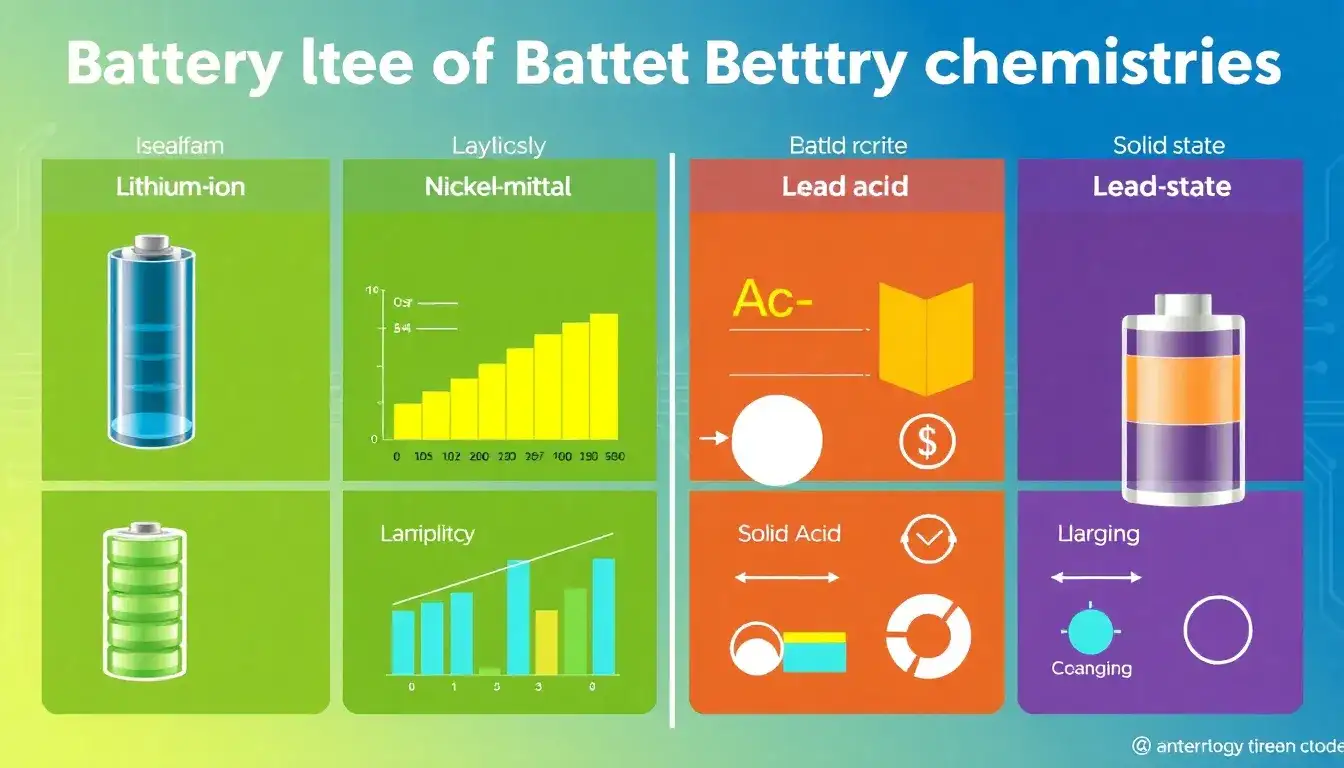
Comparison of Battery Chemistries
1. Lead-Acid Batteries
- Longevity: Lower cycle life, typically needing replacement after 300-500 cycles. Deep discharge can significantly shorten their lifespan.
- Efficiency: Lower energy density compared to lithium-ion, requiring more space and weight for the same energy storage.
- Safety: Generally safer, but they can be heavy and require maintenance such as checking electrolyte levels.
2. Lithium-Ion Batteries
- Variants:
- Lithium Cobalt Oxide (LCO):
- Longevity: Shorter lifespan compared to other Li-ion chemistries, with up to 500-1,000 cycles.
- Efficiency: High energy density, ideal for compact devices like smartphones and laptops.
- Safety: Prone to thermal runaway, especially when overcharged or physically damaged.
- Lithium Iron Phosphate (LFP):
- Longevity: Offers a longer lifespan and up to 6,000-10,000 cycles before significant degradation.
- Efficiency: Lower energy density than LCO, but more stable and suitable for high-power applications.
- Safety: More stable and less prone to overheating than LCO, making it safer for use in solar systems and electric vehicles.
- Lithium Nickel Manganese Cobalt Oxide (NMC):
- Longevity: Generally offers 3,000 to 5,000 cycles but can degrade faster than LFP under certain conditions.
- Efficiency: Balances energy density and safety better than LCO but less stable than LFP.
- Safety: Less stable than LFP but more so than LCO.
- Lithium Titanium Oxide (LTO):
- Longevity: Excellent lifespan with up to 6,000-20,000 cycles, ideal for long-term applications.
- Efficiency: Lower energy density compared to other Li-ion batteries.
- Lithium Cobalt Oxide (LCO):
3. Nickel-Based Batteries
- Nickel-Cadmium (NiCd) and Nickel Metal Hydride (NiMH):
- Both have limited cycle life (up to 800 for NiCd, up to 500 for NiMH) and suffer from memory effects and toxicity issues.
- Efficiency: Lower than lithium-ion batteries in terms of energy density and longevity.
In summary, LFP and LTO batteries are well-suited for applications requiring long-term durability and stability, while LCO and NMC are more energy-dense but have limitations in terms of safety and lifespan. Lead-acid batteries are less efficient and less durable than most lithium-ion options but are still used due to lower upfront costs.
Original article by NenPower, If reposted, please credit the source: https://nenpower.com/blog/how-do-different-battery-chemistries-compare-in-terms-of-longevity-and-efficiency/