

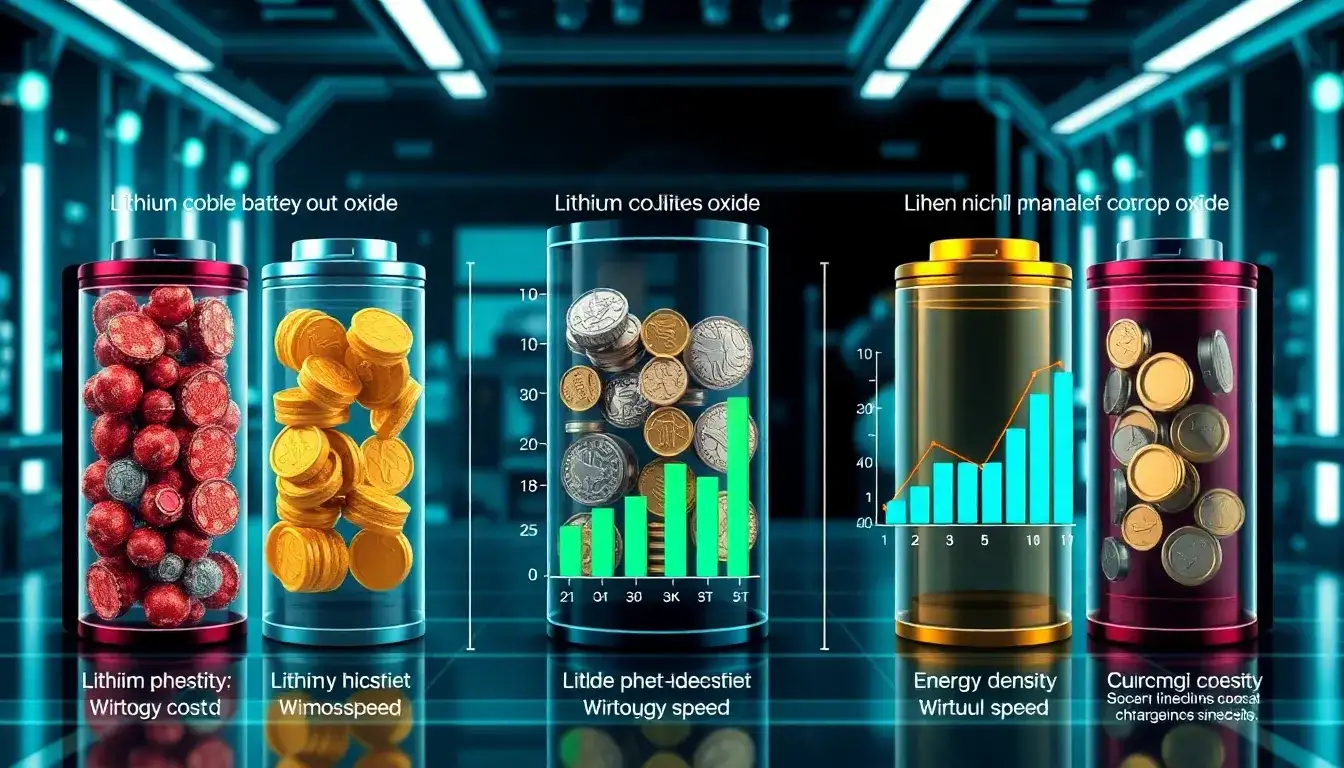
Different battery chemistries significantly affect the overall cost of lithium-ion batteries by influencing their performance, safety, and material expenses. Here’s a breakdown of key factors:
Battery Chemistries and Their Impact on Cost
1. Lithium Iron Phosphate (LFP)
- Cost: Generally, LFP batteries are considered to be more cost-effective for large-scale applications like energy storage systems.
- Advantages: Stable, longer lifespan, and enhanced thermal resistance, making them safer for residential use.
- Disadvantages: Higher initial cost compared to some other chemistries, but they offer longer lifespans and better safety.
2. Lithium Nickel Manganese Cobalt Oxide (NMC)
- Cost: NMC batteries are 20% more expensive than LFP due to their higher energy density and the use of more costly metals like cobalt.
- Advantages: Higher energy density, making them smaller and lighter, ideal for portable devices and electric vehicles.
- Disadvantages: May have a shorter lifespan than LFP batteries and require earlier replacement.
3. Nickel Manganese Cobalt (NMC) Variants
- Cost: Variants like NMC 811 reduce cobalt content, potentially lowering costs but maintaining performance. However, these still rely on expensive metals.
- Advantages: Lower cobalt content can reduce costs slightly without significantly affecting performance.
- Disadvantages: Less energy density compared to high-cobalt variants, but still more expensive than LFP due to the use of nickel and manganese.
Impact of Chemistry on Overall Cost
The cost of lithium-ion batteries is primarily driven by the cathode active materials (CAM), which can account for 29% to 51% of the total battery cost. The type of metal used (e.g., lithium, cobalt, nickel) affects the overall price significantly. LFP batteries have gained popularity due to their lower cost, enhanced safety, and long lifespan, contributing to a global average price reduction.
Factors Influencing Battery Cost Beyond Chemistry
- Manufacturing and Economies of Scale: Increased production volumes can significantly reduce unit costs.
- Raw Material Prices: Fluctuations in metal prices can directly impact battery costs.
- Market Competition: Increased competition among manufacturers puts pressure on prices.
Overall, while the choice of battery chemistry directly influences the cost, other factors like manufacturing scale and market dynamics also play critical roles.
Original article by NenPower, If reposted, please credit the source: https://nenpower.com/blog/how-do-different-battery-chemistries-affect-the-overall-cost-of-lithium-ion-batteries/

