

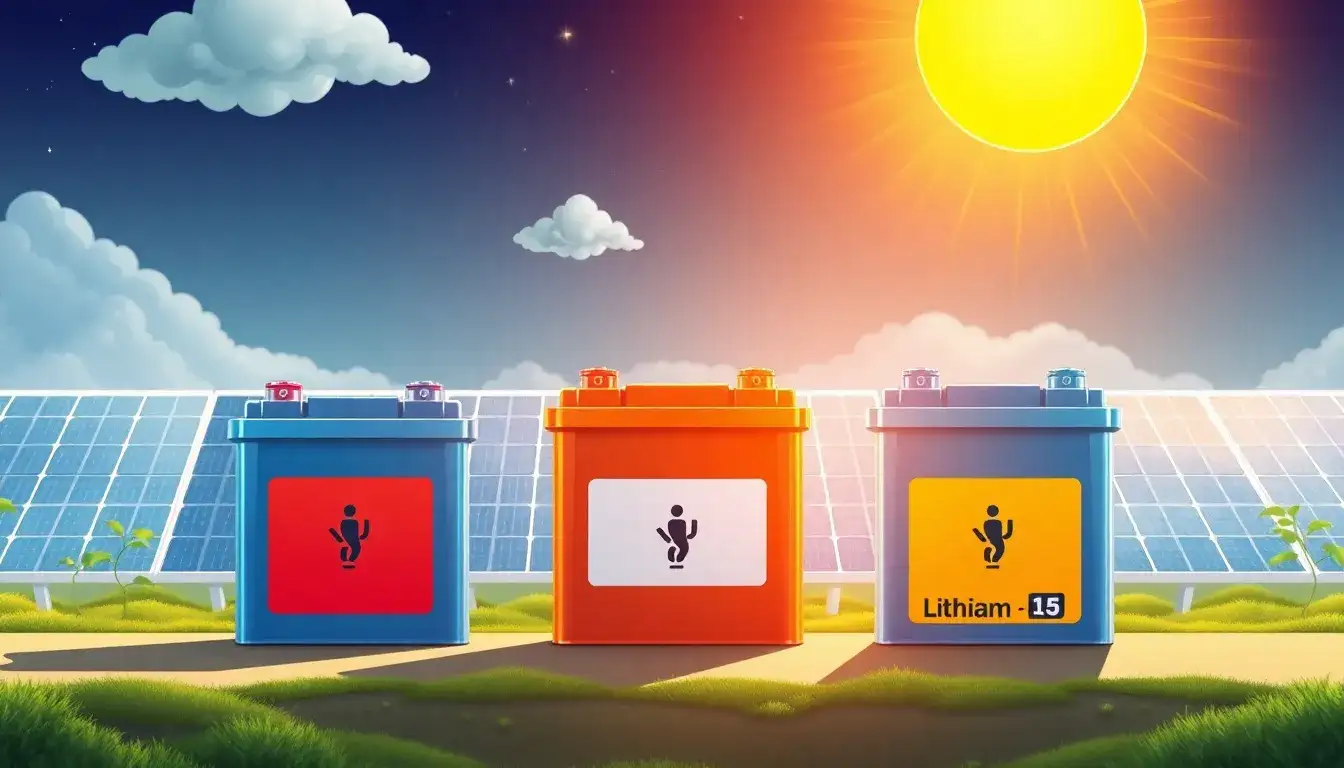
Battery Chemistries and Lifespan
- Lead-Acid Batteries: These have the shortest lifespan among solar batteries, typically lasting around 3-5 years. They require regular maintenance and have a lower depth of discharge (DoD) compared to lithium-ion options.
- Lithium-Ion Batteries: These are more commonly used for solar energy due to their higher energy density and longer lifespan. Lithium-ion batteries can last 8-15 years or more, depending on the specific chemistry and usage patterns.
- Lithium Nickel Manganese Cobalt Oxide (NMC) Batteries: NMC batteries are more power-dense but generally have a shorter lifespan compared to LFP batteries. They last longer in backup mode compared to self-consumption mode.
- Lithium Iron Phosphate (LFP) Batteries: LFP batteries are renowned for their longevity and stability. They can last 15-20 years and endure 6,000 to 10,000 cycles before capacity diminishes significantly. LFP is more suitable for daily self-consumption scenarios.
Factors Affecting Lifespan
- Depth of Discharge (DoD): Using a higher percentage of a battery’s capacity reduces its lifespan. Lithium-ion batteries can handle deeper discharges without significant damage.
- Temperature and Environmental Conditions: Extreme temperatures can accelerate degradation. Maintaining optimal temperature conditions is vital for extending the lifespan.
- Maintenance and Care Practices: Regular maintenance helps ensure longevity by preventing issues that could shorten a battery’s lifespan.
In summary, the choice of battery chemistry significantly impacts the lifespan and performance of solar batteries, with LFP lithium-ion batteries offering the longest lifespan among current options.
Original article by NenPower, If reposted, please credit the source: https://nenpower.com/blog/how-do-different-battery-chemistries-affect-the-lifespan-of-solar-batteries/

