

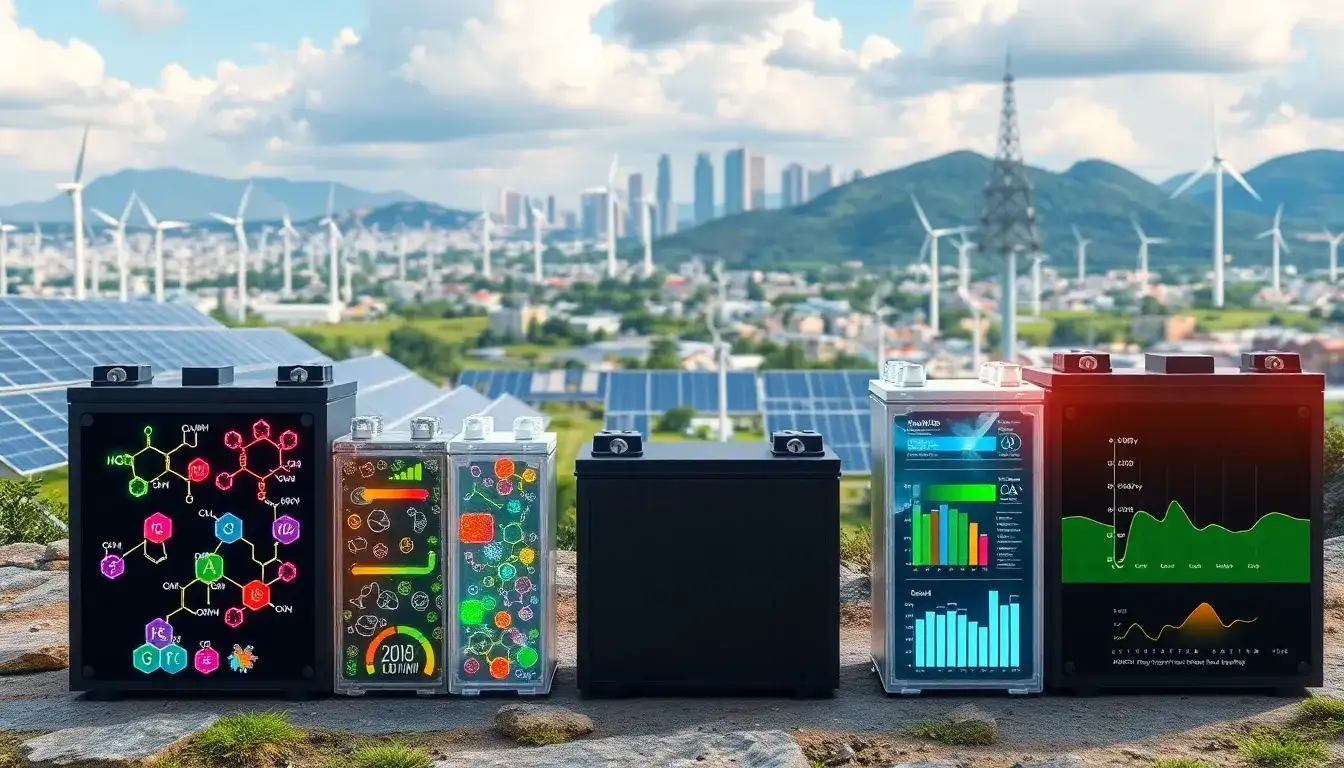
Different battery chemistries can significantly affect the cost of utility-scale battery storage systems. Here’s a breakdown of how various chemistries influence costs:
Overview of Battery Chemistries
- Lithium-Ion (Li-ion) Chemistries:
- Nickel Manganese Cobalt (NMC): High energy density but costly due to the use of cobalt. However, innovations are reducing cobalt content to decrease costs.
- Lithium Iron Phosphate (LFP): Less expensive than NMC, primarily due to avoiding cobalt. It has become a dominant choice for stationary storage due to lower costs and improved safety profiles.
- Other Chemistries:
- Redox Flow Batteries: Cost-effective for long-duration storage but are less common due to technology maturity.
- Lead Acid Batteries: Generally less expensive but have limited use in utility-scale applications due to lower performance compared to Li-ion technologies.
- Sodium-Ion Batteries: Emerging as a potentially cost-effective alternative to Li-ion, as sodium is more abundant and could reduce material costs.
Cost Factors
- Material Costs: Variations in the cost of materials like lithium, cobalt, nickel, and iron significantly affect the overall battery cost. For example, LFP batteries are less costly due to the absence of cobalt.
- Performance and Efficiency: Different chemistries affect the efficiency, lifespan, and capacity retention of batteries, impacting total cost of ownership.
- Scalability and Production: Large-scale production of specific chemistries can lead to economies of scale, reducing costs over time.
- Innovation and Research: Continuous advancements in battery technology lead to cost reductions through improved manufacturing processes and optimized designs.
Impact on Utility-Scale Storage Costs
- Battery Costs Alone: Lithium-ion batteries, for large-scale applications, typically range from $100 to $300 per kWh. However, when considering the entire system (including balance of system components and installation), costs can double or more.
- System Costs: The total cost of a utility-scale battery storage system includes not just the batteries but also power conversion systems, balance of system components, and installation expenses. Different chemistries can influence these components’ costs due to varying efficiency and compatibility requirements.
- Market Trends: Reductions in material costs and improvements in manufacturing efficiency have been key drivers in reducing the overall cost of battery storage systems across different chemistries.
In summary, the choice of battery chemistry affects utility-scale storage costs by influencing material costs, efficiency, scalability, and overall system performance. As technology evolves, costs are expected to continue declining, making various chemistries more competitive for different applications.
Original article by NenPower, If reposted, please credit the source: https://nenpower.com/blog/how-do-different-battery-chemistries-affect-the-cost-of-utility-scale-battery-storage/

