

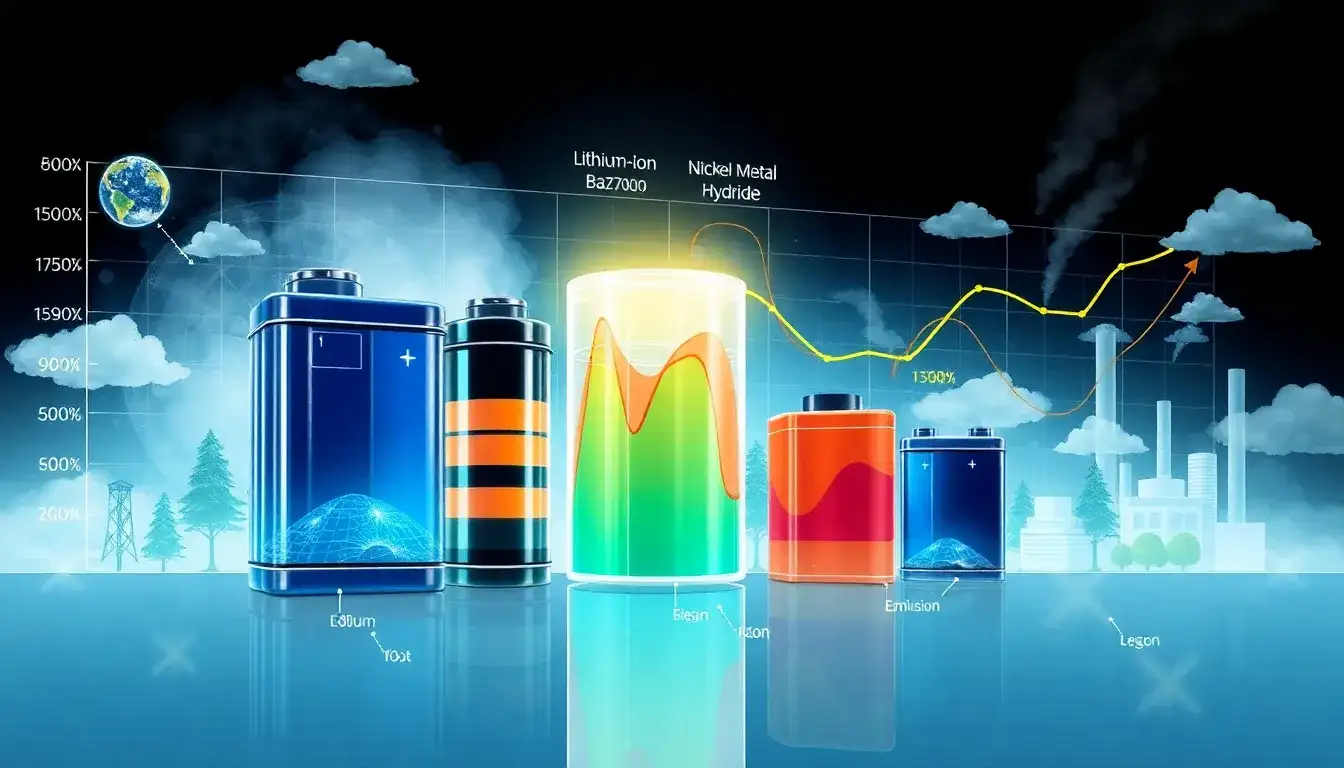
Key Points on Battery Chemistries and Emissions
-
Variation in Carbon Intensity:
- Lithium Nickel Cobalt Aluminum Oxide (NCA) and Lithium Ion Phosphate (LFP): These chemistries are commonly used in electric vehicles but have different carbon intensities. NCA batteries contain cobalt, which is associated with high energy-intensive extraction and processing emissions.
- Cobalt-Free Chemistries: Chemistries like LFP (Lithium Iron Phosphate) are gaining popularity due to their lower carbon footprint compared to cobalt-containing batteries.
-
Impact of Production Emissions:
- The manufacturing of batteries requires high-temperature processes typically powered by fossil fuels, contributing significantly to CO₂ emissions.
- Coal vs. Natural Gas: Most lithium-ion batteries are made in China, where coal is often used, leading to higher emissions compared to natural gas.
-
Recycling and Future Technologies:
- Recycling: Recycling lithium-ion batteries can reduce emissions by 30-50% by reusing materials instead of extracting new ones.
- Future Technologies: Emerging technologies like sulfur or air-based cathodes might offer significant greenhouse gas savings, though they are still in development.
-
Energy Source in Manufacturing:
- Using renewable energy sources in battery production can significantly reduce emissions by up to 70% compared to traditional fossil fuel-based energy.
Summary
Battery chemistries influence emissions primarily through their material extraction and processing phases. Transitioning to recycling and cobalt-free chemistries like LFP can reduce the environmental footprint. Additionally, using renewable energy in manufacturing processes is crucial for minimizing CO₂ emissions. Future technologies may further decrease emissions, but they are still under development.
Original article by NenPower, If reposted, please credit the source: https://nenpower.com/blog/how-do-different-battery-chemistries-affect-emissions/

