

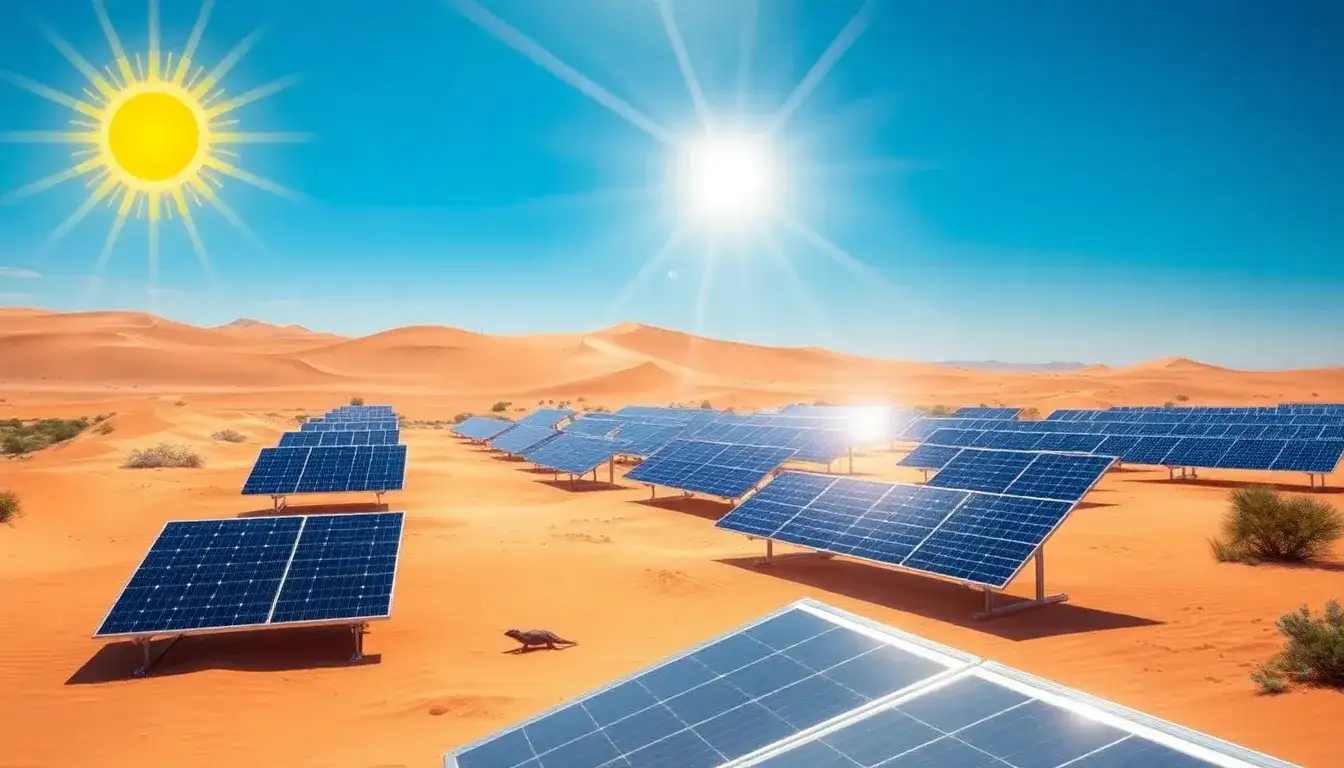
Desert environments have both positive and negative impacts on solar panel performance.
Positive Factors
- High Solar Irradiance: Deserts receive an abundance of sunlight throughout the year due to minimal cloud cover, which significantly increases the potential for solar energy generation.
- Low Humidity: The dry air in deserts helps maintain equipment and reduces wear and tear from moisture, enhancing the overall longevity of solar panels.
- Vast Land Availability: Deserts offer large tracts of unused land ideal for solar farms, reducing the challenge of finding suitable locations for solar panel installation.
Negative Factors
- High Temperatures: Solar panels are less efficient at high temperatures, often exceeding 40°C in desert climates. This can lead to reduced power output and faster degradation of solar cells.
- Dust and Sand: Accumulation of dust and sand on solar panels can reduce their efficiency by blocking sunlight. Despite this, technologies like self-cleaning coatings are being developed to mitigate these effects.
- Ecosystem Impact: Large-scale solar installations can alter local ecosystems, potentially disrupting native plant and animal habitats.
- Logistical Challenges: Desert environments pose logistical challenges, including high setup costs and technical difficulties due to harsh conditions.
Mitigation Strategies
- Proper Placement and Ventilation: Ensuring solar panels are positioned and ventilated to minimize heat buildup.
- Use of Heat-Resistant Materials: Employing materials that maintain efficiency in high temperatures.
- Cooling Technologies: Implementing cooling systems to keep panels at optimal operating temperatures.
- Regular Maintenance: Frequent cleaning and inspection to maintain optimal performance and longevity.
Original article by NenPower, If reposted, please credit the source: https://nenpower.com/blog/how-do-desert-environments-impact-solar-panel-performance/

