

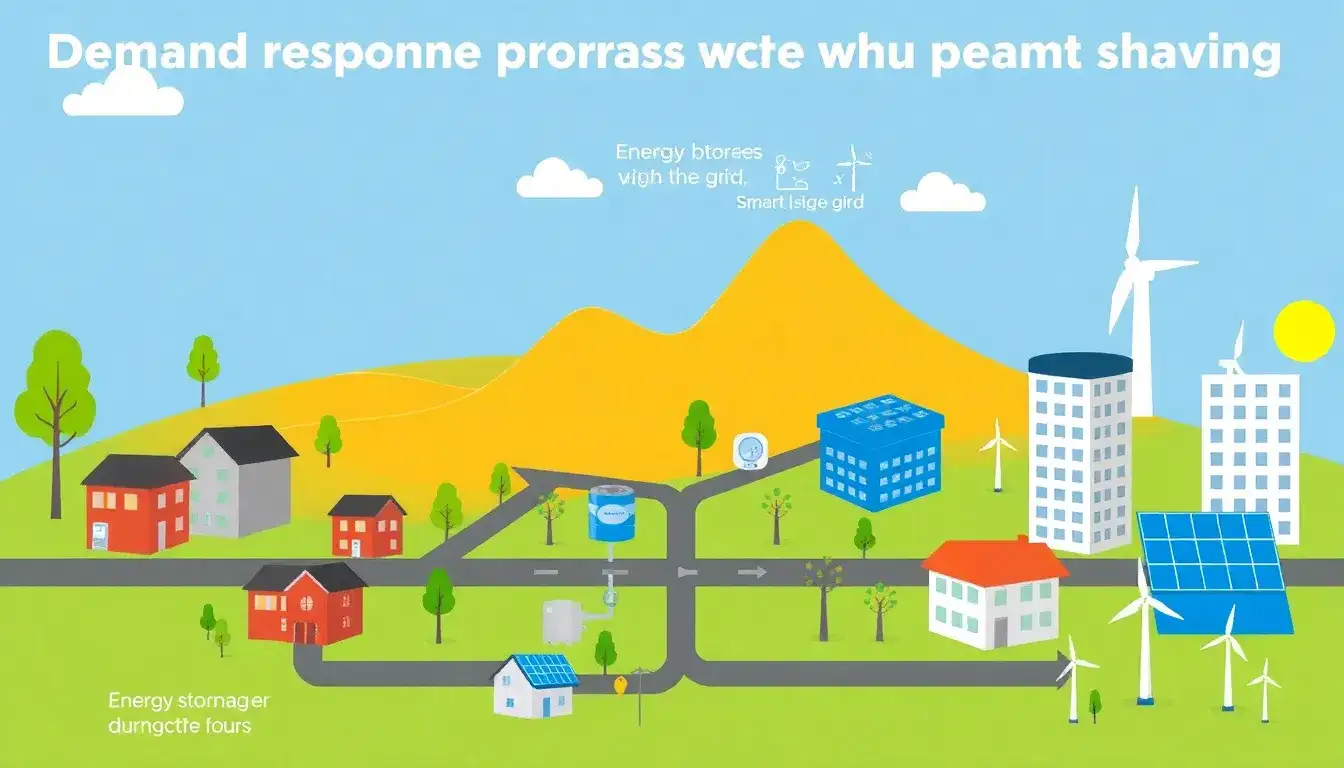
Demand response programs and peak shaving are both crucial strategies used to manage peak electricity demand, but they work in slightly different ways and can be used in conjunction to enhance energy efficiency and cost savings.
Demand Response Programs
Demand response programs are implemented by utilities or grid operators to encourage consumers to reduce their electricity usage during peak demand periods. These programs can be price-based, where higher prices during peak hours incentivize lower usage, or incentive-based, where consumers receive financial rewards for reducing their power consumption at specified times. The primary goals of demand response are to ensure grid stability, prevent blackouts, and reduce reliance on expensive peak power plants.
Peak Shaving
Peak shaving involves reducing electricity usage during peak demand periods using methods like on-site energy storage systems, such as batteries, or on-site generation systems like solar panels. This strategy helps businesses lower their demand charges, which are often based on the highest electricity usage during a billing period. By decreasing peak demand, businesses can make their energy costs more predictable and save money.
How Demand Response and Peak Shaving Work Together
- Complementary Strategies: Demand response can incentivize consumers to participate in peak shaving by offering monetary rewards for reducing their consumption during peak hours. This combination allows businesses to both manage their energy costs more effectively and contribute to grid stability.
- Enhanced Flexibility: By integrating demand response with peak shaving, businesses can leverage energy storage systems to absorb or supply energy during peak times. This flexibility enables smarter management of energy usage, aligning well with the dynamic nature of demand response programs.
- Reduced Grid Stress: Both strategies aim to reduce peak electricity demand, thereby alleviating stress on the grid. This synergistic approach supports better grid management and helps avoid blackouts.
- Economic Benefits: Participating in demand response while employing peak shaving strategies can lead to lower energy bills and additional revenue streams through demand response incentives.
In summary, while demand response focuses on grid-wide stability through incentivized load reduction, peak shaving is a business-level strategy to optimize energy costs. Together, they enhance energy management efficiency and support sustainable energy practices.
Example of Combined Use
- Commercial Buildings: A commercial building can participate in a demand response program to earn incentives by reducing its power usage during peak hours. Additionally, it can use a battery energy storage system for peak shaving, storing energy during off-peak times and using it during peak periods, thus further reducing demand charges and enhancing grid stability.
This integrated approach allows businesses to smoothly manage their energy consumption while contributing to a more stable and efficient energy infrastructure.
Original article by NenPower, If reposted, please credit the source: https://nenpower.com/blog/how-do-demand-response-programs-work-in-conjunction-with-peak-shaving/

