

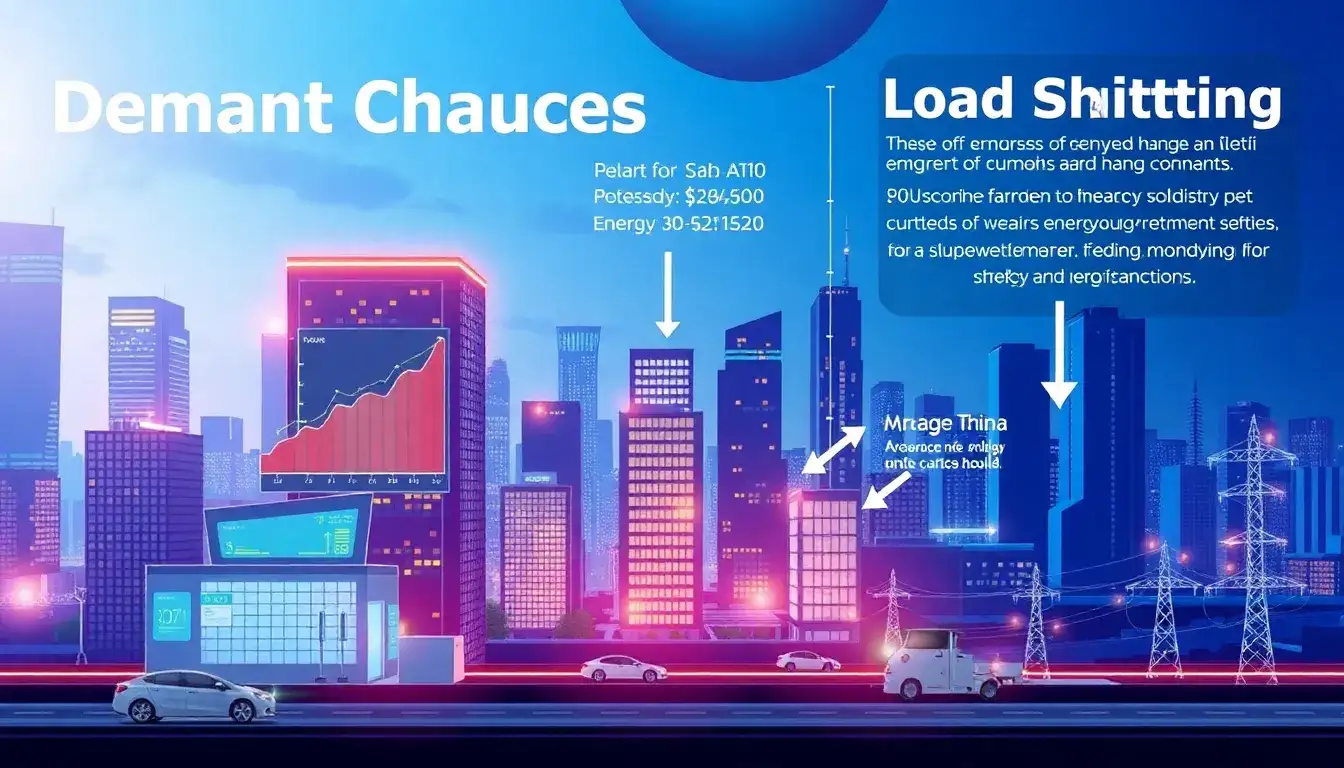
Influence of Demand Charges on Peak Shaving and Load Shifting
Demand Charges Overview
- Definition: Demand charges are fees based on the highest rate of energy consumption during peak periods, measured in kilowatts (kW).
- Financial Impact: These charges can be substantial for businesses with high peak demand, such as manufacturing facilities or shopping malls, as they make up a significant portion of the electricity bill.
Peak Shaving and Demand Charges
- Cost Savings: Peak shaving is particularly effective for reducing demand charges. By using energy storage systems or on-site generation, businesses can lower their maximum demand during peak times, resulting in significant cost savings.
- Implementation: Peak shaving involves technologies like battery storage that store energy during low-demand periods and discharge it during peak times to reduce grid reliance.
- Scenario Suitability: Ideal for businesses with inflexible loads or those facing high demand charges, as it does not require altering operational schedules.
Load Shifting and Demand Charges
- Objective: Load shifting involves moving energy consumption from peak to off-peak hours to reduce overall electricity costs.
- Effectiveness: While load shifting can help manage demand charges indirectly by smoothing out the demand curve, it does not directly reduce peak demand; it redistributes it to different times.
- Scenario Suitability: Suitable for environments where energy usage can be flexibly rescheduled without operational disruption, such as industrial production or commercial buildings with time-sensitive consumption.
Decision Factors
- Energy Profile: Facilities with inflexible loads or those where operational changes are not viable lean towards peak shaving to directly reduce demand charges.
- Operational Flexibility: Businesses with flexible operations can benefit from load shifting to lower costs through time-of-use pricing.
- Technology and Infrastructure: Peak shaving often requires more advanced infrastructure like energy storage, while load shifting can be achieved with existing scheduling systems.
In summary, when demand charges are a significant concern, peak shaving is typically more effective due to its direct approach in reducing peak consumption. However, load shifting remains viable for facilities with flexible operations that can reschedule energy use effectively.
Original article by NenPower, If reposted, please credit the source: https://nenpower.com/blog/how-do-demand-charges-influence-the-decision-between-peak-shaving-and-load-shifting/

