

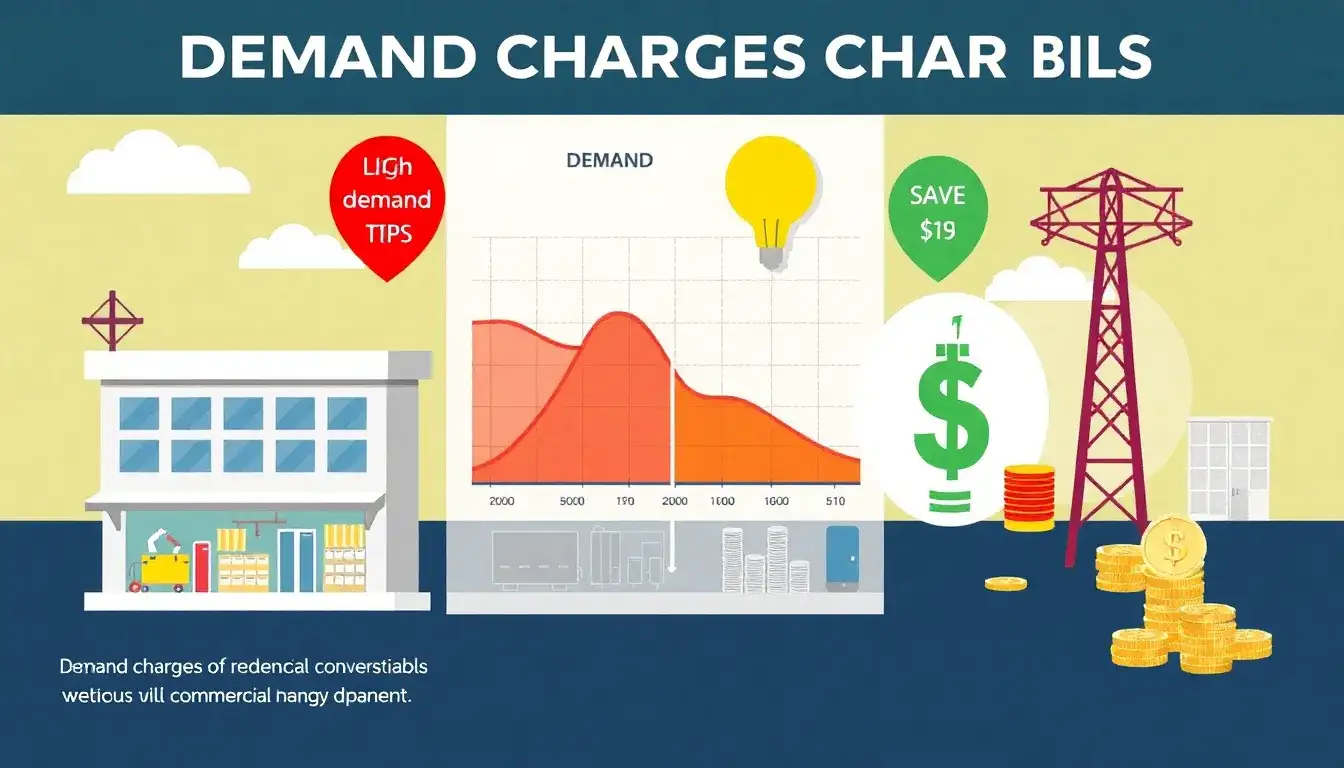
Demand charges significantly impact commercial electricity bills, often representing 30 to 70% of the total bill for commercial customers. These charges are based on the maximum power consumption at a single point during a billing cycle, usually measured over a short interval such as 15 minutes. Here’s a breakdown of how demand charges affect commercial electricity bills:
Impact of Demand Charges
- Financial Impact: Demand charges can be substantial for businesses with high peak energy demands, such as manufacturing facilities or shopping malls. Even if overall energy consumption remains constant, high peak usage can lead to higher bills.
- Calculation Method: Demand charges are calculated by multiplying the peak demand in kW by the demand charge rate per kW. This focus on peak demand, rather than overall energy consumption, incentivizes businesses to manage their power usage during peak periods.
- Billing Structure: Commercial electricity bills typically include both energy charges (based on total kWh used) and demand charges (based on peak kW usage). Understanding both components is crucial for managing costs effectively.
- Peak Demand Management: Reducing peak demand is key to lowering demand charges. Businesses can achieve this by shifting energy-intensive tasks to off-peak periods or by investing in energy-efficient equipment.
- Regulatory Influence: Demand response programs, often regulated by local authorities, encourage companies to reduce their peak demand by offering financial incentives. This helps maintain grid reliability and can lead to cost savings for businesses.
Managing Demand Charges
To manage demand charges effectively, businesses should:
- Monitor Peak Demand: Regularly check usage patterns to identify peak demand periods.
- Use Energy-Efficient Equipment: Upgrade to appliances and systems that minimize energy consumption.
- Shift Operations: Time energy-intensive operations during off-peak hours when possible.
- Participate in Demand Response Programs: Engage with programs that provide incentives for reducing peak demand.
By understanding and actively managing demand charges, commercial entities can better control their electricity costs and improve operational efficiency.
Original article by NenPower, If reposted, please credit the source: https://nenpower.com/blog/how-do-demand-charges-impact-commercial-electricity-bills/

