

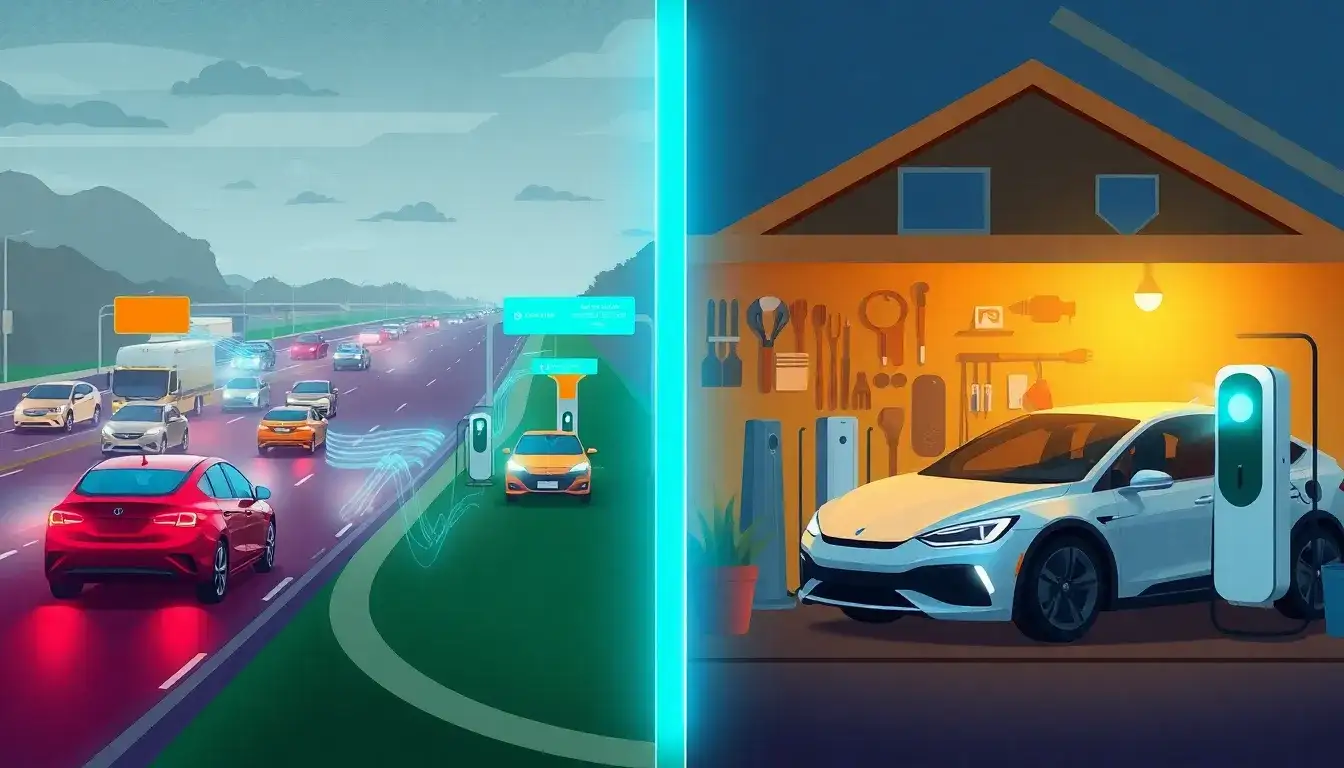
Comparison of DC Fast Charging and Home Charging Solutions
Charging Speed
- DC Fast Charging: Offers the fastest charging speeds, often capable of charging an electric vehicle (EV) to 80% in under 30 minutes. This is ideal for long trips where quick recharging is necessary.
- Home Charging (Typically AC): AC chargers (like Level 2 or Level 1 chargers) are generally slower, taking several hours to fully charge an EV at home. While slower, they are more suitable for daily charging needs when time is not a constraint.
Convenience and Cost
- DC Fast Charging: Provides quick charging for those needing a short pit stop, which is convenient for travelers. However, it is typically more expensive to use than AC chargers at home.
- Home Charging: More cost-effective for daily charging needs, as it utilizes lower energy rates available at home. However, it may not offer the same convenience for long-distance travel as DC fast chargers do.
Environmental Impact and Grid Management
- DC Fast Charging: Requires more energy and can strain the grid if not managed properly, potentially leading to higher utility costs and environmental impacts.
- Home Charging: Offers a more distributed charging format, which can help manage grid demand more efficiently. However, the overall impact depends on the energy source used to power the home charging station.
Battery Health and Infrastructure
- DC Fast Charging: Can degrade battery health over time due to the high charge rates, potentially causing internal short circuits within lithium-ion cells.
- Home Charging: Typically uses slower charging rates, which are generally less stressful on batteries and may extend battery lifespan compared to frequent DC fast charging.
Availability and Compatibility
- DC Fast Charging: Less common in remote areas and not all EV models are compatible with fast charging systems.
- Home Charging: Easily accessible and compatible with most EV models, as it typically uses standard AC charging technology available for most vehicles.
In summary, DC fast chargers are ideal for rapid charging during long trips, while home charging solutions offer cost-effective, slower charging for daily needs. Each has its advantages and disadvantages regarding speed, cost, and environmental impact.
Original article by NenPower, If reposted, please credit the source: https://nenpower.com/blog/how-do-dc-fast-chargers-compare-to-home-charging-solutions/

