

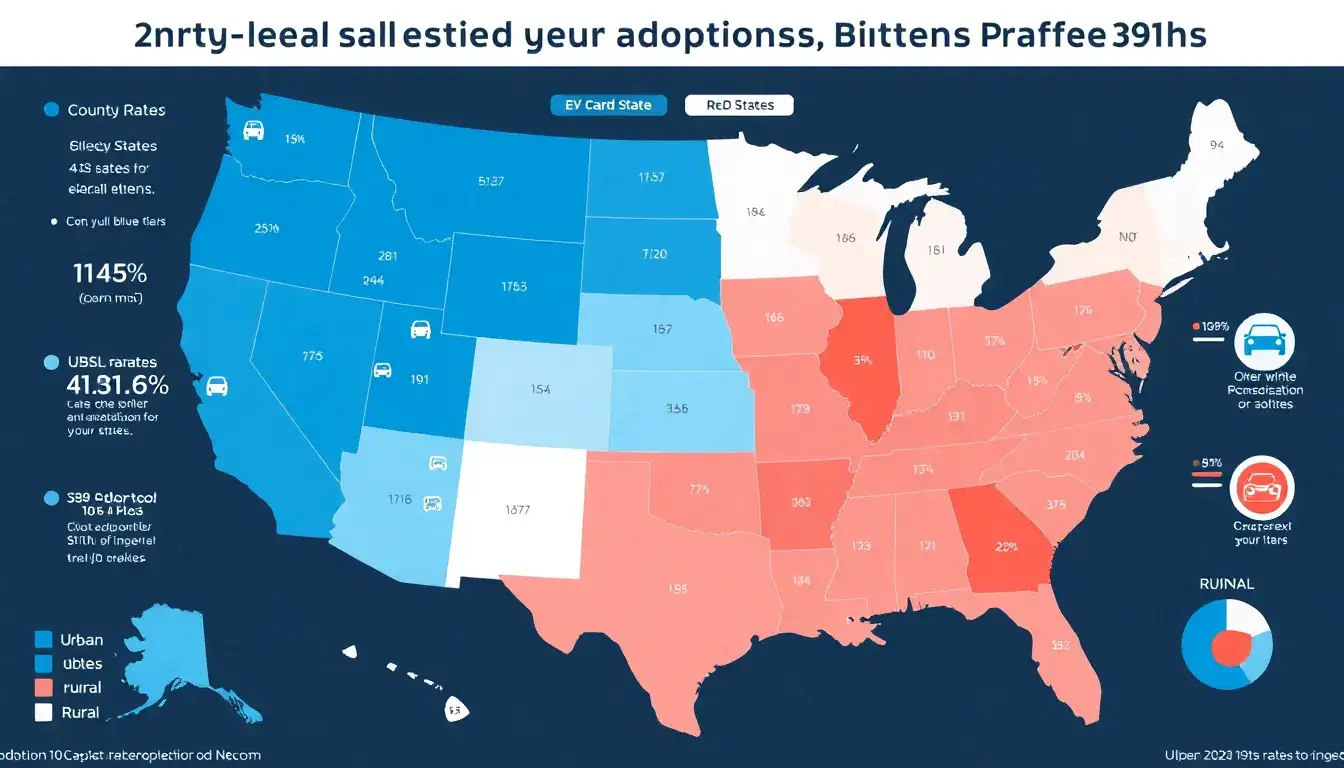
County-level EV adoption rates within both “blue” and “red” states in the U.S. can vary significantly due to several factors, including political ideology, income, population density, and the availability of charging infrastructure. Here are some observations and trends:
Factors Influencing EV Adoption
- Income and Charging Infrastructure: Areas with higher per capita income tend to have higher EV adoption rates. For example, in Florida, counties like Collier and St. Johns, which have high per capita incomes, also have higher levels of EV adoption. The availability of charging stations is another crucial factor, as it directly affects the practicality of owning an EV.
- Political Ideology: There is evidence to suggest that EV adoption is more concentrated in politically liberal areas. In 2012, about half of all new EVs were registered in the top 10% most Democratic counties, and this pattern has persisted over the years, though with some fluctuations. However, there are exceptions, such as Orange County, California, which has a high EV adoption rate despite being less Democratic than surrounding areas.
Trends in Blue States
- Higher Adoption Rates: Blue states, often characterized by higher incomes and greater political support for environmental policies, tend to have higher EV adoption rates. States like California and New York have been leaders in promoting EV adoption through policies and incentives.
- Urban vs. Rural Variations: Within blue states, urban areas generally have higher EV adoption rates than rural areas due to factors like income levels and charging infrastructure density.
Trends in Red States
- Lower Adoption Rates: Red states typically have lower EV adoption rates compared to blue states. However, there is variability within these states, with some counties showing higher adoption rates, especially those with higher incomes or strategic urban centers.
- Exceptions and Local Factors: Some areas within red states may exhibit higher EV adoption due to local economic conditions, such as high-tech industries or metropolitan areas with strong economic bases. Placer County in California, despite voting for Trump in 2020, has a notable EV adoption rate, possibly due to factors like local economic conditions.
Conclusion
While EV adoption rates are generally higher in blue states due to political and economic factors, there is significant variability at the county level across both blue and red states. Local economic conditions, charging infrastructure, and political ideology all play roles in shaping these adoption rates.
Original article by NenPower, If reposted, please credit the source: https://nenpower.com/blog/how-do-county-level-ev-adoption-rates-vary-within-blue-and-red-states/

