

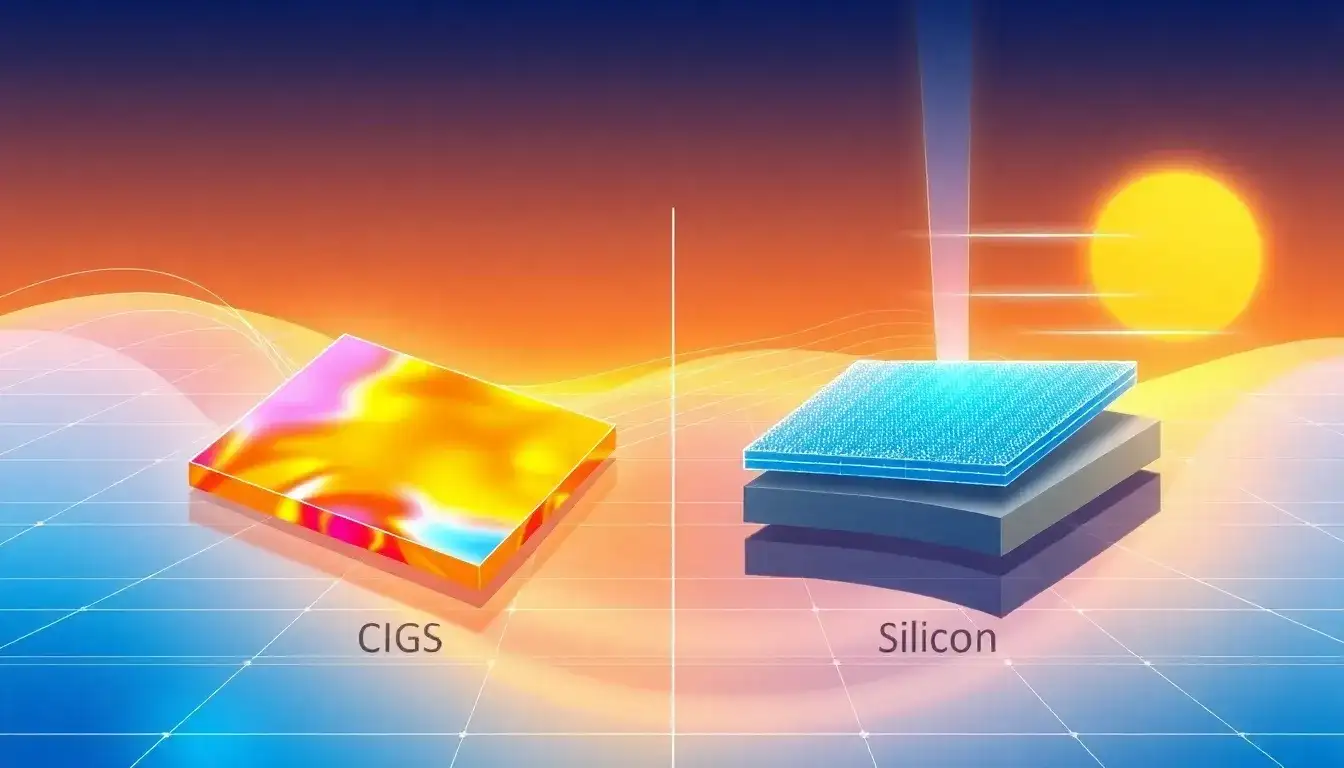
Efficiency Comparison
- CIGS Solar Cells: These have achieved high efficiencies in laboratory settings. Recently, a record efficiency of 23.64% was reported for CIGS-based solar cells, surpassing the efficiency of many commercial silicon-based modules. Commercial modules typically range from 12% to 14% efficiency, though recent advancements are pushing towards higher efficiencies in commercial applications.
- Silicon Solar Cells: Crystalline silicon (c-Si) solar cells, which are the most common type, have efficiencies ranging from about 15% to over 22% for high-efficiency models. The highest efficiency achieved for silicon solar cells is around 26.1% in laboratory conditions.
Material Characteristics
- CIGS: Offers high absorption coefficients, allowing for thinner films compared to silicon. This can reduce material costs and environmental impact. However, CIGS cells are less mature than silicon technology.
- Silicon: Well-established technology with a long history of development and manufacturing scale. Silicon cells are generally more stable and widely used, though they require thicker layers to achieve similar absorption.
Overall, while silicon remains the dominant material due to its maturity and scalability, CIGS solar cells are rapidly improving in efficiency and offer advantages in terms of material usage and cost.
Original article by NenPower, If reposted, please credit the source: https://nenpower.com/blog/how-do-copper-indium-gallium-selenides-compare-to-silicon-in-terms-of-efficiency/

