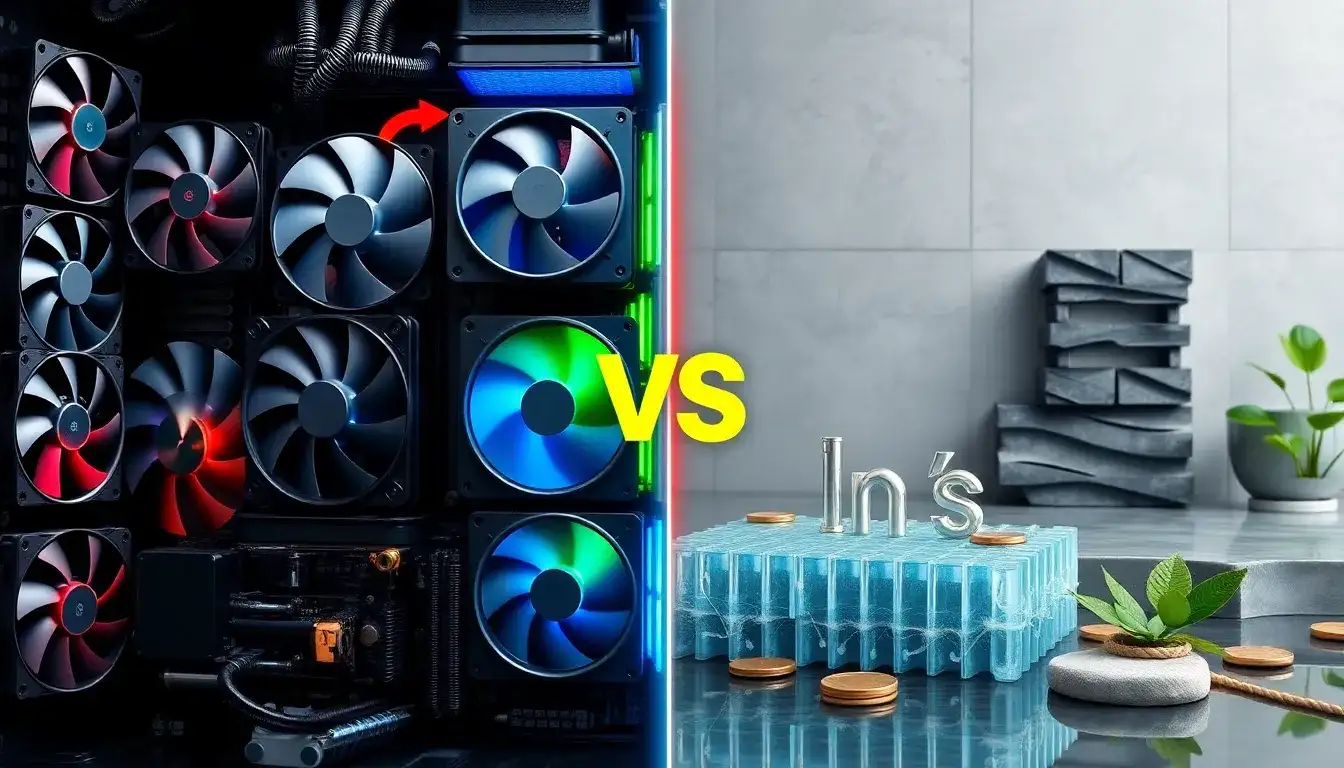
When comparing cooling fans (active cooling) to passive cooling techniques, several factors come into play, including cost, effectiveness, noise, and power consumption.
Cost Comparison
- Active Cooling: Typically requires additional components like fans, which can increase the upfront cost of the device. However, it offers high performance, making it a worthwhile investment for high-power applications.
- Passive Cooling: Generally more cost-effective as it relies on natural convection and heat dissipation without mechanical parts, reducing manufacturing costs and energy expenses.
Effectiveness Comparison
- Active Cooling: Offers superior heat removal capabilities, especially in high-power devices where quick heat dissipation is crucial. It can handle sudden temperature spikes effectively.
- Passive Cooling: While effective for low-power applications or in systems where noise is a concern, it can struggle with high heat loads and might not prevent thermal throttling under intense workloads.
Additional Considerations
- Noise: Active cooling generates noise, whereas passive cooling is silent, making it ideal for environments where quiet operation is required.
- Power Consumption: Active cooling requires additional power for operation, whereas passive cooling relies on natural processes, making it more energy-efficient.
- Maintenance: Active cooling often requires more maintenance due to moving parts, whereas passive cooling is generally simpler with fewer components to fail.
Conclusion
The choice between active and passive cooling depends on specific needs:
- Use Active Cooling for high-performance applications where effective heat dissipation is crucial.
- Use Passive Cooling for low-power devices or scenarios where noise is undesirable and energy efficiency is prioritized.
| Feature | Active Cooling | Passive Cooling |
|---|---|---|
| Cost | Generally more expensive due to additional components | More cost-effective due to fewer mechanical parts |
| Effectiveness | Highly effective for high heat loads and performance applications | Best for low-power applications or quiet environments |
| Noise | Generates noise from fans | Silent operation, ideal for quiet environments |
| Power Consumption | Consumes additional power | Energy-efficient as it relies on natural processes |
| Maintenance | Requires more maintenance due to moving parts | Less maintenance required |
Original article by NenPower, If reposted, please credit the source: https://nenpower.com/blog/how-do-cooling-fans-compare-to-passive-cooling-techniques-in-terms-of-cost-and-effectiveness/