

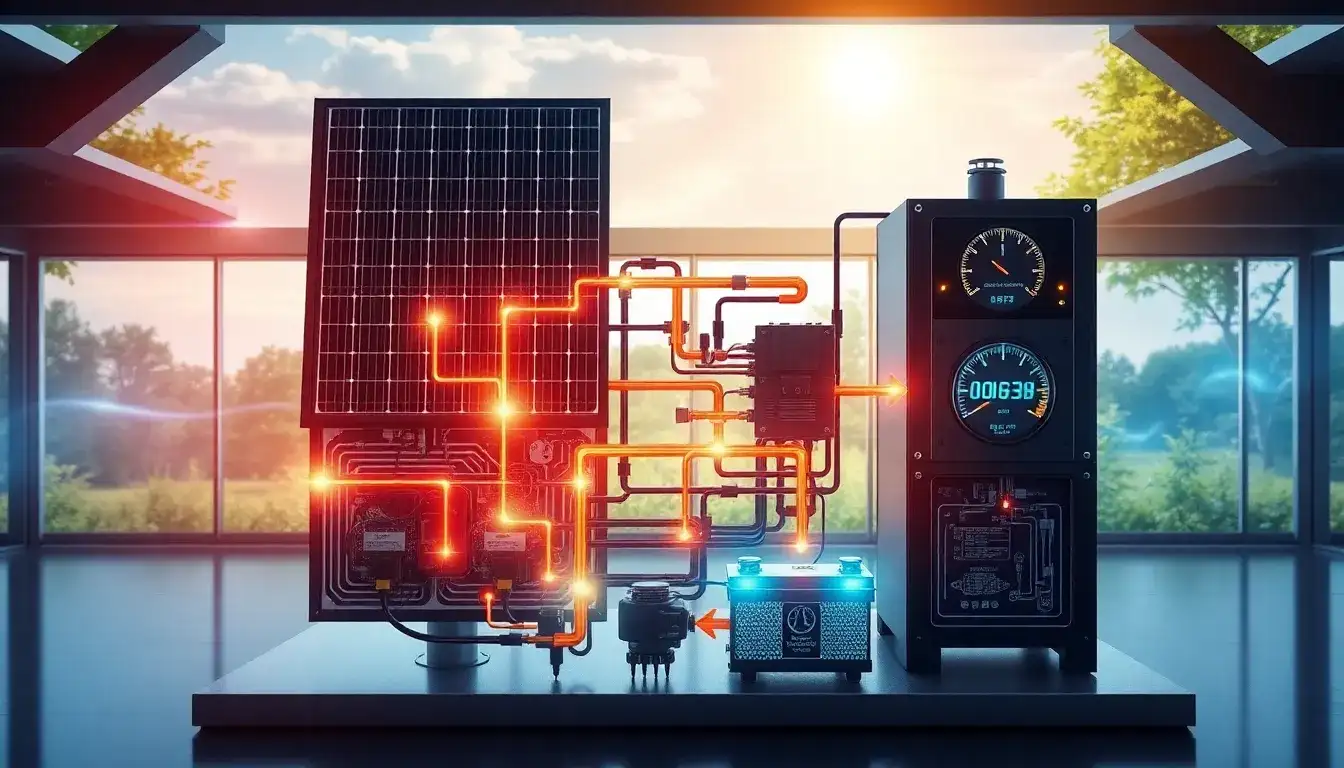
Impact of Conversion Losses on Solar Battery Systems
Conversion losses in solar battery systems occur whenever energy is converted between different forms, such as from DC to AC or vice versa. These losses can significantly impact the overall efficiency of the system, leading to reduced energy availability for use.
Types of Conversion Losses
- DC-AC and AC-DC Conversions: Each conversion step involves losses due to the inefficiency of inverters and other electronic components. For example, converting DC power from solar panels to AC for home use, and then again when storing it in batteries, incurs multiple conversion losses.
- Battery Charging and Discharging: The process of charging and discharging batteries also involves chemical energy conversions, adding to the overall loss.
Impact on Efficiency
- Double Conversion Systems: In setups where energy is converted multiple times (e.g., from solar to battery and then to AC for the grid), the cumulative loss can be substantial. For instance, a typical system might incur around 6.5% to 8% losses from DC input to AC output, depending on the components’ efficiencies.
- AC-Coupled vs. DC-Coupled Systems: AC-coupled systems, which involve more conversions, can suffer higher losses (around 13.3%) compared to DC-coupled systems (around 8.2%), due to the unnecessary AC-DC-AC conversions.
Factors Influencing Efficiency
- Component Efficiency: The efficiency of inverters, charge controllers, and batteries plays a crucial role. Optimal conditions for operation (e.g., temperature, load) can affect these efficiencies.
- Operating Conditions: Lower power outputs during charging or discharging can result in lower efficiencies. For example, if charging at low power levels, the system efficiency may drop below the optimal range.
- Design and Maintenance: Proper system design and regular maintenance (e.g., cleaning solar panels) can help minimize losses by ensuring optimal operating conditions for all components.
Conclusion
Conversion losses can significantly reduce the efficiency of solar battery systems. Choosing efficient components and designing systems to minimize unnecessary conversions can help mitigate these losses. For homeowners, opting for DC-coupled systems over AC-coupled ones can lead to better energy savings over time.
Original article by NenPower, If reposted, please credit the source: https://nenpower.com/blog/how-do-conversion-losses-impact-the-overall-efficiency-of-solar-battery-systems/

