

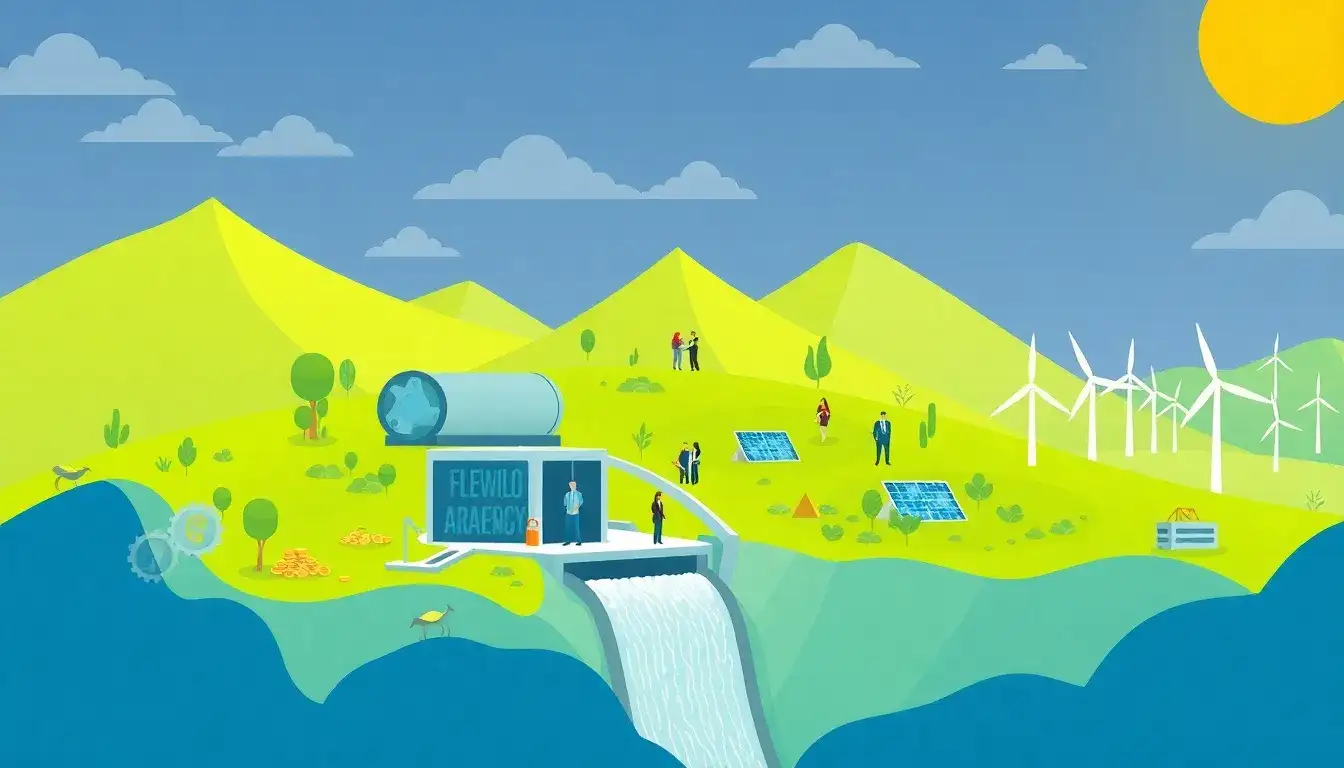
Concessional loans and guarantees from Development Finance Institutions (DFIs) significantly enhance the viability of energy storage projects, particularly in emerging markets and developing economies (EMDEs). These financial instruments address several critical challenges that often hinder private investment in such capital-intensive and innovative sectors.
Roles of Concessional Loans and Guarantees
Risk Mitigation
Concessional loans typically offer more favorable terms than commercial loans, often featuring lower interest rates and longer repayment periods. This financial structure reduces the upfront cost burden on project developers, making projects more financially feasible from the outset. This is essential for energy storage projects that may require substantial initial investments and face uncertain revenue streams due to their emerging nature and technological risks.
Guarantees, on the other hand, serve to mitigate investment risks by offering reassurance to private investors. DFIs can provide guarantees that cover potential losses, thus increasing the attractiveness of energy storage investments which might otherwise be viewed as too risky by commercial lenders. For instance, first-loss guarantees allow private investors to absorb initial risks, encouraging them to engage in projects they would typically avoid.
Leveraging Private Capital
DFIs use concessional finance to catalyze larger flows of private capital into energy storage projects. For every dollar of concessional funding provided, data suggests that up to seven dollars of private capital can be mobilized. This leverage is crucial for scaling up investments necessary for transitioning to sustainable energy systems, particularly in regions where traditional financing mechanisms are inadequate.
Technical Assistance and Capacity Building
In addition to financial support, DFIs often provide technical assistance that helps build the necessary infrastructure and regulatory frameworks for energy storage deployment. This includes support in crafting supportive policies, improving project design, and ensuring that local markets are prepared for the integration of innovative technologies. Such capacity-building efforts are vital in EMDEs where institutional capacities may be limited.
Facilitating Blended Finance Structures
Blended finance, which combines concessional loans with commercial financing, enhances overall project bankability. By utilizing blended finance structures, DFIs can reduce the perceived risks associated with energy storage projects. This approach diversifies the risk profile, making it more appealing to commercial lenders. For example, DFIs may offer blended financing solutions that package concessional loans with equity investments or guarantees, effectively lowering the overall cost of capital and increasing project viability.
Accelerating Innovation in Energy Storage
The financing provided by DFIs has been instrumental in supporting cutting-edge technologies within the energy sector, including advanced battery storage solutions. By lowering the barriers to entry for such technologies through concessional loans and guarantees, DFIs play a crucial role in fostering innovation and driving down costs over time.
Conclusion
In summary, concessional loans and guarantees from DFIs enhance the viability of energy storage projects by reducing financial risks, attracting private investments, and fostering the development of enabling environments through technical assistance. These financial instruments are critical for accelerating the transition to sustainable energy systems in EMDEs, where such projects are pivotal for meeting growing energy demands while addressing climate change.
Original article by NenPower, If reposted, please credit the source: https://nenpower.com/blog/how-do-concessional-loans-and-guarantees-from-dfis-enhance-the-viability-of-energy-storage-projects/

