

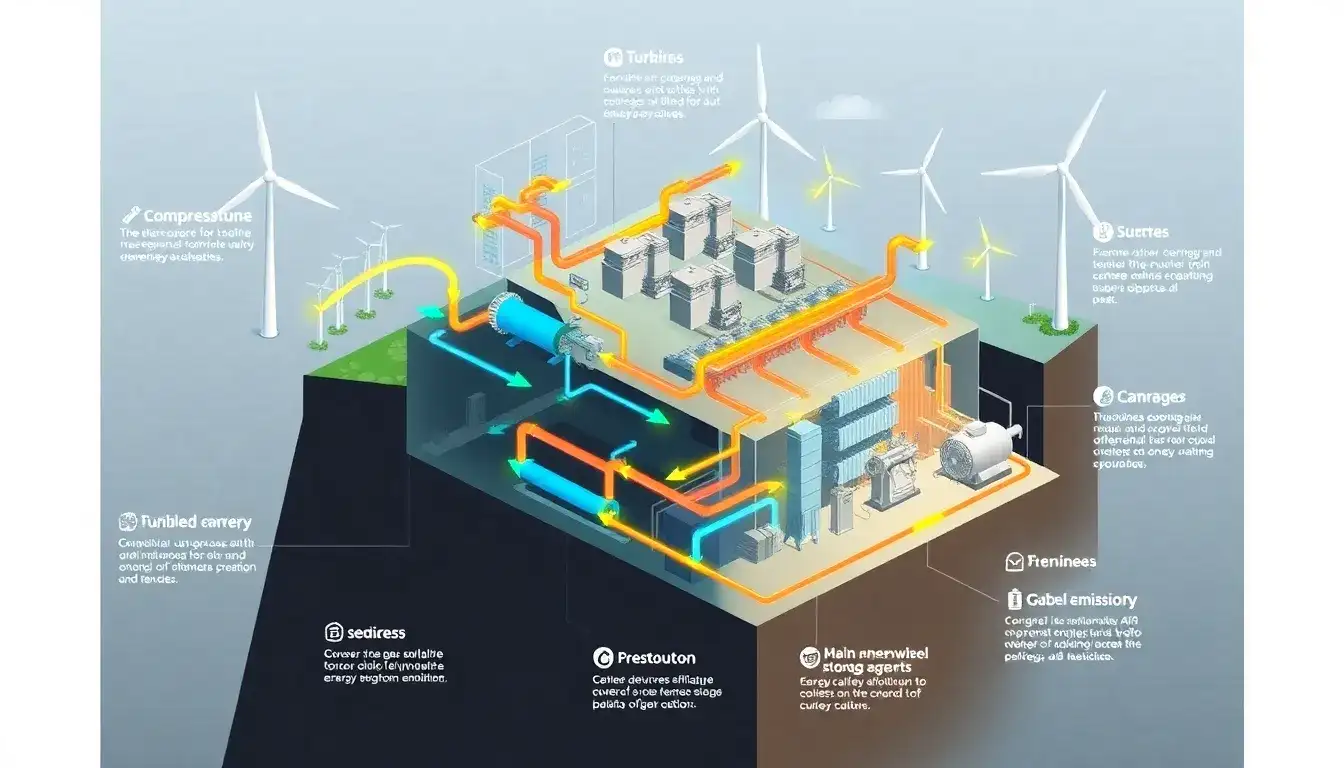
How Compressed Air Energy Storage (CAES) Systems Work
Compressed Air Energy Storage (CAES) is a technology used to store energy by compressing air and storing it in underground caverns or tanks, typically during periods of low electricity demand. This stored energy is then released during peak demand periods to generate electricity.
Process Steps:
- Charging (Compression) Phase: During off-peak hours, surplus electricity (e.g., from wind turbines or solar panels) is used to power compressors. These compressors force ambient air into underground storage facilities, such as salt caverns or aquifers, compressing it to high pressures.
- Storage: The compressed air remains stored until there is a need for energy, similar to battery systems but with a longer storage duration.
- Discharging (Expansion) Phase: When energy is needed, the compressed air is released and typically mixed with another fuel (such as natural gas) in a combustion chamber. This mixture is then passed through a turbine connected to a generator to produce electricity. In more advanced systems, the need for additional fuels can be minimized through heat recovery techniques.
Benefits of CAES Systems
- Large-Scale Storage: CAES systems can store large amounts of energy, making them suitable for grid-scale applications, especially useful in balancing the output of intermittent renewable energy sources.
- Long-Term Storage: CAES systems allow for the storage of energy over extended periods (hours to days), which helps smooth out fluctuations in renewable energy production.
- Reduced Fossil Fuel Use: Advanced CAES systems, particularly adiabatic designs, aim to reduce or eliminate the need for additional fuels like natural gas, thereby decreasing greenhouse gas emissions.
- Durability and Low Maintenance: CAES systems have a long lifespan and require less maintenance compared to traditional battery systems.
- Environmental Friendliness: When using renewable energy sources for compression and minimizing additional fuel usage, CAES is an environmentally friendly energy storage option.
Original article by NenPower, If reposted, please credit the source: https://nenpower.com/blog/how-do-compressed-air-energy-storage-systems-work-and-what-are-their-benefits/

