

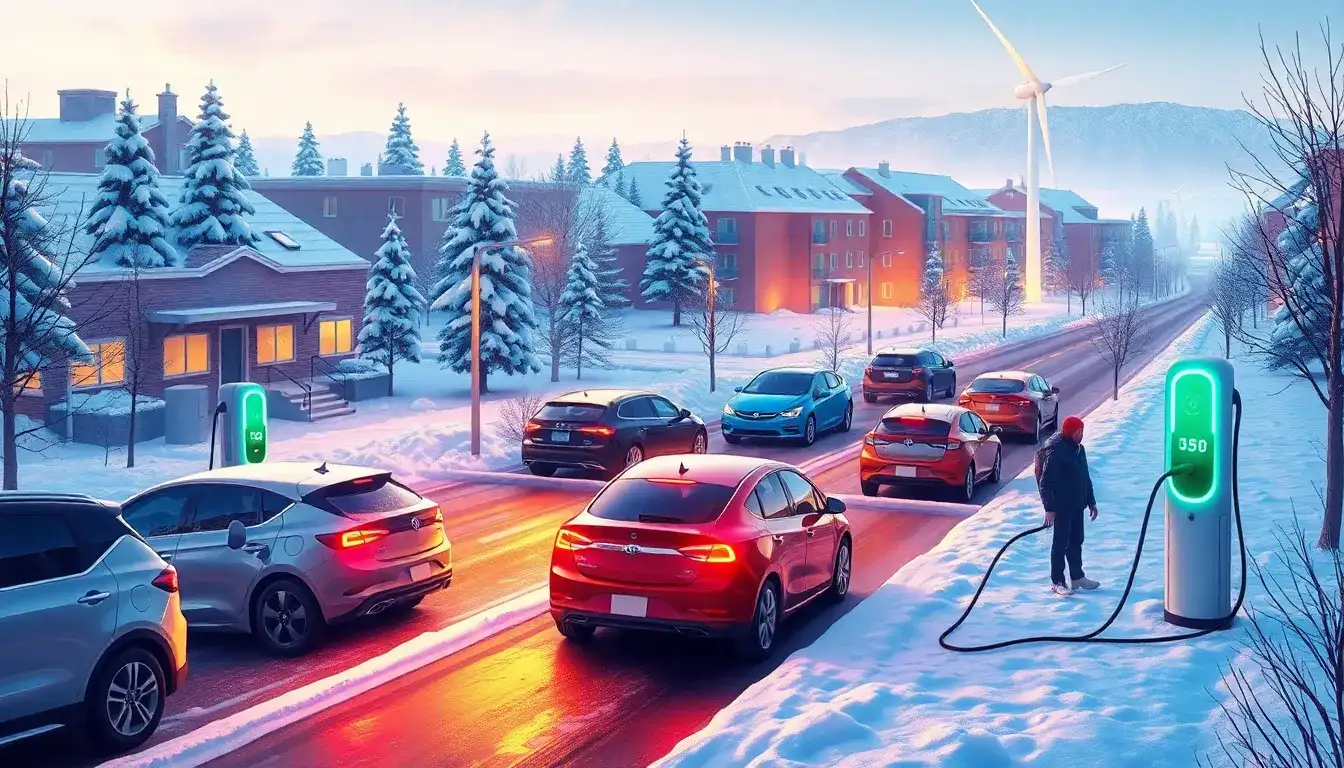
Cold-climate areas face higher electricity bill increases due to electric vehicle (EV) charging primarily because cold weather significantly reduces EV battery efficiency and driving range, which in turn leads to longer and more frequent charging sessions.
Key Reasons for Higher Electricity Usage and Costs in Cold Climates
- Reduced Driving Range: Cold temperatures slow down the chemical reactions inside EV batteries, impeding the movement of lithium ions and lowering the battery’s energy output. This results in a typical range reduction of about 10% to 36% in cold weather compared to mild conditions. With less range per charge, EV owners must recharge more often.
- Increased Energy Use for Heating: Apart from propulsion, EVs need extra energy for cabin heating and to maintain the battery at an optimal temperature. These heating demands consume additional electricity from the battery, further reducing driving range and requiring more frequent charging.
- Slower Charging Speeds: Batteries are less capable of accepting charge quickly when cold, especially at fast-charging stations. This means charging takes longer and may involve more energy losses in the process, contributing to higher energy consumption and costs for EV owners in cold climates.
- Deferred Charging and Preconditioning: To optimize battery and cabin temperature, owners often use preconditioning (heating the car while still plugged in). While preconditioning helps preserve range, it increases the amount of electricity drawn from the grid before driving, raising overall electricity usage in colder areas.
Impact on Electricity Bills
Because EVs require more energy to travel the same distance in cold weather and charging sessions last longer, residential electricity consumption rises. In regions with higher electricity rates, this leads to noticeably increased monthly electric bills for EV owners during winter months.
In summary, the combination of decreased battery efficiency, additional heating energy needs, slower charging, and extended charge durations makes EV charging more electricity-intensive in cold climates, causing higher electricity bills for drivers in these areas. Planning with preconditioning and charging during off-peak hours can help mitigate some of these costs but does not eliminate the fundamental increase in energy demand caused by the cold.
Original article by NenPower, If reposted, please credit the source: https://nenpower.com/blog/how-do-cold-climate-areas-face-higher-electricity-bill-increases-due-to-ev-charging/

