

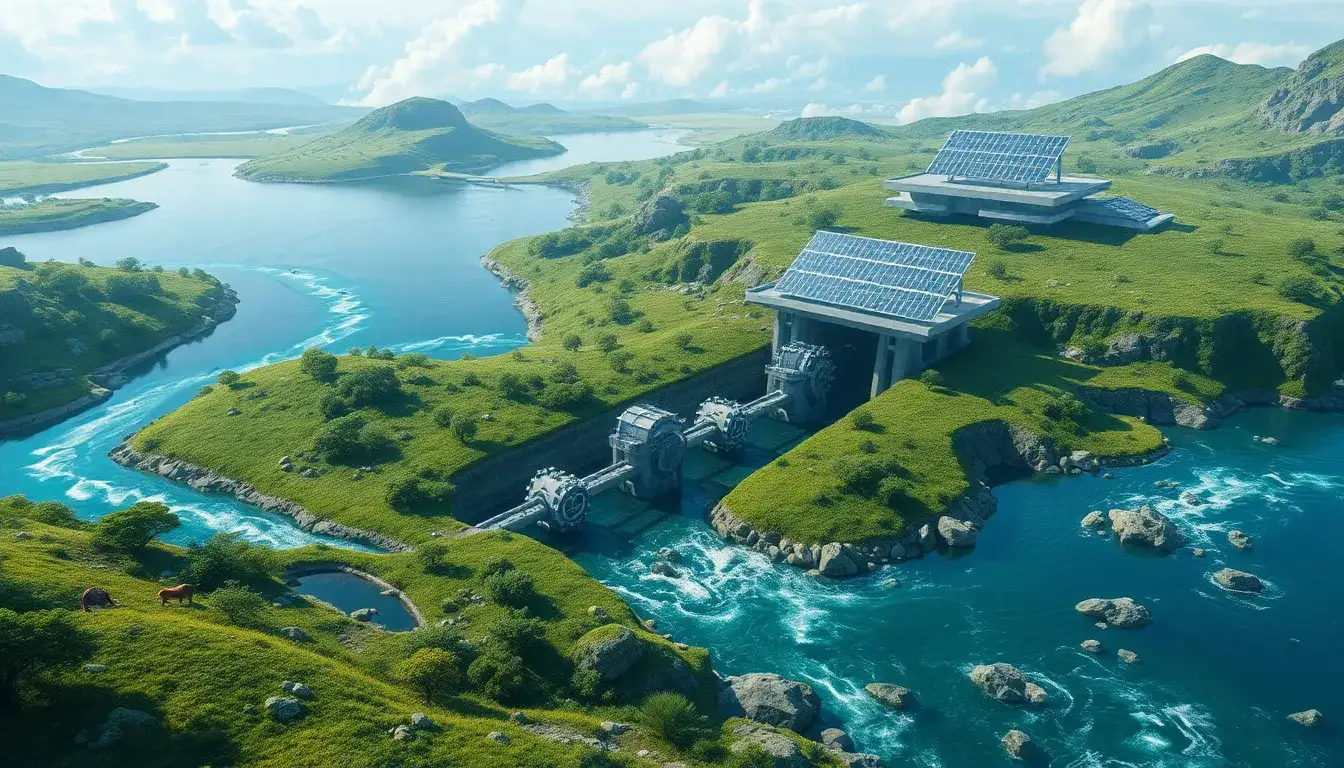
Closed-loop pumped hydroelectric energy storage systems reduce environmental impacts primarily by avoiding direct interaction with natural water bodies and ecosystems. Unlike open-loop systems, which connect to rivers, lakes, or other natural water sources and can affect aquatic habitats and water quality, closed-loop systems use two manmade reservoirs isolated from natural bodies of water.
Key Environmental Benefits of Closed-Loop Systems
- No Hydrologic Connection to Natural Water Sources: Closed-loop systems store and cycle water entirely within artificial reservoirs. This isolation prevents the disruption of natural aquatic ecosystems, avoids altering river flows or lake levels, and reduces the risk of water contamination or invasive species transfer.
- Reduced Impact on Aquatic and Terrestrial Habitats: Because closed-loop systems do not withdraw or discharge water into existing water bodies, they minimize disturbances to fish, plants, and wildlife habitats associated with open-loop systems. This can help preserve biodiversity and protect sensitive environments.
- More Site Flexibility and Less Environmental Regulation: Closed-loop systems are often located away from rivers and lakes, which can ease site selection and reduce conflicts with environmental regulations and public concerns. This also means less impact on recreational or culturally important water bodies.
- Decreased Water Resource Conflicts: Since closed-loop systems do not rely on continuous natural inflows, they avoid competing with agriculture, municipal, or ecological water needs, which can be a critical benefit in water-stressed regions.
In summary, closed-loop pumped storage systems reduce environmental impacts by isolating their water cycles from natural ecosystems, minimizing habitat disruption, and avoiding hydrologic interference. This makes them more environmentally benign alternatives to traditional open-loop pumped hydroelectric storage.
Original article by NenPower, If reposted, please credit the source: https://nenpower.com/blog/how-do-closed-loop-systems-reduce-the-environmental-impacts-of-pumped-hydroelectric-energy-storage/

