

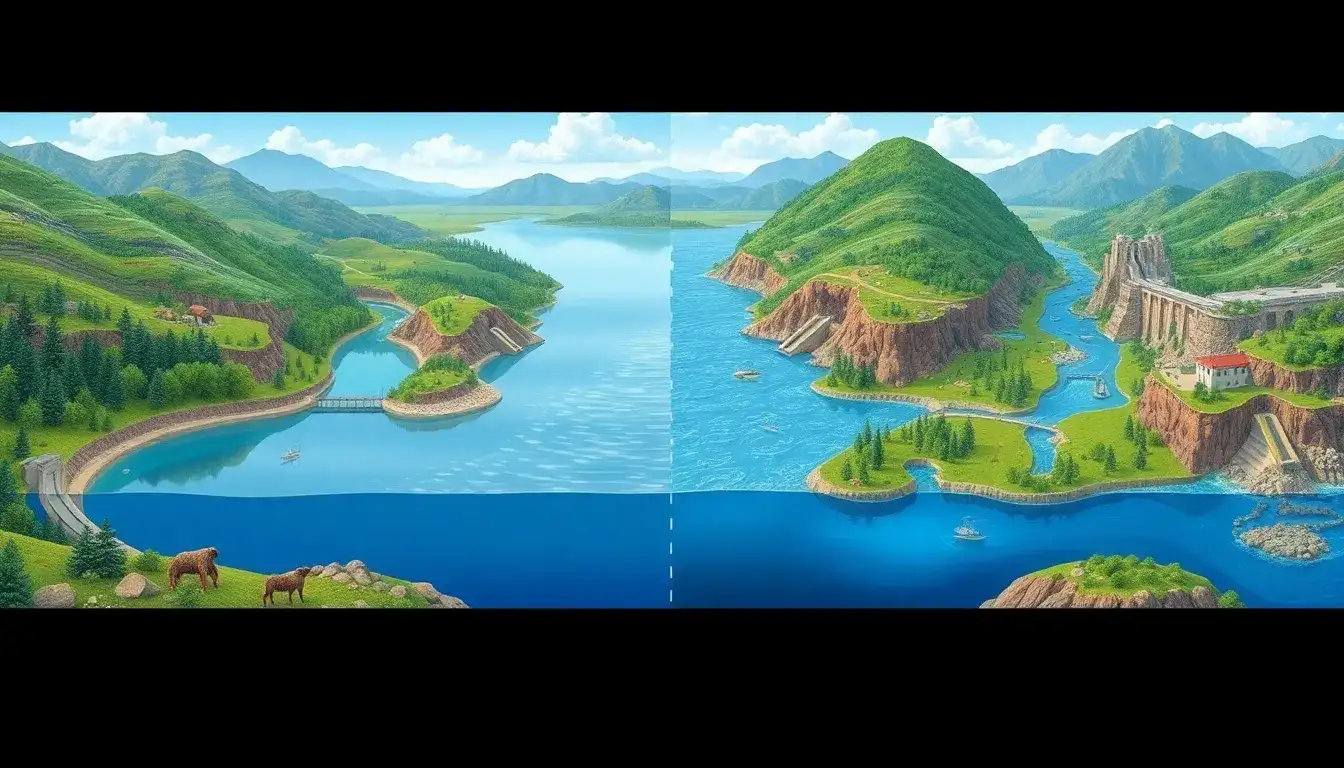
Environmental Impacts
Closed-Loop Facilities
- Localized Effects: Closed-loop facilities typically have more localized and shorter-duration environmental impacts because they are not continuously connected to naturally flowing water bodies.
- Aquatic Resources: The impact on aquatic resources is minimal, primarily related to the initial withdrawal of water for reservoir fill.
- Geological Impacts: However, they can have higher impacts on geology, soils, and groundwater compared to open-loop systems, especially in underground projects using groundwater.
- Greenhouse Gas Emissions: Closed-loop systems generally have lower life cycle greenhouse gas emissions, contributing to their potential as a more environmentally friendly option for energy storage compared to other technologies.
Open-Loop Facilities
- Wider Environmental Footprint: Open-loop facilities are continuously connected to natural water bodies, leading to broader and more sustained environmental impacts, including aquatic and terrestrial effects.
- Continuous Water Flow: Their operations involve continuous water flow, which can affect local ecosystems more significantly over time.
Siting Flexibility
- Closed-Loop: Offers greater siting flexibility due to not requiring a direct connection to a natural water flow, allowing for potential development in diverse locations.
- Open-Loop: Generally requires specific geographical conditions, limiting their siting options.
Conclusion
In summary, while both types of facilities have environmental impacts, closed-loop systems tend to have more localized and limited effects, particularly regarding aquatic resources. However, they may pose higher risks to geology and groundwater. Overall, closed-loop systems are often considered to have a lower environmental footprint compared to open-loop systems, especially in terms of greenhouse gas emissions.
Original article by NenPower, If reposted, please credit the source: https://nenpower.com/blog/how-do-closed-loop-pumped-hydroelectric-storage-facilities-compare-to-open-loop-ones-in-terms-of-environmental-impact/

