

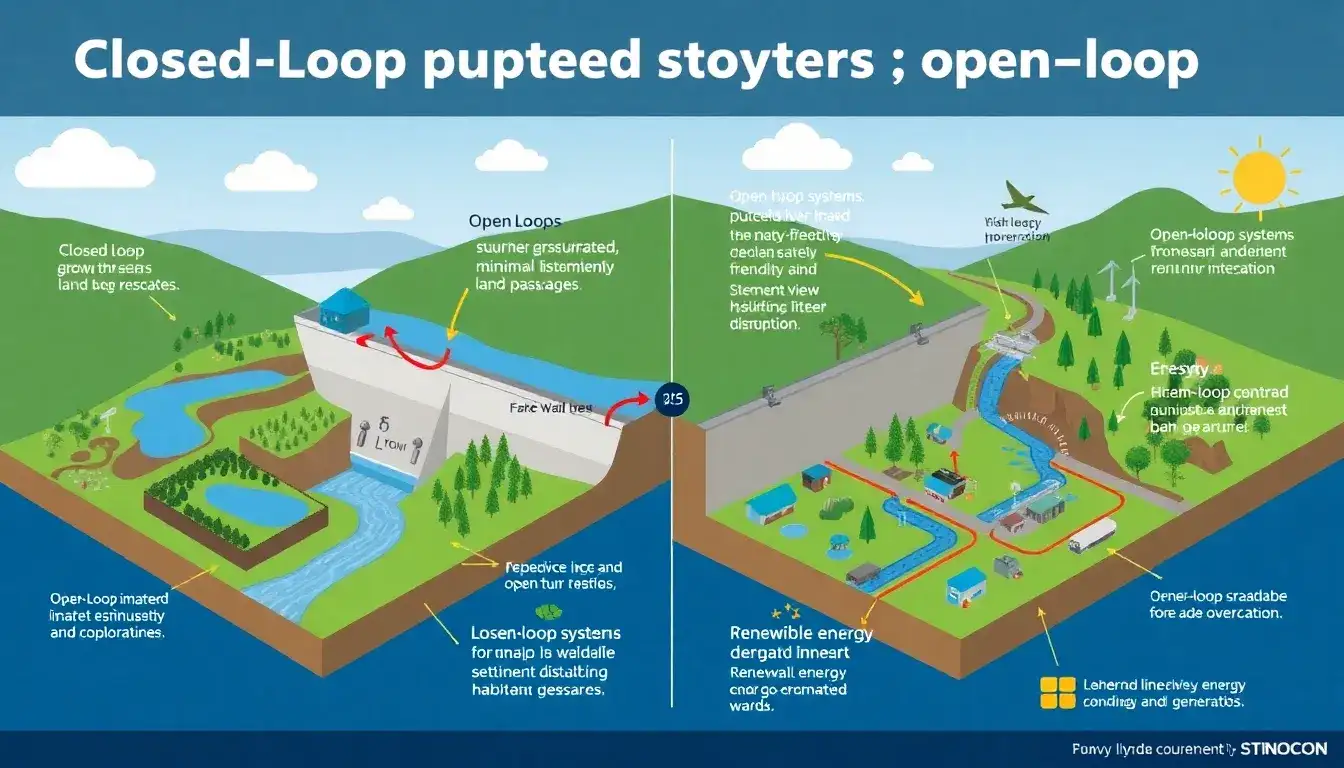
Environmental Benefits of Closed-Loop Systems
-
Aquatic and Terrestrial Impacts:
- Closed-loop systems are not continuously connected to naturally flowing bodies of water, reducing the potential for aquatic and terrestrial environmental impacts such as altering water flows or affecting fish habitats.
- They offer more opportunities to avoid or minimize these impacts, especially since they are typically “off-stream,” or located away from rivers and lakes.
-
Siting Flexibility:
- Closed-loop systems have greater siting flexibility because they do not require a connection to a natural water source. This flexibility allows them to be built in areas that are less ecologically sensitive, such as pre-existing mines or quarries, thereby reducing the need for new land acquisition and minimizing habitat disruption.
-
Groundwater Effects:
- Although closed-loop systems may utilize groundwater for initial filling or replenishment, this is generally seen as a localized impact compared to open-loop systems, which can have broader hydrological effects due to their continuous connection to natural water bodies. However, the use of groundwater can still affect local geology and water resources.
-
Reduced Land Use and Visual Impacts:
- Closed-loop systems typically involve smaller reservoirs and can be designed to blend into the surrounding terrain, reducing the visual impact of large water bodies and associated infrastructure.
Challenges and Considerations
Despite these advantages, closed-loop systems still pose some environmental challenges, such as land acquisition issues and potential impacts on local groundwater resources if they are used for filling or replenishment. Additionally, while they generally have lower environmental impacts than open-loop systems, they are not devoid of all environmental effects and require careful planning and management to mitigate any adverse impacts.
Overall, closed-loop pumped hydro storage offers a more environmentally friendly alternative to traditional open-loop systems by minimizing aquatic and terrestrial impacts, offering greater siting flexibility, and reducing broader ecological disruption.
Original article by NenPower, If reposted, please credit the source: https://nenpower.com/blog/how-do-closed-loop-pumped-hydro-storage-systems-minimize-environmental-impacts-compared-to-open-loop-systems/

