

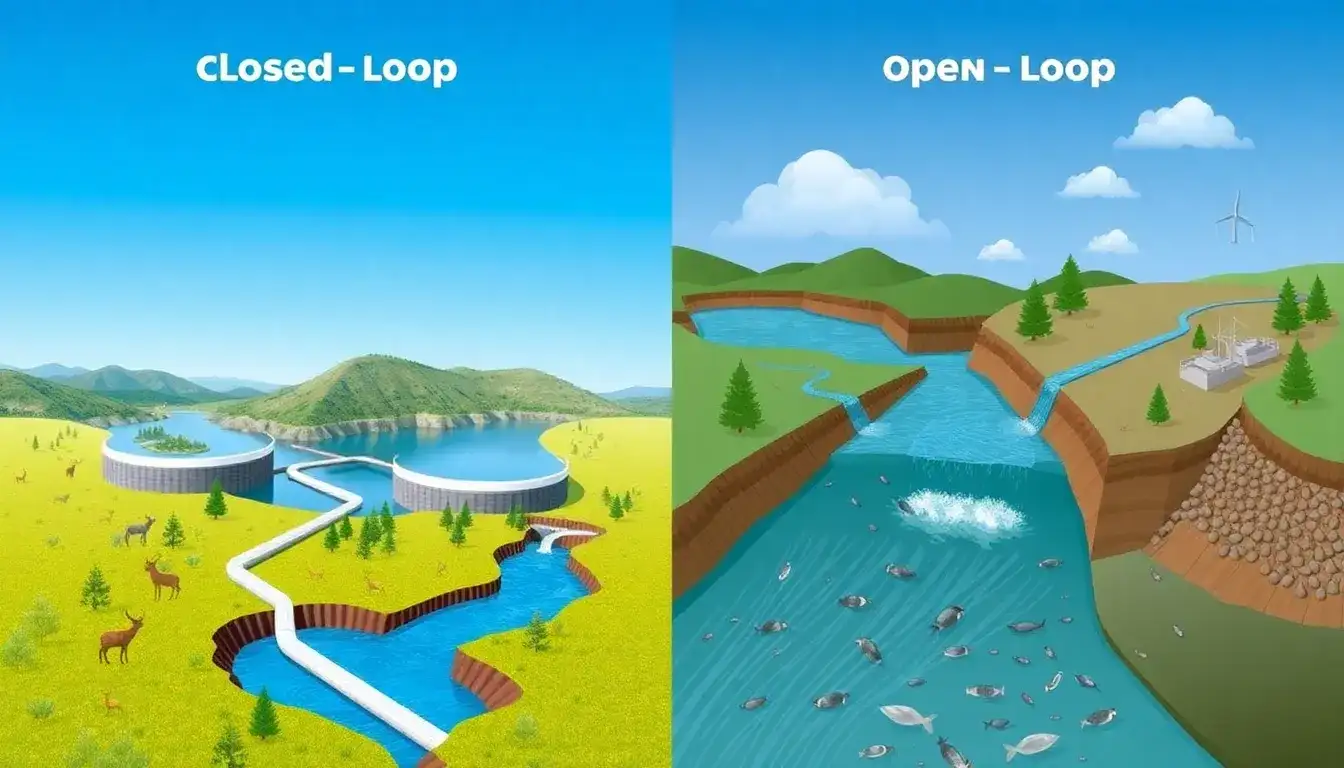
Key Differences in Environmental Impact
Closed-Loop PSH
- Environmental Effects: Closed-loop systems typically have more localized and shorter-duration environmental impacts. They are not continuously connected to naturally flowing water sources, which reduces effects on aquatic habitats.
- Geological Impacts: However, closed-loop projects can have higher impacts on geology, soils, and groundwater, particularly if they utilize groundwater or are built in mines/quarries.
- Siting Flexibility: Closed-loop facilities offer greater siting flexibility since they do not require direct connection to natural water flows.
Open-Loop PSH
- Environmental Effects: Open-loop systems are continuously connected to naturally flowing water bodies, which can lead to broader and more sustained impacts on aquatic and terrestrial ecosystems.
- Water Quality and Quantity: They can affect surface water quality and quantity, groundwater quality, and aquatic ecology more significantly than closed-loop systems.
Comparative Environmental Benefits
- Minimizing Impacts: Closed-loop PSH systems generally provide more opportunities to minimize environmental impacts compared to open-loop configurations.
- Sustainability and Climate Benefits: Closed-loop systems are considered more sustainable with a lower carbon footprint over their lifecycle, making them a promising option for reducing greenhouse gas emissions.
Overall, while both types of PSH facilities have environmental implications, closed-loop systems tend to offer a more controllable and potentially lower environmental impact compared to the broader and more sustained effects of open-loop systems.
Original article by NenPower, If reposted, please credit the source: https://nenpower.com/blog/how-do-closed-loop-pumped-hydro-storage-facilities-compare-to-open-loop-ones-in-terms-of-environmental-impact/

