

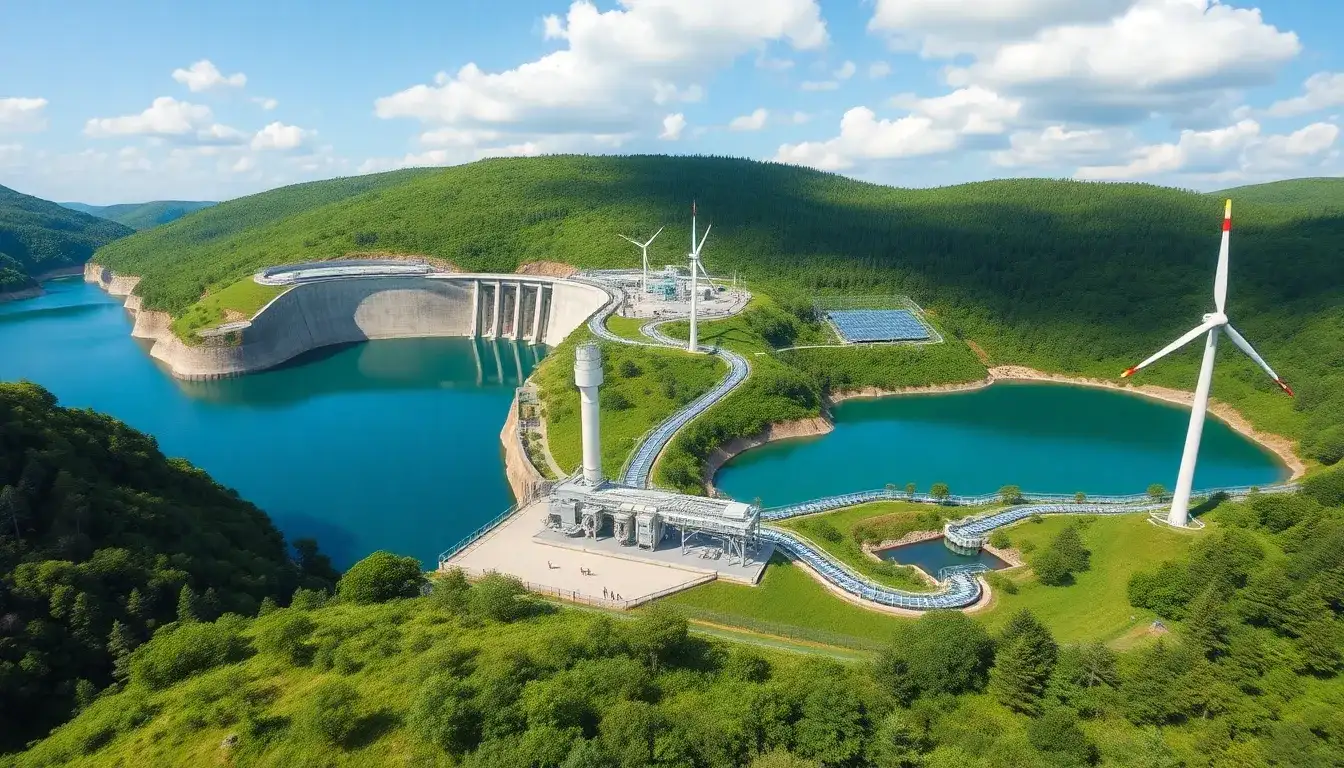
Closed-loop and open-loop pumped storage hydropower (PSH) facilities differ significantly in their environmental impacts.
Key Differences and Impacts
- Connection to Water Source:
- Open-Loop PSH: These facilities are continuously connected to naturally flowing bodies of water, which can significantly impact aquatic resources and the surrounding environment.
- Closed-Loop PSH: Not connected to naturally flowing water bodies, thus minimizing aquatic and terrestrial impacts.
- Environmental Impacts:
- Open-Loop PSH: Tend to have broader and more prolonged environmental effects due to altering natural water flows, affecting aquatic ecosystems.
- Closed-Loop PSH: Generally have more localized and shorter duration environmental impacts due to their “off-stream” nature, reducing impacts on aquatic resources.
- Siting Flexibility:
- Open-Loop PSH: Limited by the need for proximity to naturally flowing water bodies.
- Closed-Loop PSH: Offer greater flexibility in project siting as they do not require a direct connection to a water body, allowing them to be built in more diverse locations.
- Greenhouse Gas Emissions:
- PSH in General: Emissions are primarily from the energy mix used during pumping, which can vary based on the grid’s renewable energy composition. Locations with higher renewable energy mixes will have lower emissions.
- Closed-Loop PSH: While they reduce aquatic impacts, their emissions are similar to open-loop systems in terms of energy used for pumping but may vary based on construction materials and operational choices.
Summary
Closed-loop PSH facilities generally have lower environmental impacts compared to open-loop systems due to their reduced impact on aquatic resources and greater siting flexibility. However, both types of facilities share similar greenhouse gas emission profiles, largely influenced by the energy mix used for pumping.
Original article by NenPower, If reposted, please credit the source: https://nenpower.com/blog/how-do-closed-loop-psh-facilities-compare-to-open-loop-ones-in-terms-of-environmental-impact/

