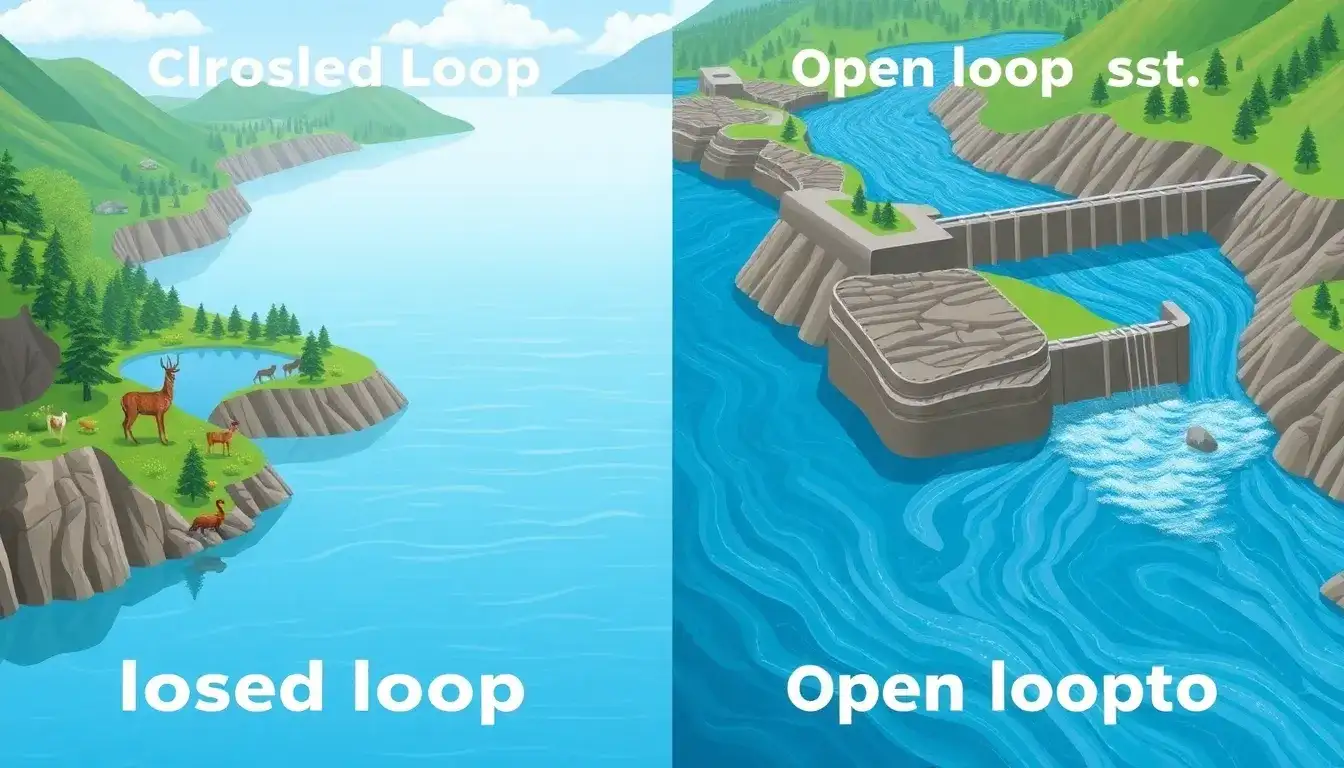
Closed-loop and open-loop pumped storage hydropower (PSH) systems differ significantly in their environmental impacts due to their design and interaction with natural water systems.
Aquatic and Terrestrial Impacts
Closed-loop systems have minimal aquatic disruption because they are not continuously connected to natural water bodies, reducing risks to fish populations and river ecosystems. Terrestrial impacts are localized to the reservoir sites, primarily affecting land use during construction. Open-loop systems, connected to flowing rivers, often cause habitat fragmentation, altered water temperatures, and sediment transport issues in downstream ecosystems.
Geological and Groundwater Effects
Closed-loop designs may pose higher risks to geology, soils, and groundwater, especially when using underground reservoirs or depending on groundwater sources. Open-loop systems typically have fewer such concerns but face challenges like reservoir-induced seismicity in geologically active areas.
Siting Flexibility and Mitigation
Closed-loop PSH offers greater siting flexibility by operating independently of natural waterways, enabling placement in areas with lower ecological sensitivity. Developers of closed-loop projects can more effectively avoid critical habitats and implement targeted mitigation strategies.
Life Cycle Emissions
Closed-loop PSH systems exhibit the lowest global warming potential among grid-scale energy storage technologies, driven by long operational lifetimes and reduced material-related emissions compared to batteries. However, their life cycle emissions still depend on the carbon intensity of the grid electricity used for pumping.
Key Comparison Table
| Aspect | Closed-Loop PSH | Open-Loop PSH |
|---|---|---|
| Aquatic Impact | Minimal (no continuous connection) | High (habitat disruption) |
| Terrestrial Impact | Localized (construction-phase) | Moderate (ongoing water use) |
| Geological Risk | Higher (groundwater/soil concerns) | Lower (unless seismically active) |
| GHG Emissions | Lowest among storage technologies | Comparable (varies with grid mix) |
Original article by NenPower, If reposted, please credit the source: https://nenpower.com/blog/how-do-closed-loop-and-open-loop-pumped-storage-hydropower-systems-differ-in-their-environmental-impacts/