

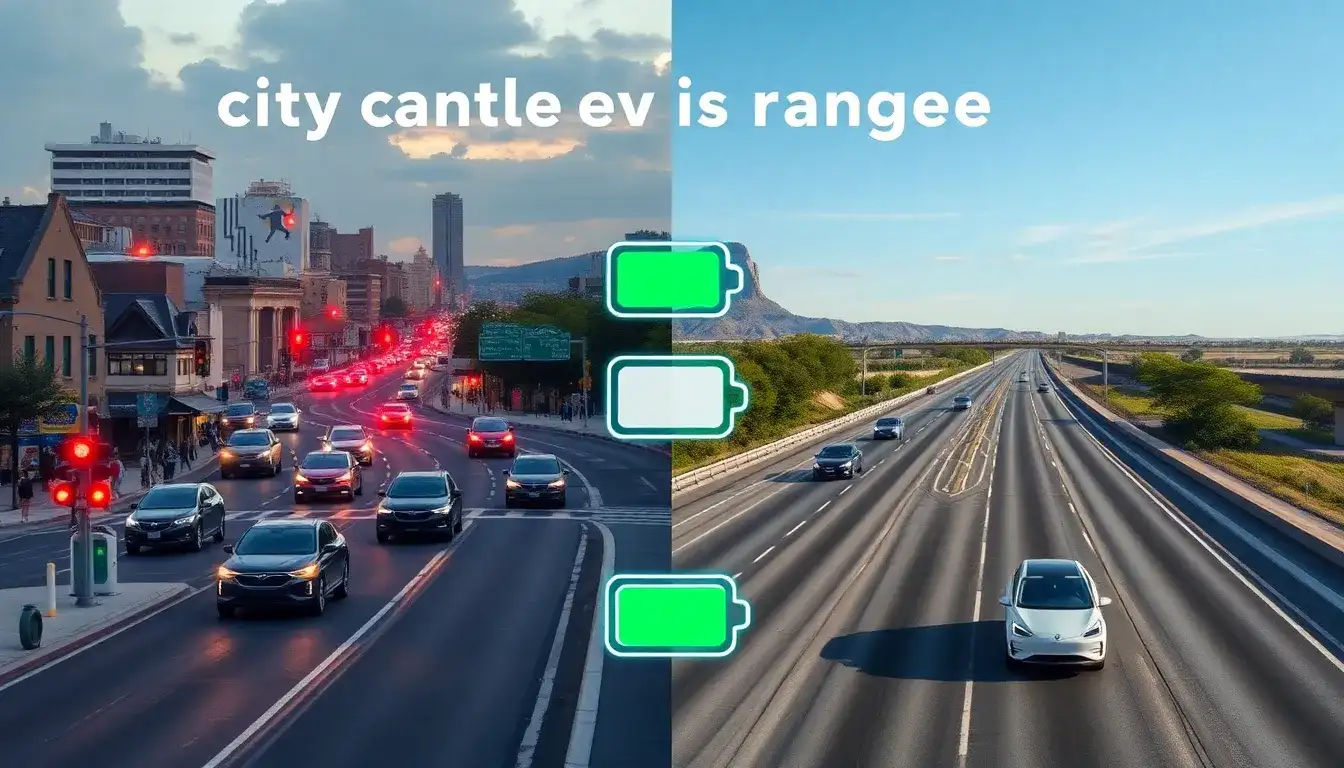
City vs. Highway Driving: Impact on Electric Vehicle Range
The driving conditions, whether city or highway, significantly affect the range of an electric vehicle (EV). Here’s a breakdown of how each environment impacts EV performance:
City Driving:
- Regenerative Braking: Frequent stop-and-go traffic allows regenerative braking systems to recover energy during braking and convert it back into electricity, which can potentially extend the vehicle’s range.
- Lower Speeds: Lower average speeds in city driving generally result in less energy consumption compared to highway driving.
- Better Range: City driving conditions often result in better range compared to highway driving due to regenerative braking and lower speeds.
Highway Driving:
- Higher Speeds: Maintaining high speeds on highways increases energy consumption due to greater aerodynamic drag.
- Air Resistance: As speed increases, so does the air resistance, which affects the efficiency of the electric motor and reduces the range.
- Range Reduction: The range typically decreases by about 10% compared to city driving, though this can vary by vehicle model.
Additional Factors:
- Weather Conditions: Both hot and cold weather can impact range: cold weather reduces battery capacity and requires energy to heat the vehicle, while hot weather increases energy use for cooling.
- Preconditioning: Using preconditioning features can help mitigate these impacts by optimizing battery temperature before driving.
In summary, city driving tends to be more range-efficient for EVs due to regenerative braking and lower speeds, whereas highway driving reduces range due to increased air resistance and energy consumption at higher speeds.
Original article by NenPower, If reposted, please credit the source: https://nenpower.com/blog/how-do-city-and-highway-driving-conditions-affect-the-overall-range-of-an-electric-vehicle/

