

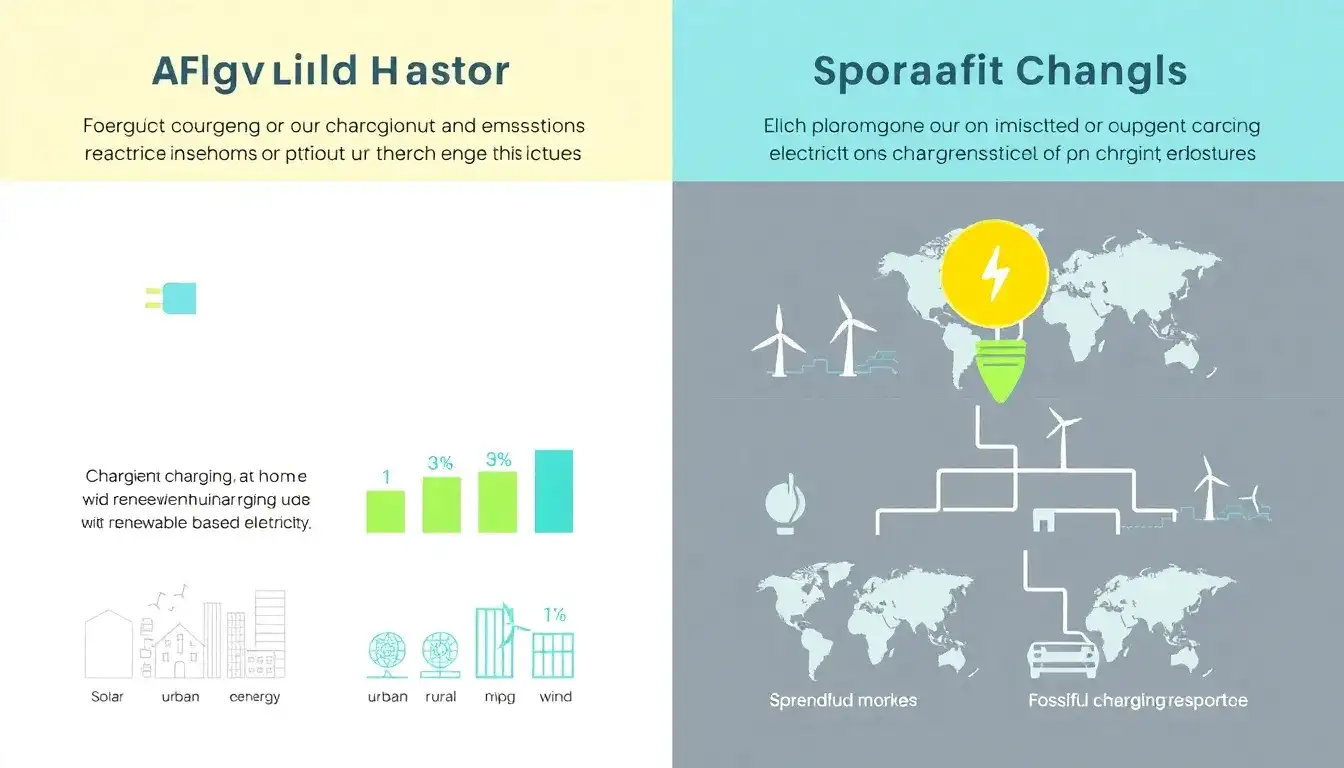
Charging patterns significantly influence the emissions of Plug-In Hybrid Electric Vehicles (PHEVs) by affecting how often they run on electricity versus gasoline. Here are key aspects of how charging patterns impact emissions:
Influence of Charging Patterns on Emissions
- Daytime Charging: The availability of daytime charging can increase the percentage of miles driven using electricity, reducing gasoline consumption and, consequently, emissions from the vehicle’s tailpipe.
- Grid Emissions: The carbon intensity of the grid at the time of charging affects overall emissions. PHEVs charged during times when the grid is powered by cleaner energy sources will have lower emissions compared to charging during periods with high reliance on fossil fuels.
- Load-Shifting: Charging PHEVs during off-peak hours can help shift the energy load to more efficient times, potentially reducing the strain on less efficient generators and thus lowering emissions like NOx, especially during ozone seasons.
- Non-Electric Miles: In scenarios where PHEVs operate in gasoline mode, emissions increase accordingly. Thus, maximizing electric use through strategic charging is essential for minimizing emissions.
- V2G Services: Though not directly related to charging patterns, Vehicle-to-Grid (V2G) services, which allow vehicles to supply energy back into the grid, can further optimize energy efficiency and potentially reduce emissions by supporting the grid during peak times.
In summary, charging patterns play a crucial role in determining the emissions footprint of PHEVs by influencing the amount of electricity used versus gasoline and the efficiency of electricity production during charging times.
Original article by NenPower, If reposted, please credit the source: https://nenpower.com/blog/how-do-charging-patterns-influence-the-emissions-of-phevs/

