

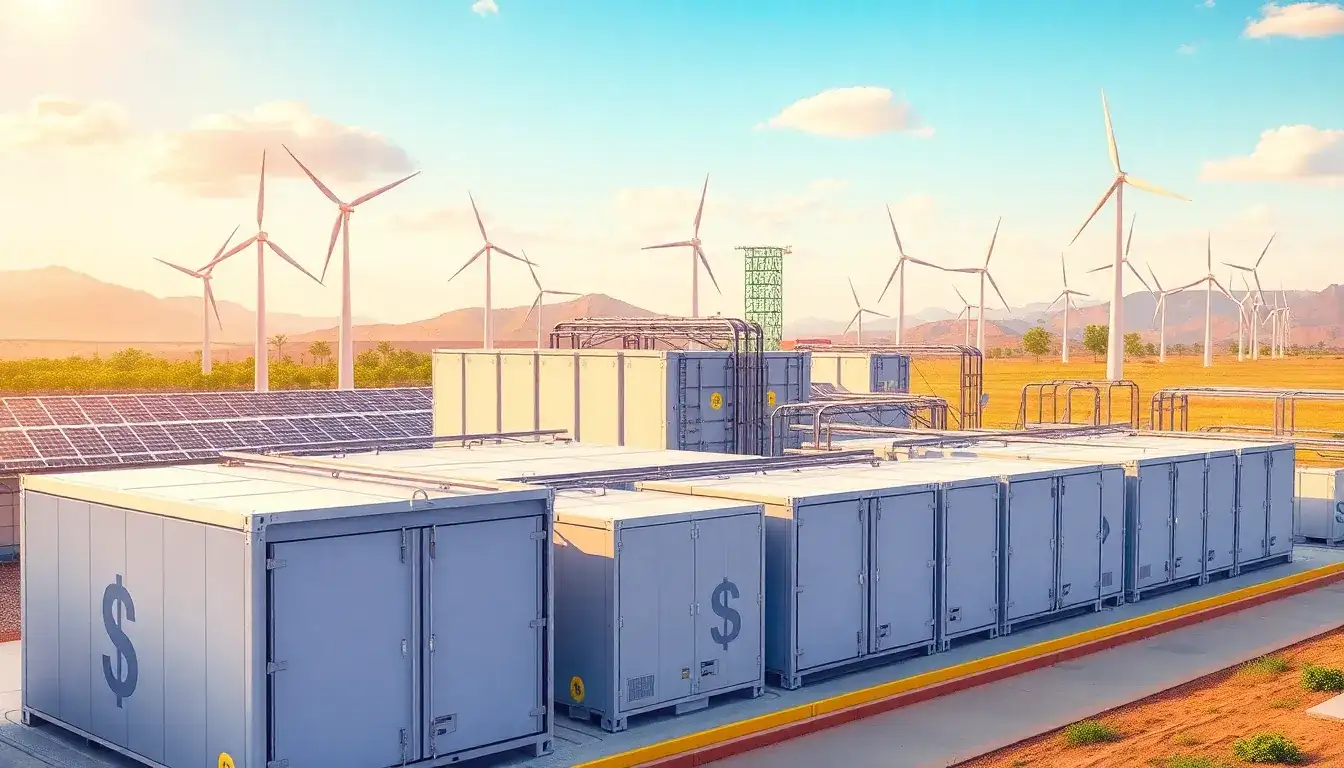
Capital costs significantly influence the deployment of utility-scale energy storage systems, shaping economic feasibility, technology selection, and project scale.
Impact of Capital Costs on Utility-Scale Energy Storage Deployment
1. Economic Feasibility and Project Viability
Capital costs represent the upfront investment required to build energy storage systems, usually expressed in dollars per kilowatt-hour ($/kWh) or per kilowatt ($/kW). High capital costs can be a barrier to entry, limiting deployment until costs decline or financing structures improve. Conversely, lower capital costs increase the economic attractiveness of energy storage, enabling more projects to proceed.
2. Cost Structure Components
Capital costs include major components such as the battery pack (e.g., lithium-ion batteries), power conversion systems (inverters), balance of system (BOS) costs, and engineering, procurement, and construction (EPC). These collectively define the total cost to install a battery energy storage system (BESS). Different technologies (compressed air, sodium-based, lithium-ion) have distinct cost profiles affecting their competitiveness and deployment scale.
3. Influence on Storage Duration and System Design
Capital costs per $/kWh generally decrease with longer storage durations because fixed power system costs are spread over more stored energy. However, capital costs per $/kW can increase with duration. This tradeoff influences decisions about optimal system sizing and storage duration based on application needs and economic trade-offs.
4. Market and Policy Sensitivity
Future capital costs projections impact investment decisions in different electricity markets (regulated vs. competitive), influencing utility choices based on expected returns and policy incentives. Declining capital costs can accelerate deployment by improving the levelized cost of storage (LCOS), enhancing competitiveness with other generation or demand-side resources.
5. Technology-Specific Capital Costs Affect Deployment Patterns
- Lithium-ion batteries currently dominate the market, with declining capital costs aiding rapid scale-up.
- Alternative technologies like compressed air or sodium-based systems have different capital costs and performance characteristics affecting their deployment niches, especially in long-duration storage applications.
Summary
Capital costs are a critical determinant in the deployment of utility-scale energy storage. They affect whether projects are financially viable, influence technology and duration choices, and shape the pace and scale of market adoption. Ongoing cost reductions in battery packs and related systems are key enablers for broader deployment and integration of energy storage in power systems.
Original article by NenPower, If reposted, please credit the source: https://nenpower.com/blog/how-do-capital-costs-impact-the-deployment-of-utility-scale-energy-storage/

