

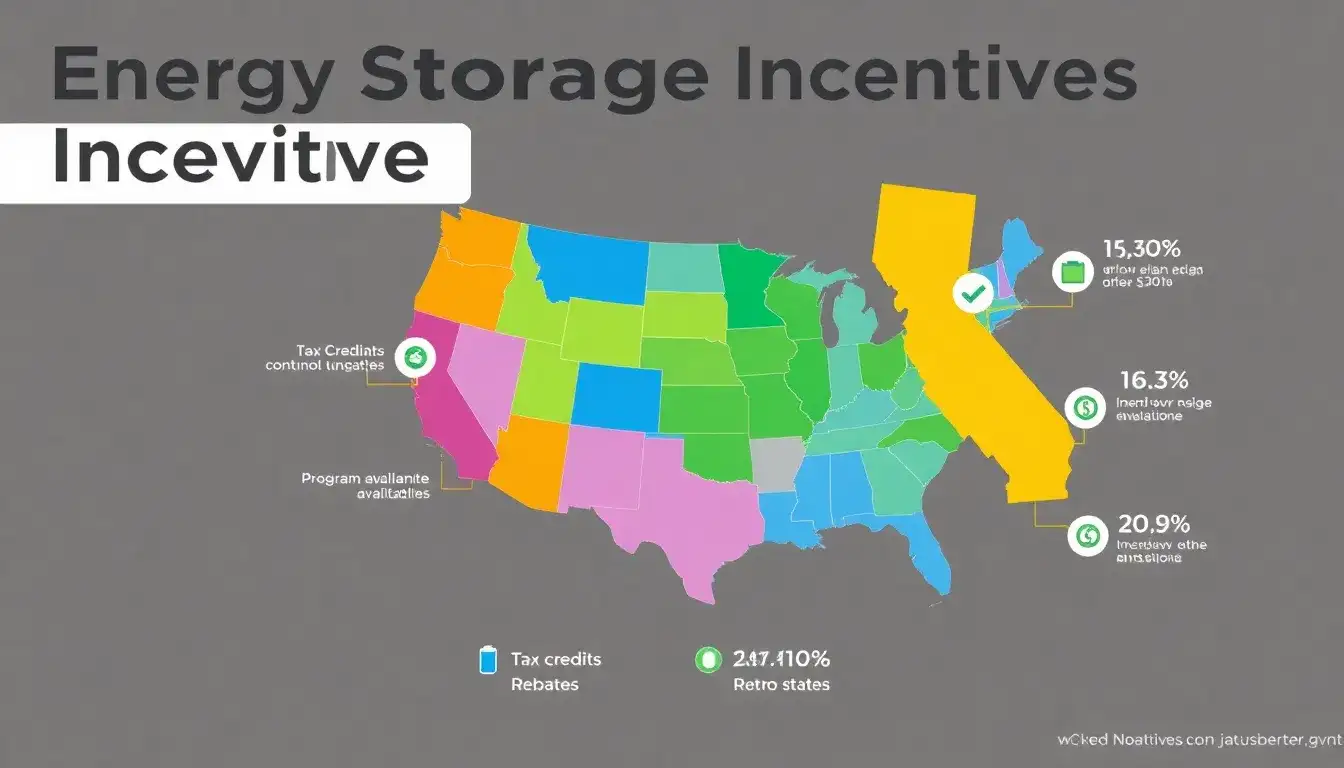
Overview of California’s Incentives
- SGIP Program: Offers rebates for installing energy storage systems, prioritizing low-income and medically vulnerable communities, as well as those in high-risk fire areas. The program includes two high-rebate categories: Equity ($850/kWh) and Equity Resiliency ($1,000/kWh), which can cover nearly the entire cost of an energy storage system.
- Federal Incentives: California residents can also take advantage of the federal Investment Tax Credit (ITC), offering up to 30% of the system cost as a tax credit, though standalone storage was only recently included starting in 2023.
Comparison to Other States
While some states offer impressive incentives, California’s comprehensive and prioritized support for vulnerable populations sets it apart:
- Arizona: Offers rebates and tax incentives, but they are generally less comprehensive than California’s programs.
- New York: Offers incentives through the NY-Sun program, focusing on solar and energy storage, but does not match the scale and focus of SGIP.
- Hawaii: Known for its renewable energy leadership, Hawaii incentivizes energy storage, particularly for pairing with solar systems, but lacks the specific equity focus of California’s program.
- New Jersey: Offers incentives for energy storage, but they are not as targeted towards vulnerable communities as California’s.
California’s incentives are designed to enhance grid resilience and support communities at high risk of power outages, setting it at the forefront of energy storage incentives in the country.
Key Differences
- Targeted Incentives: California’s focus on equity and resiliency, particularly for low-income and medically vulnerable communities, is a key differentiator.
- Rebate Structure: The tiered-block system in SGIP, combined with higher rebates for specific communities, provides a unique structure not seen in many other states.
- Federal Incentives Compatibility: The combination of state and federal incentives available to Californians makes the state’s energy storage investments even more attractive compared to others.
Overall, while other states offer incentives, California’s SGIP stands out for its comprehensive approach and focus on equity and resilience.
Original article by NenPower, If reposted, please credit the source: https://nenpower.com/blog/how-do-californias-energy-storage-incentives-compare-to-other-states/

