

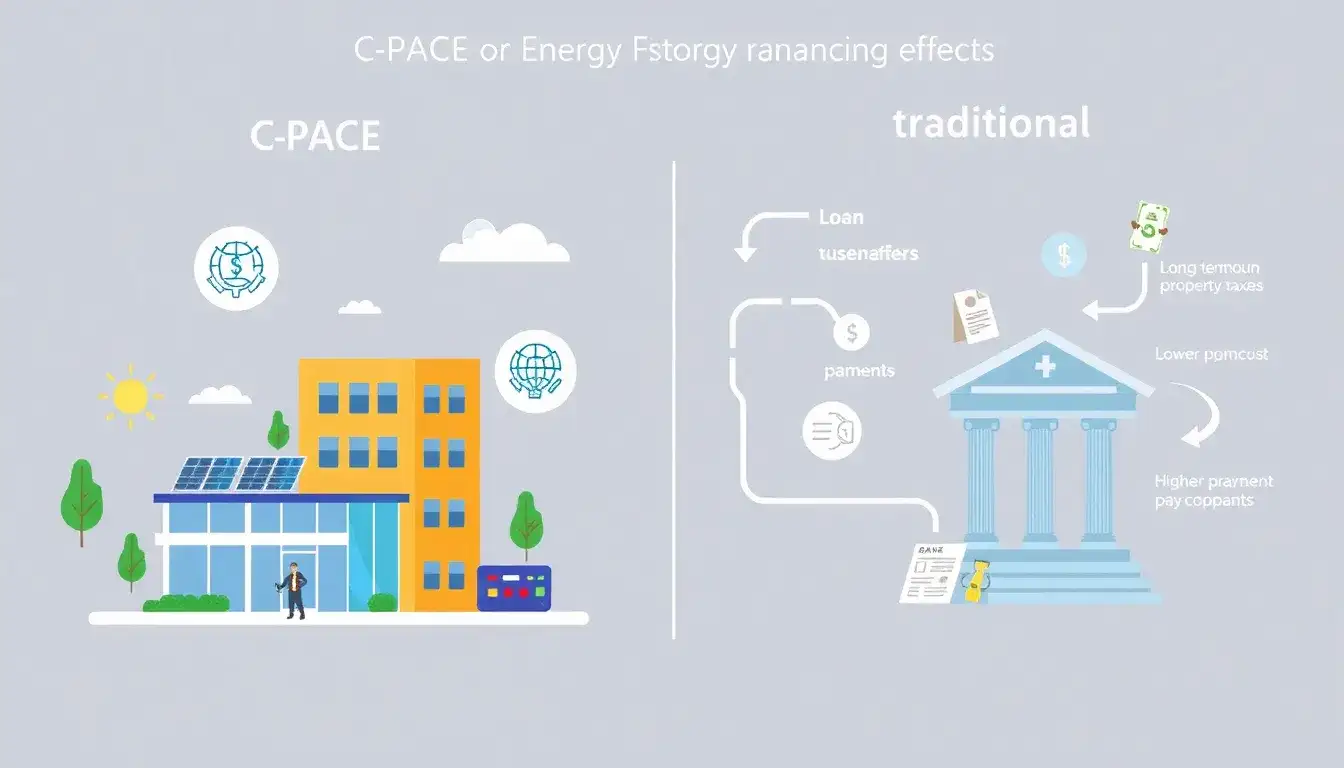
Mechanism of Repayment
- C-PACE: Repayments are made through property tax bills, similar to other municipal assessments. This means that the loan is tied to the property rather than the borrower, allowing for easier transfer if the property is sold.
- Traditional Financing: Typically involves loans secured by a mortgage lien or personal guarantees, with repayment made directly to the lender.
Risk Assessment
- C-PACE: Since repayments are via property tax bills, lenders assume less credit risk compared to traditional loans, which are often based on the borrower’s creditworthiness.
- Traditional Financing: Lenders assess the borrower’s credit risk, which can lead to higher interest rates or stricter terms if the borrower’s credit is poor.
Flexibility and Terms
- C-PACE: Offers long repayment terms, often up to 25 years, allowing building owners to align repayment schedules with the useful life of energy-efficient improvements.
- Traditional Financing: Typically has shorter loan terms and may require larger upfront payments or higher monthly payments.
Eligible Projects
- C-PACE: Specifically designed for energy efficiency, renewable energy, and environmental upgrades. It can cover up to 100% of project costs and is often cash-flow positive from the start due to energy savings.
- Traditional Financing: While available for a wide range of projects, it may not be tailored to the specific needs of energy storage and efficiency upgrades, and often doesn’t cover all costs.
Financial Benefits
- C-PACE: Often results in immediate savings due to reduced energy consumption, improving cash flow from the outset.
- Traditional Financing: Savings from energy efficiency projects may take time to materialize and may not immediately offset loan payments.
State and Local Support
- C-PACE: Encouraged by state and local governments as it supports environmental and energy efficiency goals without direct taxpayer funding.
- Traditional Financing: Does not typically receive government support or subsidies for energy efficiency projects.
Overall, C-PACE programs offer a unique financing model that aligns well with energy storage and efficiency projects by providing long-term, low-risk financing tied to property value rather than borrower creditworthiness.
Original article by NenPower, If reposted, please credit the source: https://nenpower.com/blog/how-do-c-pace-programs-differ-from-traditional-financing-options-for-energy-storage-projects/

