

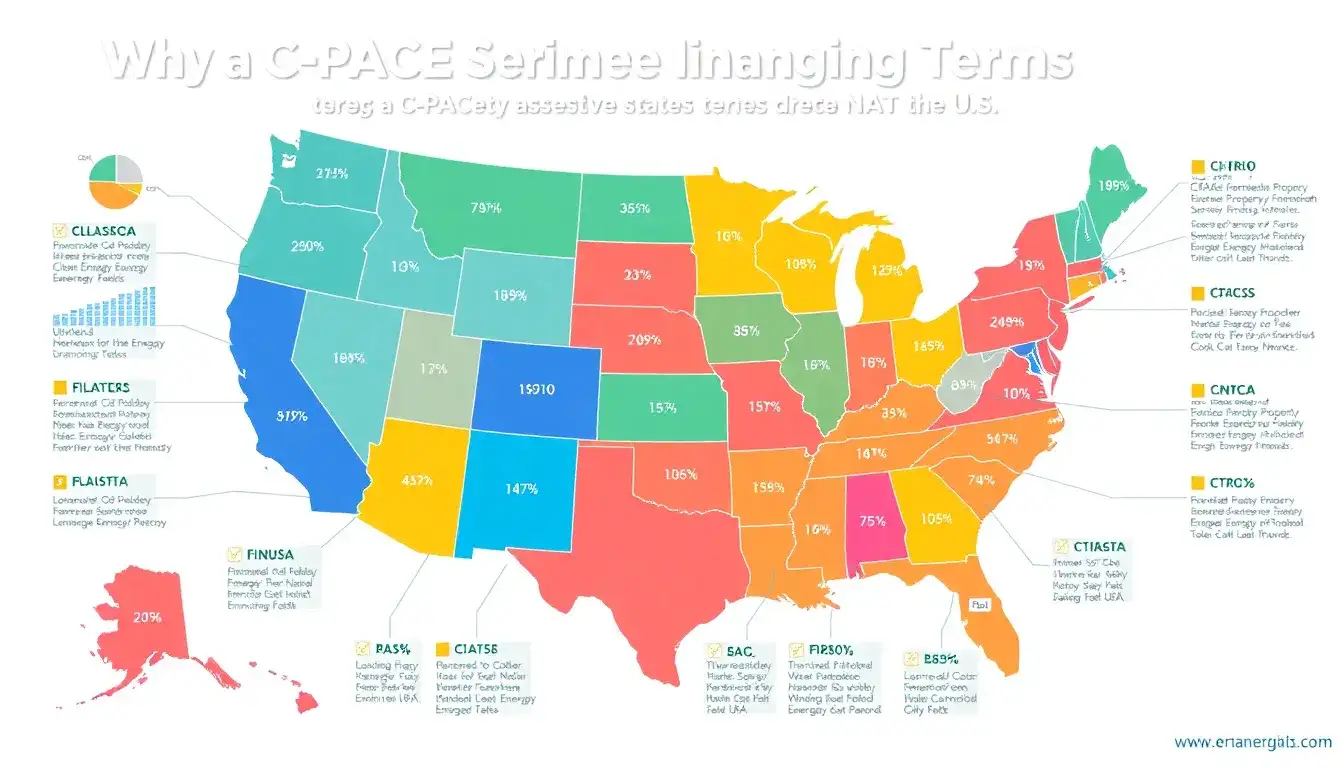
C-PACE financing terms can vary by state due to differences in state and local regulations. Here are some key aspects where variations occur:
1. Enabling Legislation and Program Structure
- Availability: C-PACE is available in approximately 38 states plus Washington D.C., but active programs are operational in about 29 states. States like California, Connecticut, and Illinois have established programs, while others may have passed legislation but not yet launched active programs.
- Local Ordinances: Programs are created at the local level, leading to differences in program administration and eligible projects.
2. Eligible Projects
- Types of Improvements: While most states focus on energy efficiency, water conservation, renewable energy, and resiliency measures, specific eligible projects can differ. For example, seismic upgrades might be more emphasized in earthquake-prone areas like California.
- Savings-to-Investment Ratio (SIR): Some states have specific SIR requirements to ensure that energy savings outweigh the cost of financing.
3. Financing Terms
- Loan Terms: Loan terms can range from 15 to 30 years, often tied to the useful life of the improvements.
- Loan-to-Value (LTV) Ratio: Typically, C-PACE financing can cover up to 30% of the property’s value, though combined LTV with senior debt can be higher.
- Interest Rates: Rates vary based on market conditions and program specifics, but C-PACE is generally low-cost compared to other financing options.
4. Administrative Processes
- Application and Approval: Processes for securing financing can differ significantly between states and municipalities, including how applications are reviewed and approved.
- Repayment Mechanisms: While repayment typically occurs through special property tax assessments, some states might prefer direct billing by the capital provider.
Overall, while C-PACE financing shares core characteristics across states, local regulations and program specifics introduce variability in terms and implementation.
Original article by NenPower, If reposted, please credit the source: https://nenpower.com/blog/how-do-c-pace-financing-terms-vary-by-state/

