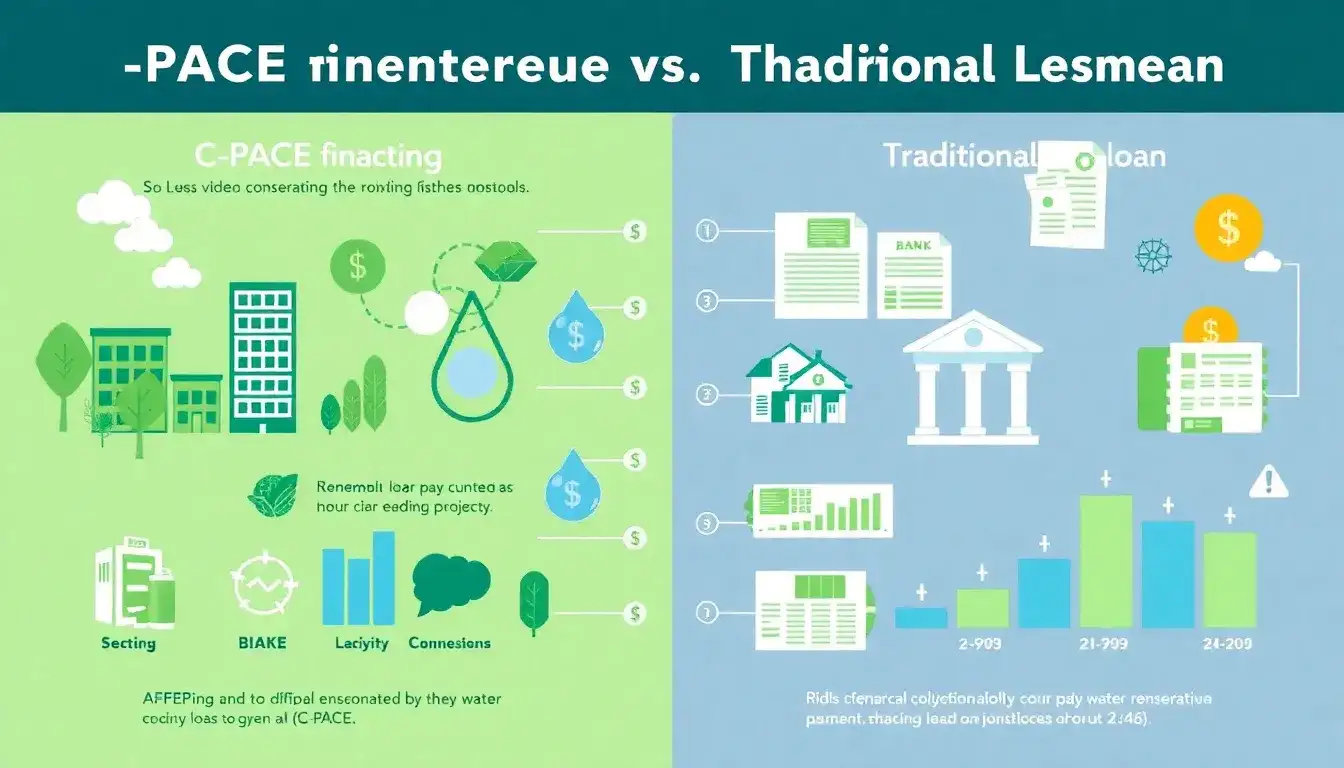
Overview of C-PACE Financing
- Purpose: C-PACE is designed to finance energy efficiency, water conservation, and renewable energy projects by enabling commercial property owners to access low-cost, long-term financing.
- Structure: It involves a special assessment on the property tax bill, which is repaid over a term of up to 20-30 years. This allows owners to offset project costs over an extended period, aligning with the useful life of the improvements.
Comparison with Traditional Loans
| Feature | C-PACE Financing | Traditional Loans |
|---|---|---|
| Financing Terms | 10-30 years | Typically 5-7 years |
| Upfront Costs | No upfront costs required | Often requires significant equity or down payment |
| Interest Rates | Fixed rates, often 5-7% | May vary widely, often higher for similar terms |
| Repayment Structure | Repaid through property tax assessments | Typically involves direct loan payments to the lender |
| Liability | Non-recourse | Often requires personal recourse or collateral |
| Transferability | Transfers to new owners if property is sold | Usually does not transfer without lender agreement |
| Cost Savings | Designed so that energy or water savings often offset repayment costs | Savings are not directly linked to repayment in traditional structures |
Benefits of C-PACE for Water Conservation Projects
- Cost Savings: C-PACE can cover 100% of project costs, allowing property owners to benefit from reduced utility bills without significant upfront costs.
- Long-term Repayment: Aligns with the lifespan of improvements, spreading the financial burden over a long period.
- Increased Property Value: Upgrades like water conservation projects can enhance property value and appeal.
Overall, C-PACE financing provides more flexibility and cost savings compared to traditional loans for water conservation projects by offering longer repayment terms, lower costs, and the ability to transfer debt if the property changes hands.
Original article by NenPower, If reposted, please credit the source: https://nenpower.com/blog/how-do-c-pace-financing-terms-compare-to-traditional-loans-for-water-conservation-projects/