

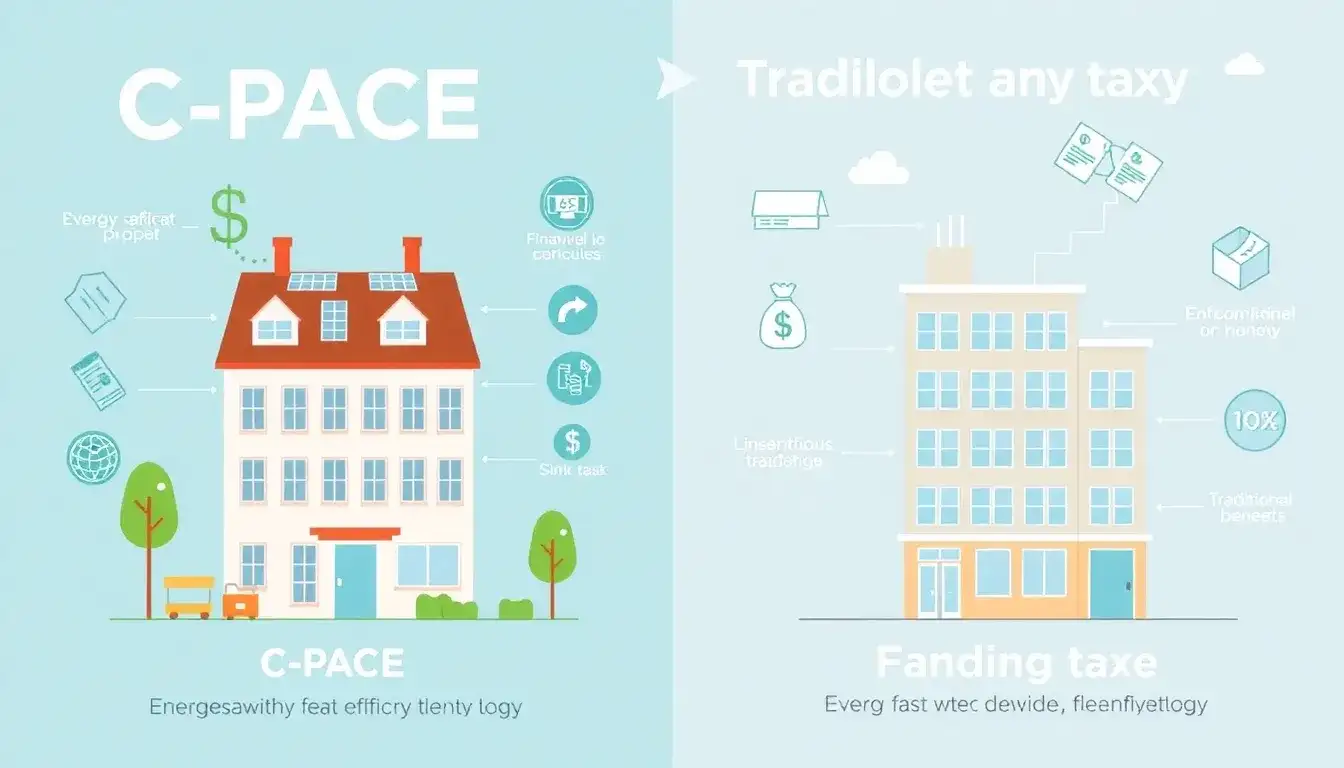
C-PACE assessments and traditional property taxes share some similarities but also have key differences. Here’s a comparison:
Similarities:
- Payment Method: Both traditional property taxes and C-PACE assessments are collected as part of the property tax bill. They are typically paid semi-annually or annually alongside regular property taxes.
- lien on Property: Both types of assessments create a lien on the property, which secures the repayment of the obligation. For C-PACE, this lien is specifically tied to the energy-efficient improvements financed by the program.
Differences:
- Purpose: Traditional property taxes fund public services such as infrastructure, schools, and law enforcement. C-PACE assessments, on the other hand, are specifically used to finance energy-efficient and renewable energy projects, enhancing the sustainability of properties.
- Voluntary Nature: C-PACE assessments are voluntary, meaning property owners opt into them to finance specific upgrades. Traditional property taxes are mandatory for all property owners.
- Priority and Acceleration: C-PACE assessments have priority over mortgages only to the extent that a payment is due. Unlike traditional debts, they do not accelerate upon default, meaning only past-due amounts are considered in default, not the entire outstanding balance. Traditional property taxes do not have priority over mortgages in the same way, as mortgage liens generally take precedence unless otherwise specified by local laws or agreements.
- Interest Rates and Terms: C-PACE financing typically offers fixed, long-term rates (often ranging between 5.75% to 7%), with terms up to 20 or 30 years, aligned with the useful life of the improvements. Traditional property taxes do not have interest rates but can fluctuate with changes in local tax rates.
- Non-Recourse Nature: C-PACE financing is non-recourse to the borrower, which means that the lender’s claim is limited to the property itself, not the borrower’s personal assets. Traditional property taxes are not a form of financing and thus do not have a non-recourse aspect.
In summary, while both traditional property taxes and C-PACE assessments are linked to property tax bills and liens, they serve different purposes, have different payment structures, and are treated differently in terms of priority and recourse.
Original article by NenPower, If reposted, please credit the source: https://nenpower.com/blog/how-do-c-pace-assessments-compare-to-traditional-property-taxes/

