

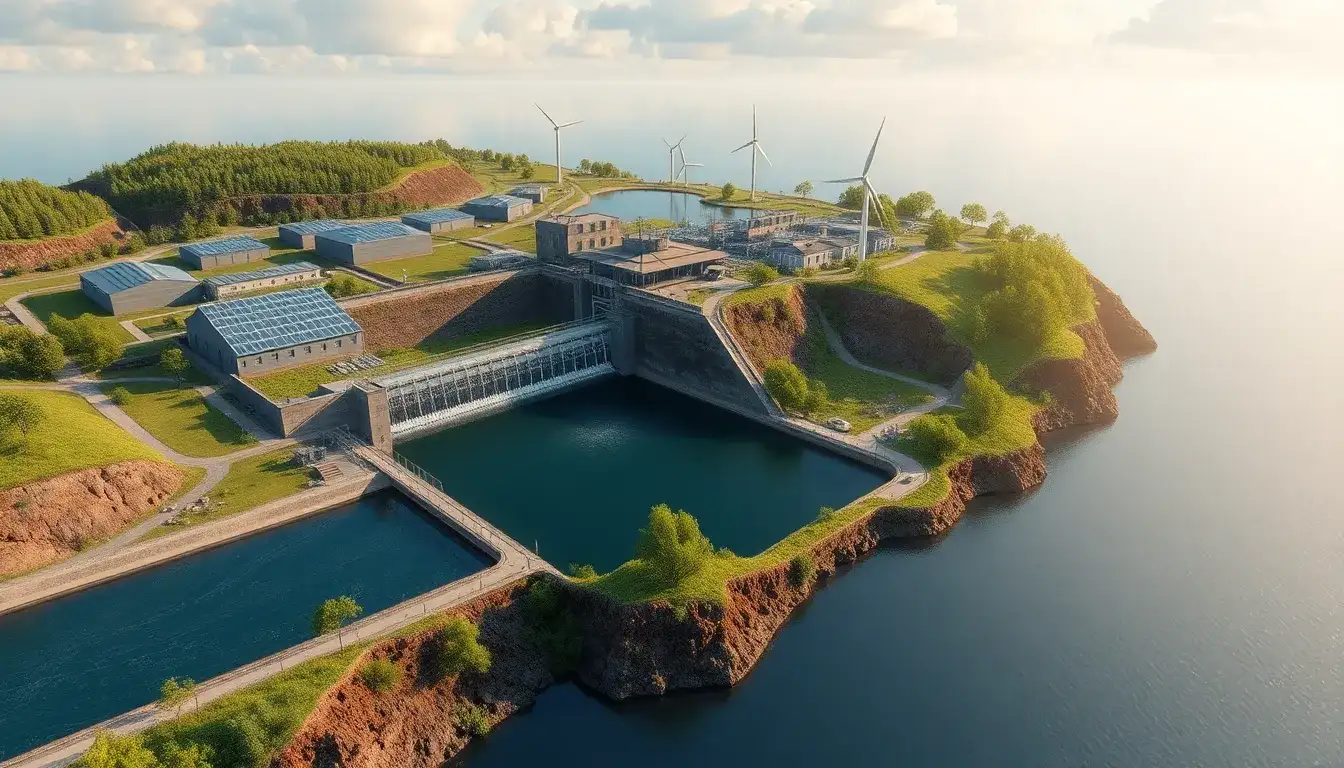
Brownfield sites, such as former mining areas, can significantly reduce the environmental impact of pumped hydro storage (PHS) facilities compared to greenfield sites in several ways:
Environmental Impact Reduction
- Existing Infrastructure: Mining sites often have pre-existing infrastructure like transmission lines, roads, and water pumping systems, which reduces the need to construct new infrastructure. This minimizes land clearing and associated environmental disturbances.
- Pre-Cleared Land: Land has already been cleared for mining operations, so additional vegetation clearing for PHS is minimized or avoided.
- Cultural and Environmental Sensitivity: Repurposing mining sites reduces the likelihood of impacting culturally or environmentally sensitive areas, as these sites have already been disturbed by mining activities.
- Lower Greenhouse Gas Emissions: Brownfield sites tend to have a lower life cycle greenhouse gas emissions profile compared to greenfield sites, primarily due to reduced construction requirements.
- Reduced Social License Issues: The social license for development is often less contentious since these areas are already disturbed and not in pristine natural conditions.
However, considerations such as water quality, unstable slopes, and the potential need for reservoir linings must still be addressed.
Original article by NenPower, If reposted, please credit the source: https://nenpower.com/blog/how-do-brownfield-sites-reduce-the-environmental-impact-of-pumped-hydro-storage-facilities/

