

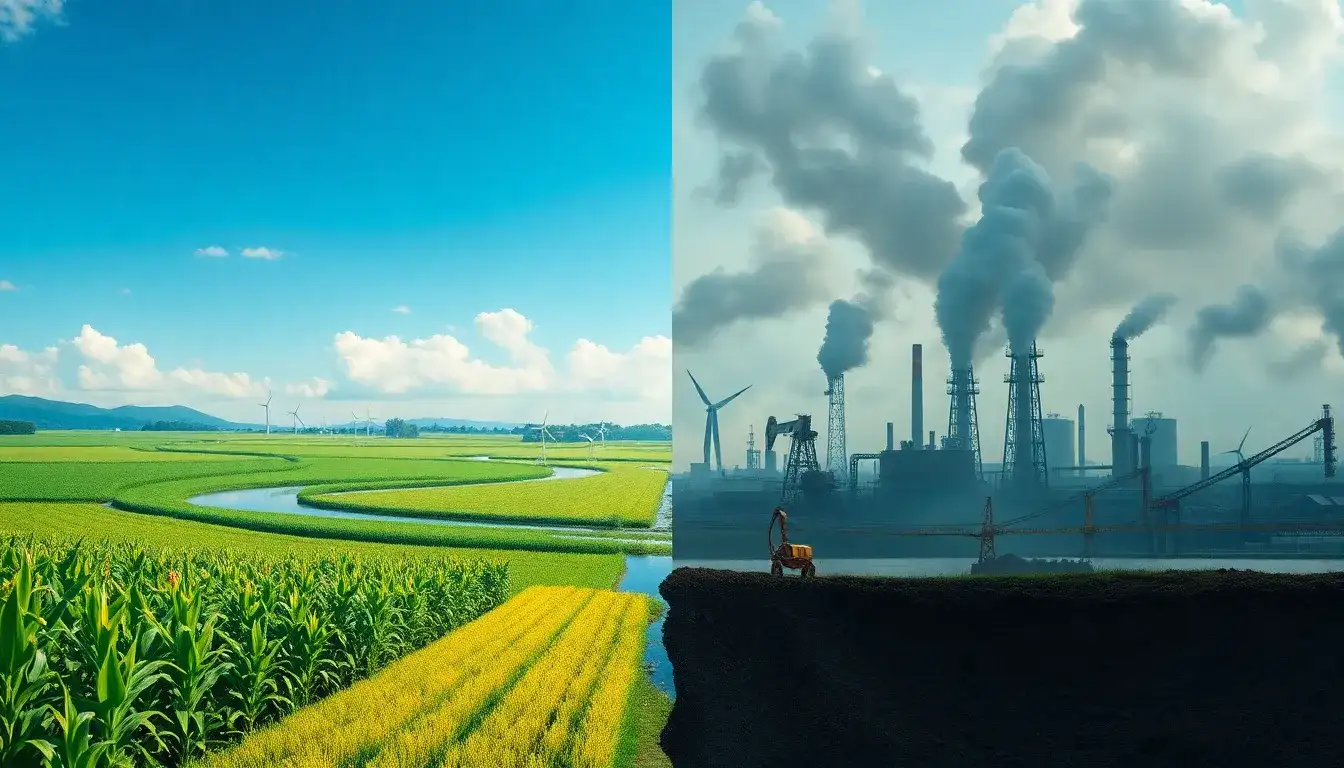
Biofuels generally have a lower environmental impact than fossil fuels, particularly in terms of greenhouse gas (GHG) emissions, but this varies depending on the type of biofuel, feedstock, production methods, and land-use changes.
Environmental Impact Comparison
Greenhouse Gas Emissions:
- Biofuels burn cleaner than fossil fuels, producing fewer GHG emissions such as carbon dioxide, sulfur dioxide, particulates, and air toxics. This cleaner burning helps reduce air pollution and climate change impacts.
- First-generation biofuels (e.g., ethanol from corn or sugarcane) can reduce GHG emissions compared to fossil fuels, but the reductions often fall short of stringent targets like those set by the EU Renewable Energy Directive unless no land-use changes occur.
- Second-generation biofuels (made from non-food biomass like agricultural residues) tend to have a greater potential to reduce GHG emissions than first-generation biofuels, again assuming no land-use change.
- Third-generation biofuels (derived from algae or advanced sources) currently emit more GHGs than fossil fuels, making them less environmentally favorable at present.
Other Environmental Effects:
- While biofuels reduce many harmful emissions, they can contribute to increased nitrogen oxides (NOx) in some cases, particularly biodiesel combustion.
- Biofuels are biodegradable and nontoxic, so accidental spills tend to have less environmental harm compared to fossil fuels.
- However, biofuel production can cause additional environmental impacts such as acidification, eutrophication (nutrient runoff leading to water pollution), higher water use, and biodiversity loss, especially if large-scale land-use changes are involved.
Resource and Energy Security:
- Using biofuels can decrease dependence on finite fossil fuel resources and reduce reliance on unstable foreign oil suppliers, providing potential national security benefits.
Summary Table
| Aspect | Biofuels | Fossil Fuels |
|---|---|---|
| Greenhouse gas emissions | Generally lower, especially 2nd gen biofuels | Higher emissions |
| Air pollutants | Fewer particulates, sulfur dioxide, toxics | Higher emissions |
| Biodegradability | Fully biodegradable | Persistent and toxic |
| Land use impact | Potential for habitat loss and water issues | Extraction impacts |
| Spill risk | Less toxic, breaks down quickly | Toxic, long-lasting spills |
| Resource depletion | Renewable sources, but feedstock-dependent | Finite, non-renewable |
| NOx emissions | Sometimes higher (biodiesel) | Variable |
| Energy security | Can improve by reducing fossil imports | Dependent on fossil fuel markets |
In conclusion, biofuels provide an environmentally preferable alternative to fossil fuels by reducing greenhouse gas emissions and many pollutants. However, their overall environmental benefit depends on careful management of feedstock sources, production processes, and avoiding negative land-use changes that can offset these gains.
Original article by NenPower, If reposted, please credit the source: https://nenpower.com/blog/how-do-biofuels-compare-to-fossil-fuels-in-terms-of-environmental-impact/

