

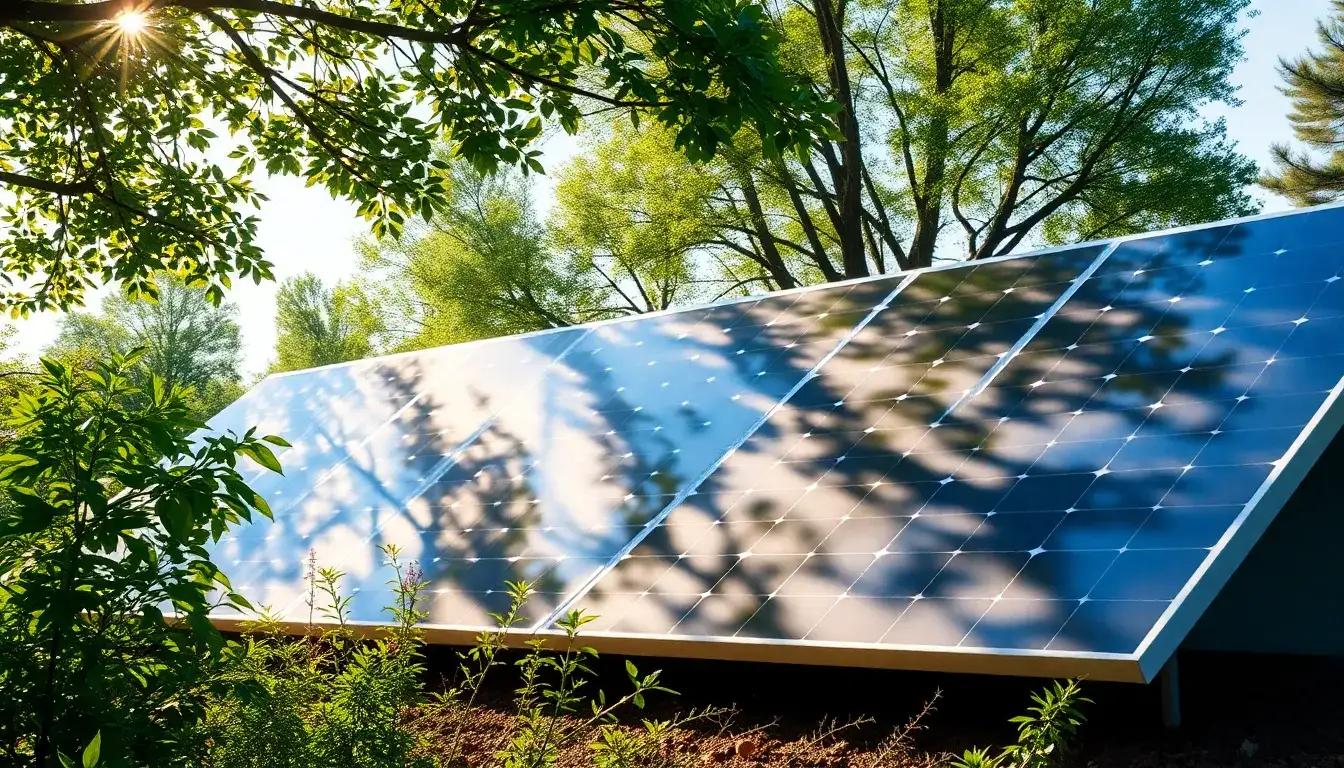
Bifacial solar panels capture sunlight from both their front and rear sides, which theoretically offers higher energy yields compared to traditional monofacial panels. However, their performance in shaded environments is particularly sensitive and can be significantly affected by shading.
How Shading Affects Bifacial Solar Panels
- Dual-Side Sensitivity: Unlike monofacial panels, bifacial panels rely on capturing light both directly on the front and as reflected or diffuse light on the rear side. If shading occurs, it not only reduces the direct sunlight on the front but also limits the amount of reflected light reaching the rear side. This dual impact can substantially reduce overall energy production.
- Shading Sources: Shading might come from trees, buildings, rooftop obstructions, or even the mounting structure itself. Both static and dynamic shading (changing with time of day or season) can detrimentally affect performance.
- Impact Magnitude: Even relatively small amounts of shading can cause disproportionate power losses because solar cells are wired in series. Shaded cells restrict current flow in the string, potentially causing hotspots and further efficiency loss. Although bypass diodes help mitigate some shading effects, the reduction in output remains significant.
Performance in Partial Shade
- Better than Monofacial? Bifacial panels can sometimes perform somewhat better than traditional panels in shaded conditions because the rear side can still capture diffuse and reflected light if available. For example, if shaded from direct sunlight but with bright, reflective surfaces nearby (high albedo), the rear side can contribute some energy generation.
- Still Reduced Efficiency: Despite this advantage, bifacial panels are not immune to shading losses and their output is still significantly reduced compared to full direct sunlight. They are more shade-tolerant but not a substitute for optimal, unshaded placement.
Mitigating Shading Effects
- Installation Optimization: Proper tilt angle and orientation can maximize sunlight capture and reflected light, enhancing rear-side performance and reducing shading impact.
- Site Selection: Avoiding locations with frequent or prolonged shading is critical. Selecting sites with high ground reflectivity can help partially offset shading losses by boosting rear-side illumination.
- Regular Maintenance: Keeping both sides of bifacial panels clean from dust, leaves, or bird droppings helps maintain performance, especially because dirt on the rear side can block reflected light.
Summary
Bifacial solar panels offer improved efficiency by capturing light on both sides, but shading negatively impacts them more significantly than monofacial panels because it limits both front and rear light absorption. While they can generate some power in shaded environments due to rear-side sensitivity to diffuse and reflected light, their efficiency is still substantially reduced compared to unshaded conditions. Optimal installation, site selection, and maintenance are essential to minimize shading effects and maximize energy yield from bifacial systems.
In essence, bifacial panels perform better than traditional panels in some partially shaded scenarios but still require careful shading management to ensure good overall performance.
Original article by NenPower, If reposted, please credit the source: https://nenpower.com/blog/how-do-bifacial-solar-panels-perform-in-shaded-environments/

