

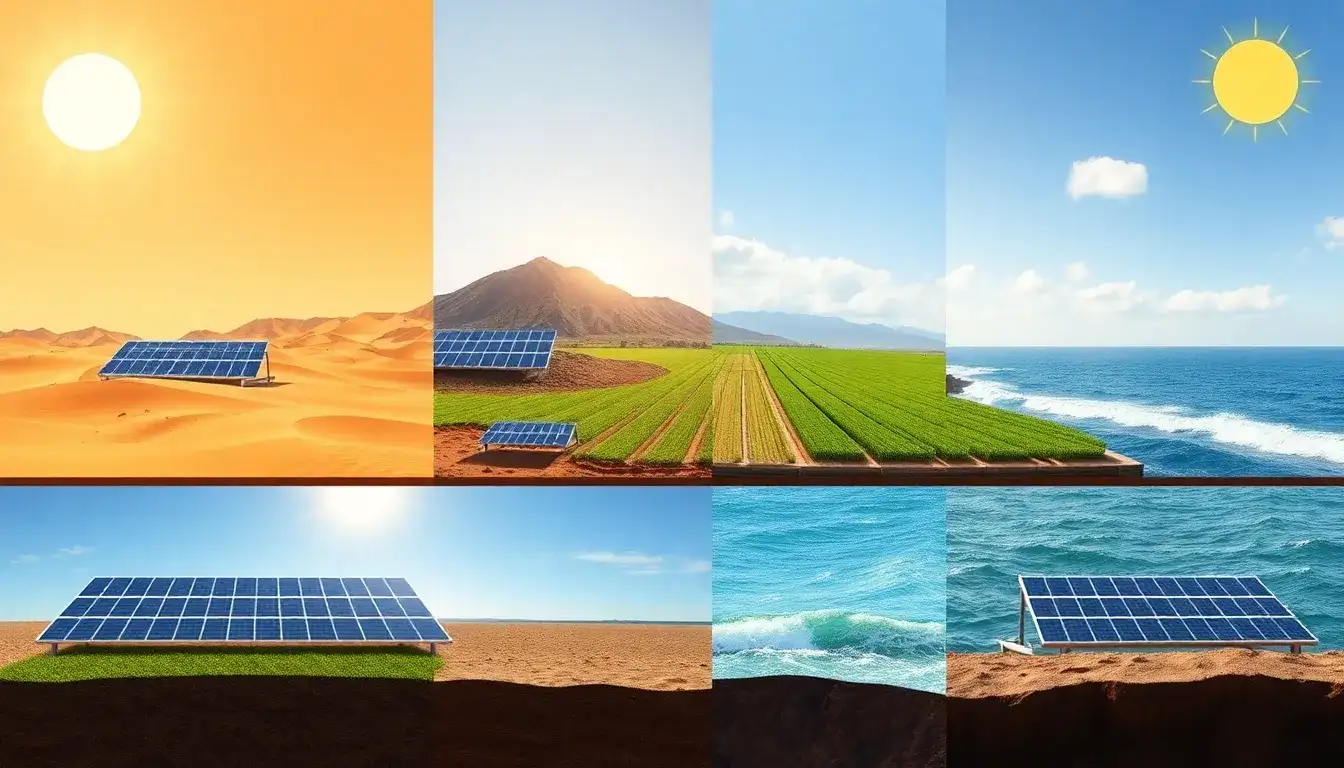
Bifacial solar panels perform variably across different terrains largely due to the impact of ground reflectivity (albedo) on their energy production. Since bifacial panels generate power from both their front side (direct sunlight) and rear side (reflected sunlight), the nature of the terrain beneath them significantly influences their efficiency.
How Terrain Affects Bifacial Panel Performance
- High-Albedo (Light-Colored) Terrains: Surfaces like sand, snow, or white gravel reflect a large portion of sunlight onto the rear side of the panels, boosting their energy yield. For example, sandy or snowy terrains can provide more reflected light, leading to higher bifacial gains because more irradiance reaches the backside of the module.
- Low-Albedo (Dark-Colored) Terrains: Dark surfaces such as asphalt, soil, or dirt absorb more sunlight and reflect less. In these cases, bifacial panels receive less additional light on their rear side, resulting in smaller efficiency gains compared to installations over bright surfaces.
Quantitative Impact on Energy Yield
- Studies show that bifacial panels can produce around 11% more energy than traditional monofacial panels in ground-mounted setups, with this advantage increasing when combined with solar trackers.
- Rear irradiance gain (the additional energy generated on the back side) can vary significantly by region and terrain, ranging from about 1% in low-albedo equatorial regions to up to 40% in high-latitude, high-albedo environments.
- Real-world research, such as in Brazil’s tropical conditions, confirms that different ground covers with varying albedo values directly affect the performance of bifacial panels, with higher albedo surfaces leading to more significant power improvements.
Other Influencing Factors
- The mounting system design is important; structures that minimize shading on the rear side (e.g., using narrow support rails and mounting at optimal height) enhance bifacial performance regardless of terrain.
- Use of solar trackers that adjust panel orientation in line with the sun’s movement further amplifies the advantages of bifacial panels by maximizing light capture from both sides.
Summary Table of Terrain Impact on Bifacial Panels
| Terrain Type | Surface Albedo | Reflection Level on Rear Side | Expected Performance Impact on Bifacial Panels |
|---|---|---|---|
| Sand, Snow, White Gravel | High (0.4 – 0.8) | High | Significant increase in energy production (up to ~40% gain) |
| Grass, Vegetation | Medium (~0.2 – 0.3) | Moderate | Moderate increase in energy production |
| Soil, Dirt, Asphalt | Low (~0.1 – 0.15) | Low | Small increase in energy production |
In conclusion, bifacial solar panels perform best on light-colored, highly reflective terrains where the rear side can capture substantial reflected sunlight, thereby maximizing their efficiency. Deployments on darker terrains yield smaller performance improvements but still generally outperform monofacial panels when properly installed with optimal mounting and tracking systems.
Original article by NenPower, If reposted, please credit the source: https://nenpower.com/blog/how-do-bifacial-solar-panels-perform-in-different-terrains/

