

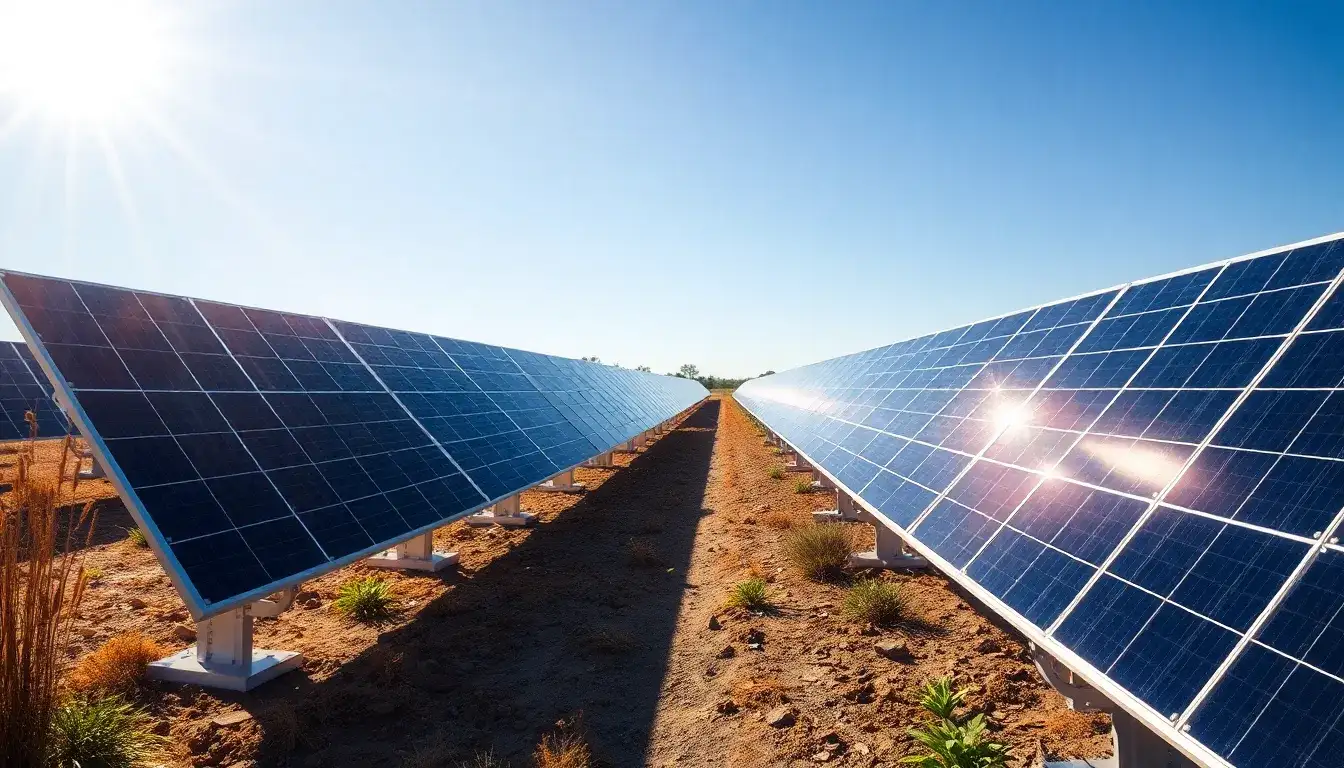
Bifacial solar panels improve efficiency in hot weather primarily by capturing sunlight on both their front and rear sides, which increases total energy yield compared to traditional monofacial panels. However, high temperatures generally reduce the efficiency of all solar panels, including bifacial ones, due to voltage losses caused by heat. The rear side’s ability to harvest reflected sunlight can partially offset this temperature-related efficiency decline, but it does not fully eliminate it.
How Bifacial Panels Boost Efficiency in Hot Weather
- Dual-Sided Light Absorption: Bifacial panels have photovoltaic cells on both sides. While the front side captures direct sunlight, the rear side captures sunlight reflected from the ground or nearby reflective surfaces (such as sand, snow, or light-colored rooftops). This increases the total irradiance absorbed by the panels and can raise power output by up to 30% under optimal conditions.
- Albedo Effect: The reflectivity of the surface beneath the panels (albedo) is critical. Surfaces with high albedo reflect more light onto the rear panel surface, boosting energy capture. In hot climates with reflective surfaces, this effect helps increase energy yield despite elevated temperatures.
- Mitigating Heat-Induced Loss: Hot weather reduces photovoltaic efficiency mainly by lowering voltage output. Although bifacial panels are also affected by high temperature, their rear side collecting additional reflected light can somewhat compensate for the heat-induced drop in efficiency, resulting in a less pronounced overall decline compared to monofacial panels.
- Installation Considerations: Proper tilt and mounting to maximize rear side exposure to reflected light can help mitigate efficiency losses in hot weather. Good ventilation and spacing also reduce panel temperature, improving performance.
Limitations in Hot Weather
- Elevated temperatures still cause efficiency reduction in bifacial panels, similar to traditional panels, by decreasing voltage and overall output. The rear side gain cannot fully overcome this thermal effect but can partially offset it.
- Efficiency gains from bifaciality are more significant in cooler climates or reflective environments such as snowy areas. In very hot climates without reflective surfaces, the benefit is somewhat smaller but still present.
Summary Table
| Factor | Effect on Efficiency in Hot Weather |
|---|---|
| Front side direct sunlight | Generates standard power; efficiency drops with heat |
| Rear side reflected light | Adds 5-30% more power by capturing reflected light |
| Surface albedo | High reflectivity improves rear side gain |
| Temperature effect | Heat reduces voltage and efficiency on both sides |
| Installation tilt/spacing | Optimal setups maximize rear-side capture and cooling |
In conclusion, bifacial solar panels enhance energy production in hot weather by harnessing reflected sunlight on their rear side, partially offsetting the typical efficiency loss caused by high temperatures. While they still experience reduced efficiency in heat, their dual-sided design offers a notable performance advantage over conventional solar panels, especially when installed above reflective surfaces and with good ventilation.
Original article by NenPower, If reposted, please credit the source: https://nenpower.com/blog/how-do-bifacial-solar-panels-improve-efficiency-in-hot-weather/

