

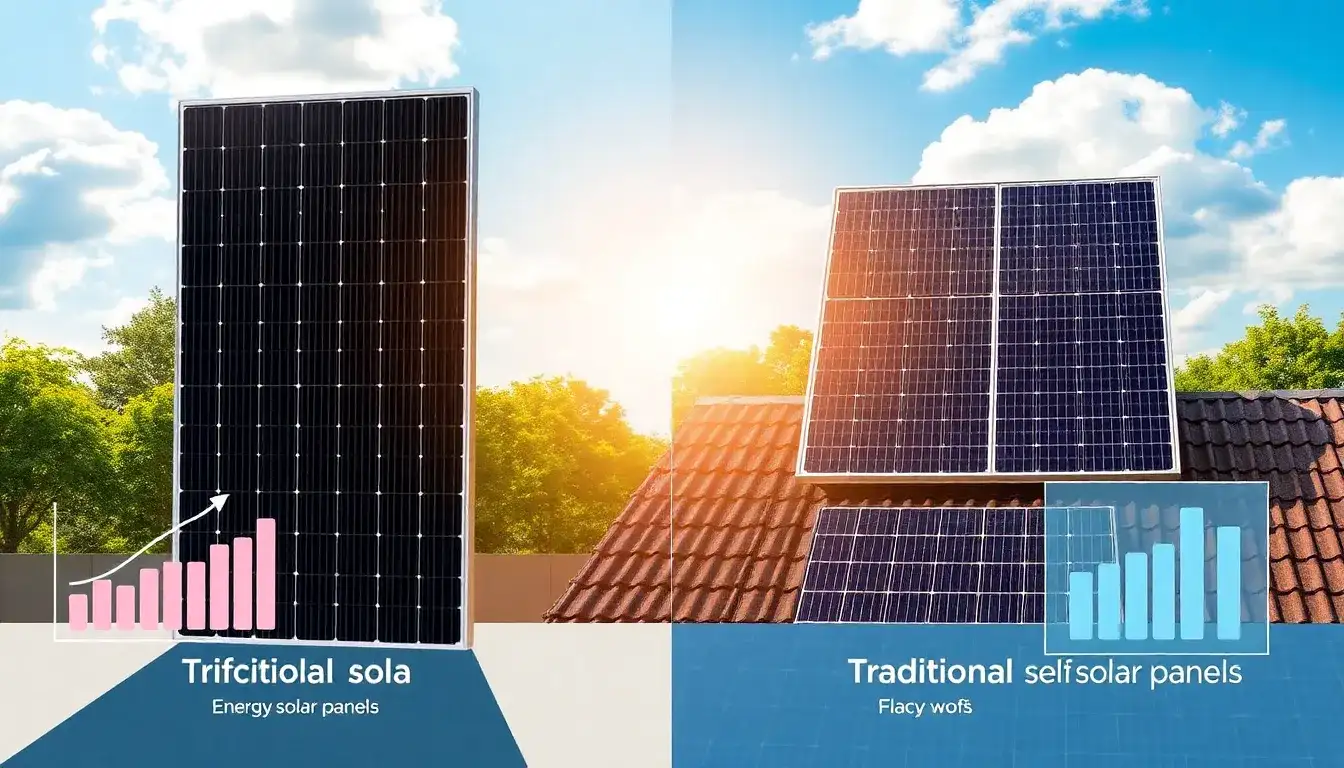
Bifacial solar panels generally outperform traditional (monofacial) solar panels in terms of energy output due to their ability to absorb sunlight on both their front and rear surfaces.
Energy Output Comparison
- Energy Gain: Bifacial panels can produce approximately 5% to 30% more energy than traditional monofacial panels, depending heavily on installation conditions such as the reflectivity (albedo) of the surface beneath them. For example, a study by LONGi found an 11% increase in energy output for ground-mounted bifacial panels compared to standard panels, with gains up to 27% when combined with solar tracking systems. Other research shows real-world increases ranging from 10% to 25% under global conditions.
- Surface Reflectivity Impact: The effectiveness of bifacial panels depends on how much sunlight is reflected onto their rear side. Light-colored or reflective surfaces (like sand or snow) enhance performance, while darker surfaces (like asphalt or dirt) reduce the advantage.
- Low-Light Performance: Bifacial panels also perform better in low-light or diffuse light conditions because they can capture reflected light, extending their productive hours beyond those of monofacial panels.
Efficiency and Construction
- Efficiency: Monofacial panels typically have efficiencies between 18-22%, while bifacial panels, leveraging both sides, can achieve higher effective yields because of additional light capture.
- Design: Bifacial panels usually have a transparent back sheet or dual glass design that allows sunlight to reach the rear solar cells. This structure is often coupled with specialized mounting systems that minimize shading on the back side to maximize energy capture.
Cost and Use Cases
- Cost Considerations: Bifacial panels tend to be more expensive initially due to their advanced construction. However, the increased energy output can offset the higher upfront cost over time, especially for large-scale or ground-mounted installations where reflected light is abundant.
- Applications: They are versatile and suitable for ground, rooftop, and other installations, including areas with high reflectivity (snow, water bodies), making them beneficial for a wide range of residential, commercial, and industrial uses.
In summary, bifacial solar panels can deliver significantly higher energy output than traditional monofacial panels—typically between 5% and 30% more—thanks to their ability to capture sunlight on both sides and better utilize reflected and diffuse light. This advantage is maximized in installations with highly reflective surfaces and can be further enhanced with solar tracking systems.
Original article by NenPower, If reposted, please credit the source: https://nenpower.com/blog/how-do-bifacial-solar-panels-compare-to-traditional-solar-panels-in-terms-of-energy-output/

