

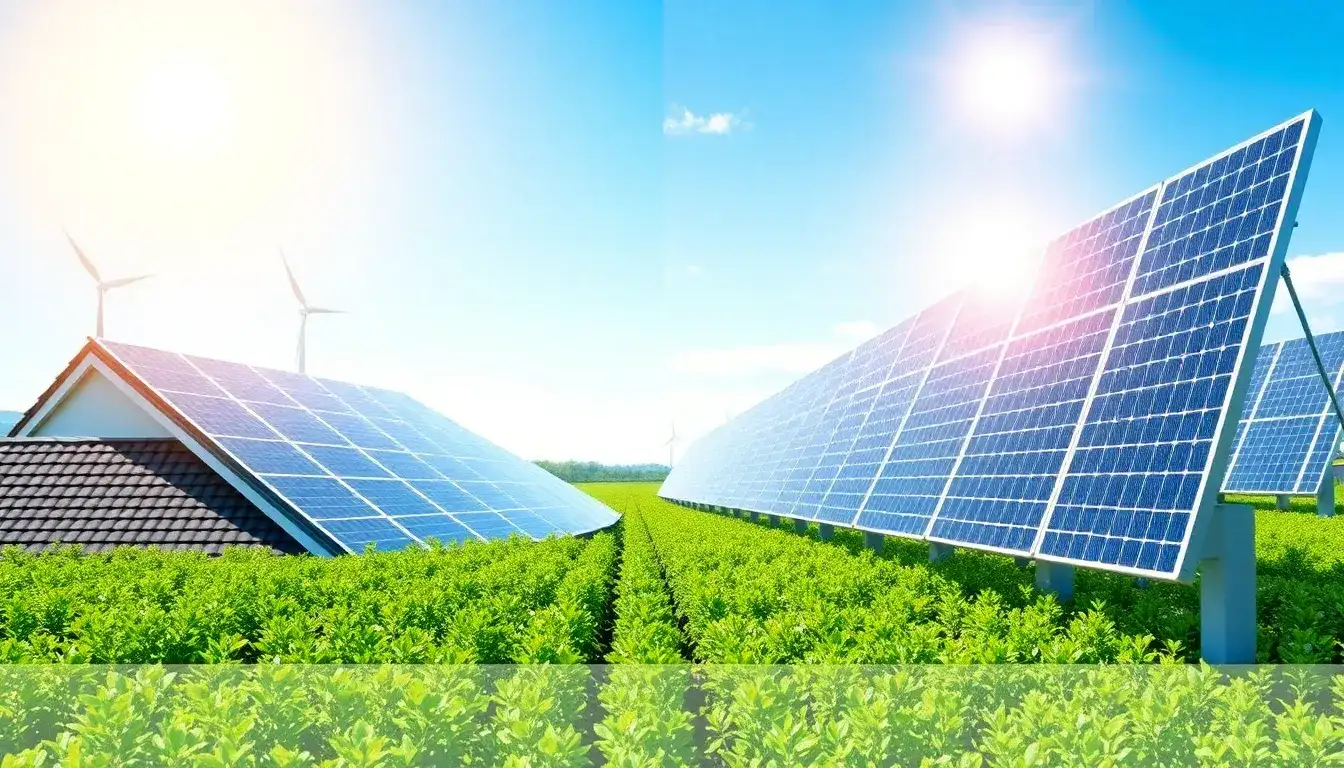
Bifacial solar panels differ from traditional monofacial panels primarily in their ability to capture sunlight from both their front and rear surfaces, which leads to higher energy production and efficiency. This dual-side absorption can boost electricity generation by approximately 5-30%, depending on conditions such as installation environment and surface reflectivity (albedo).
Long-Term Cost Savings Comparison
Upfront Costs:
- Bifacial panels generally come with a 10%-20% higher initial price premium compared to monofacial panels. For example, a typical bifacial system can cost significantly more than a traditional monofacial system for a residential home.
- Monofacial solar panels remain less expensive upfront and are the most common choice for cost-sensitive residential projects.
Energy Production and Efficiency:
- Bifacial panels achieve higher efficiency ratings, sometimes up to around 30%, versus 15-22% for monofacial panels. This means bifacial panels can generate more electricity per unit area without requiring additional space, which is a crucial factor in installations with limited roof or land space.
- The enhanced energy yield of bifacial panels—often 6%-10% more compared to monofacial PERC technology—directly translates to greater electricity production over the system’s lifetime.
Durability and Maintenance:
- Bifacial panels typically feature robust designs with tempered glass on both sides, improving durability and resistance to environmental stressors such as UV radiation, high temperatures, and wind. This construction often leads to longer lifespans and reduced maintenance needs compared to traditional panels, further enhancing lifetime savings.
Levelized Cost of Energy (LCOE):
- Although bifacial panels have a higher upfront cost per watt, their increased energy output lowers their levelized cost of energy (LCOE), which measures the total cost to produce a unit of electricity over the panel’s lifetime. In many cases, this leads to greater cost-effectiveness in the long term, especially in optimal installation conditions that maximize reflected light capture.
Summary
| Aspect | Bifacial Solar Panels | Traditional Monofacial Panels |
|---|---|---|
| Upfront Cost | 10%-20% higher initial cost | Lower upfront cost |
| Energy Production Boost | 5%-30% more electricity depending on conditions | Standard single-side absorption |
| Efficiency Rating | Up to ~30% | Typically 15%-22% |
| Durability & Longevity | More durable with dual glass and frameless designs | Standard durability |
| Maintenance | Generally lower due to sturdy design | Standard maintenance needs |
| Long-Term Cost Savings | Greater due to higher output and durability | Lower cost but potentially less cost-effective long term |
In conclusion, bifacial solar panels offer superior long-term cost savings primarily through increased energy production, higher efficiency, and enhanced durability despite higher initial costs. They tend to be especially advantageous in environments with good ground reflectivity or large-scale installations, where the additional upfront investment is offset by greater electricity generation and lower lifetime maintenance.
Original article by NenPower, If reposted, please credit the source: https://nenpower.com/blog/how-do-bifacial-solar-panels-compare-to-traditional-panels-in-terms-of-long-term-cost-savings/

