

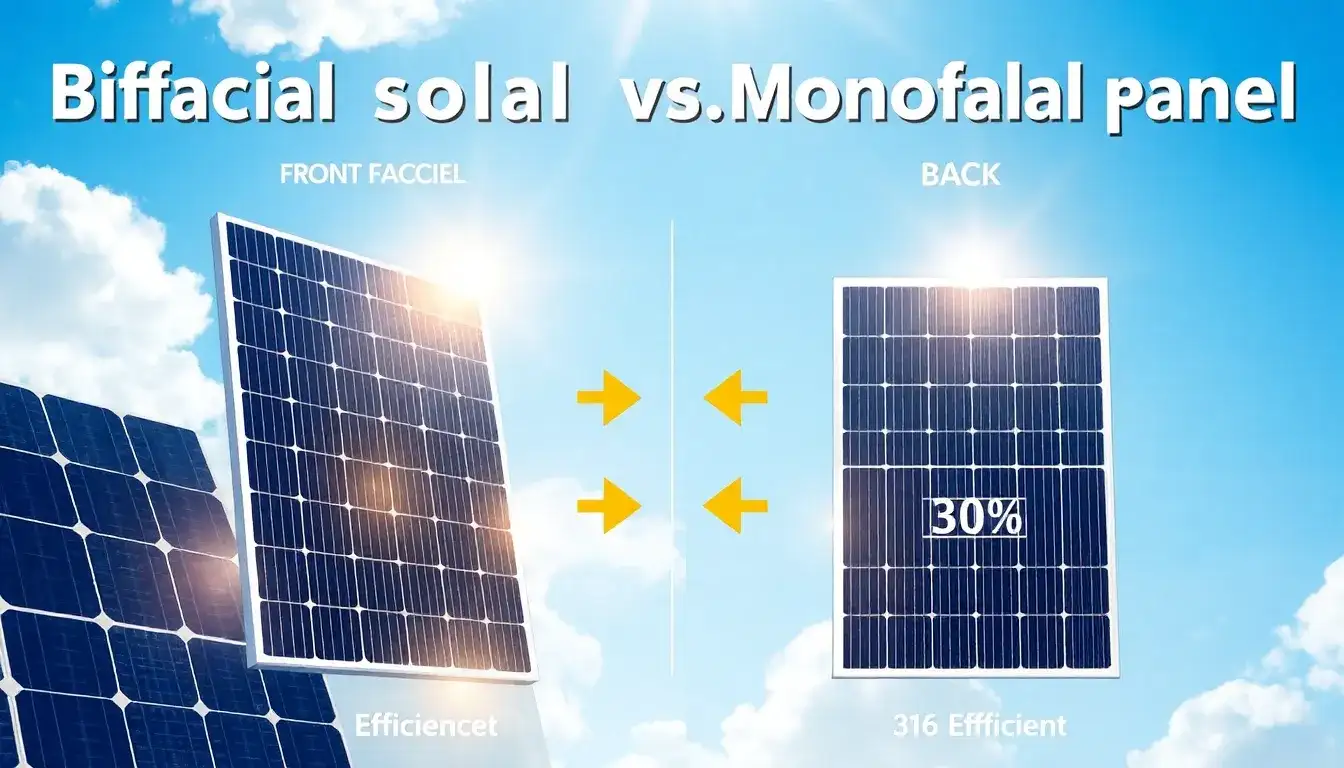
Efficiency Comparison
- Bifacial Solar Panels: These panels can generate electricity from both their front and rear sides, capturing direct and reflected sunlight. This ability leads to an increased efficiency of 5% to 30% compared to monofacial panels, depending on the surrounding environment and installation conditions. In optimal conditions, bifacial panels can achieve efficiencies up to 30%.
- Monofacial Solar Panels: Monofacial panels only absorb sunlight from their front side, making them less efficient than bifacial ones. They typically have an efficiency range of 15% to 20%, which is still effective but may require more panels to achieve the same energy output as bifacial panels.
Key Factors Affecting Efficiency
- Installation Environment: Bifacial panels perform best in environments with high albedo (reflectivity), such as sandy or snowy areas, where they can capture more reflected light.
- Cost and Installations: While bifacial panels offer higher efficiency, they are generally more expensive than monofacial panels. Monofacial panels are simpler and cost-effective, making them popular for standard residential installations.
Overall, bifacial solar panels offer superior efficiency in the right conditions, while monofacial panels remain a cost-effective and reliable choice for many installations.
Original article by NenPower, If reposted, please credit the source: https://nenpower.com/blog/how-do-bifacial-solar-panels-compare-to-monofacial-panels-in-terms-of-efficiency/

