

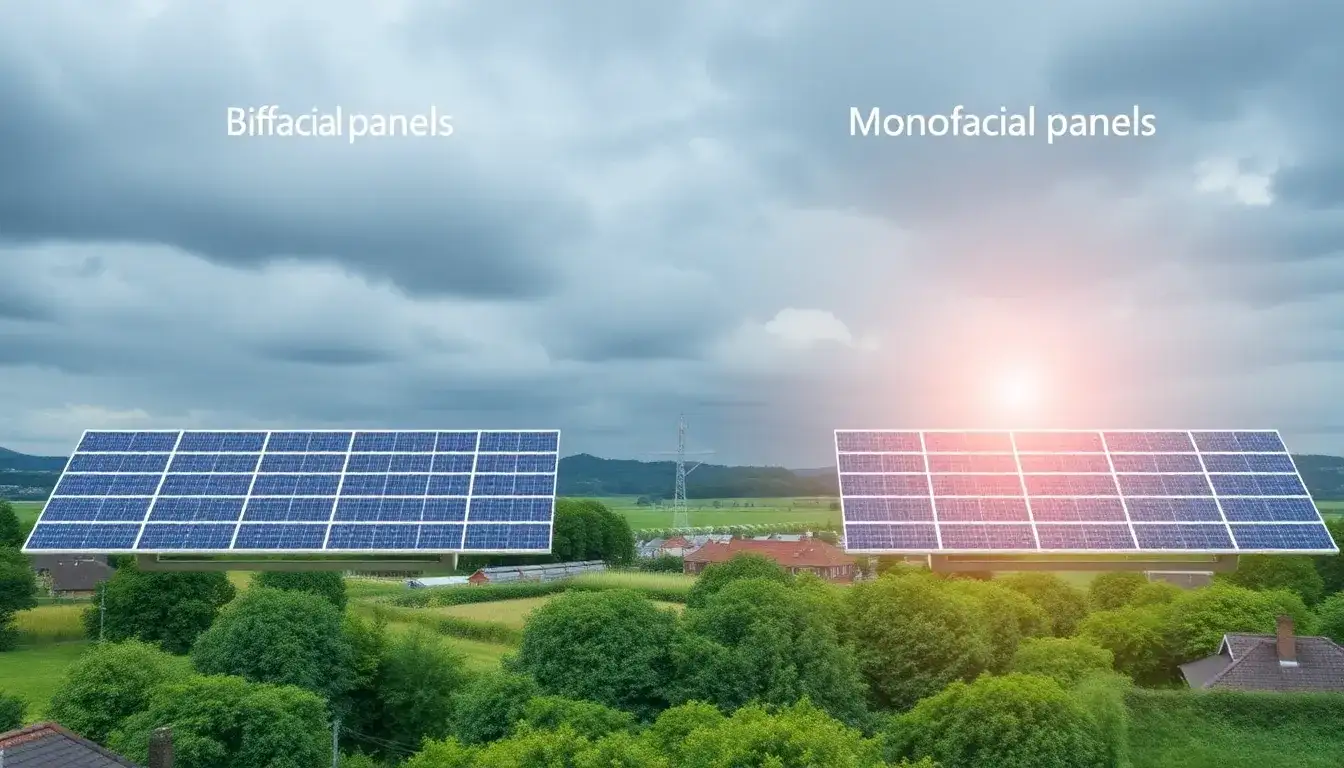
Bifacial solar panels outperform monofacial panels in cloudy conditions due to their ability to capture diffuse light from both the front and rear sides. Unlike monofacial panels, which only absorb sunlight on one side and thus generate less power when direct sunlight is scarce, bifacial panels can harness additional ambient and reflected light, improving energy yield under overcast skies.
Key Comparisons in Cloudy Conditions
- Light Capture:
- Monofacial panels absorb sunlight only on the front side, making them less efficient when direct sunlight is limited by clouds.
- Bifacial panels have photovoltaic cells on both sides, allowing them to capture diffuse light and reflected light from the ground or surroundings, which is more prevalent in cloudy weather.
- Energy Production:
- Bifacial panels can produce significantly more electricity than monofacial panels in low-light and cloudy conditions, with typical increases ranging from 5% to as much as 25-30%, depending on installation and surface reflectivity.
- The enhanced generation on cloudy days is due to the panels’ ability to utilize diffuse sunlight and higher albedo effects from the environment, such as light reflected off clouds or reflective ground surfaces like snow or grass.
- Practical Applications:
- For locations with frequent cloud cover or fewer peak sunlight hours, bifacial solar panels provide a better return on investment by maximizing electricity generation throughout the day.
- They are especially favored in portable and off-grid setups where consistent energy generation is critical despite variable weather conditions.
In summary, bifacial solar panels have a distinct advantage over monofacial panels in cloudy weather by effectively capturing light from both sides and benefiting from diffuse, ambient, and reflected radiation, resulting in improved power output when sunlight is not direct or optimal.
Original article by NenPower, If reposted, please credit the source: https://nenpower.com/blog/how-do-bifacial-solar-panels-compare-to-monofacial-panels-in-cloudy-conditions/

