

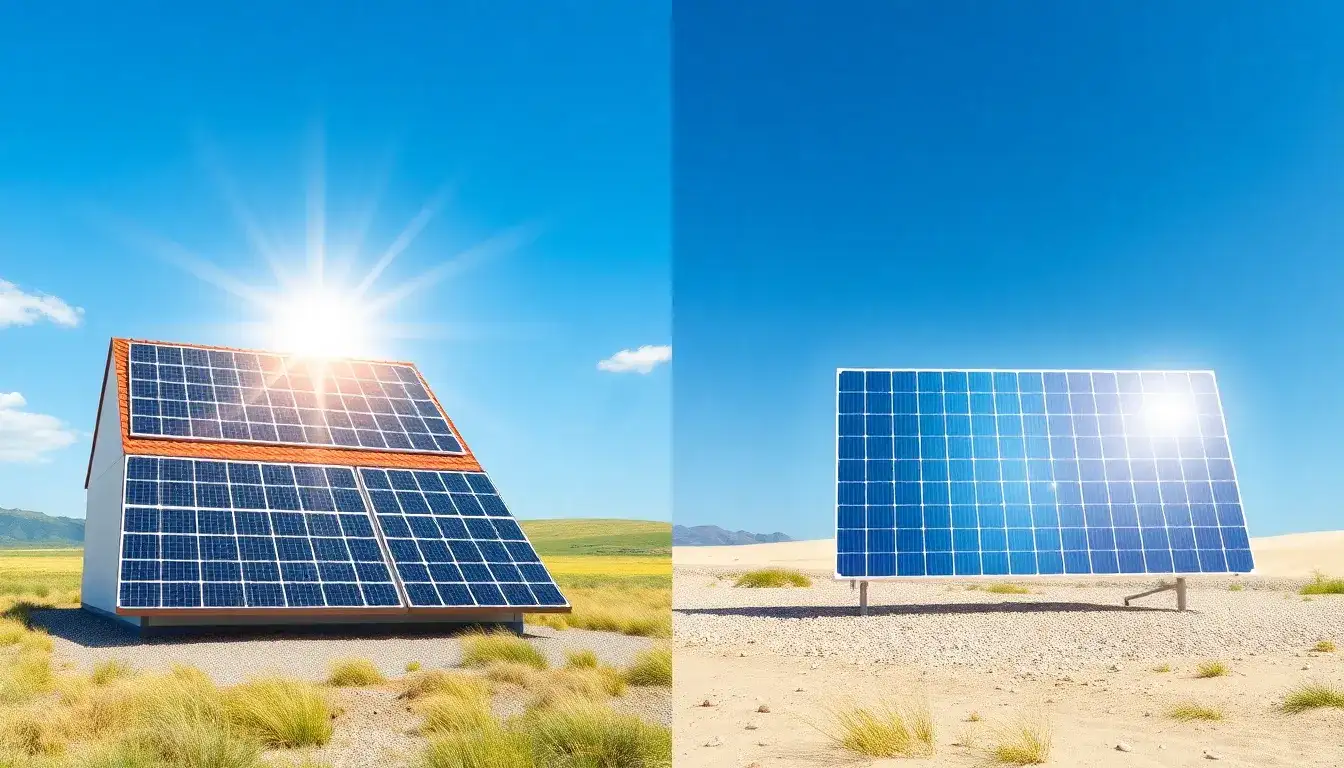
Bifacial solar panels generally offer higher energy output compared to traditional monofacial solar panels. Here are the key points of comparison:
Energy Output Comparison
- Efficiency Advantage: Bifacial panels can generate 5-30% more electricity than monofacial panels, depending on the reflectivity of the surface beneath them. In specific conditions, such as when paired with solar trackers, this efficiency advantage can increase significantly, up to 27%.
- Environmental Factors: The effectiveness of bifacial panels is influenced by the surface beneath them. Light-colored surfaces reflect more light, enhancing the panel’s energy output, while darker surfaces reduce this effect.
System Design Differences
- Panel Design: Bifacial panels often have a slim profile with minimal framing and use a dual-glass design or a clear back sheet to maximize energy capture from both sides.
- Mounting Systems: The mounting systems for bifacial panels are designed to minimize shading on the rear, using features like narrower support rails and smaller junction boxes.
Cost and Durability
- Cost: While bifacial panels are more expensive initially, their increased efficiency can offset the cost difference over time, particularly in large-scale installations.
- Durability: Bifacial panels typically feature a double-glass construction, which enhances their durability and often results in longer warranties.
Overall, bifacial solar panels are a more efficient option for capturing solar energy, especially in settings with high albedo values or when used with advanced tracking systems. However, their higher cost may limit their adoption in smaller, budget-sensitive projects.
Original article by NenPower, If reposted, please credit the source: https://nenpower.com/blog/how-do-bifacial-solar-panels-compare-in-energy-output-to-traditional-ones/

