

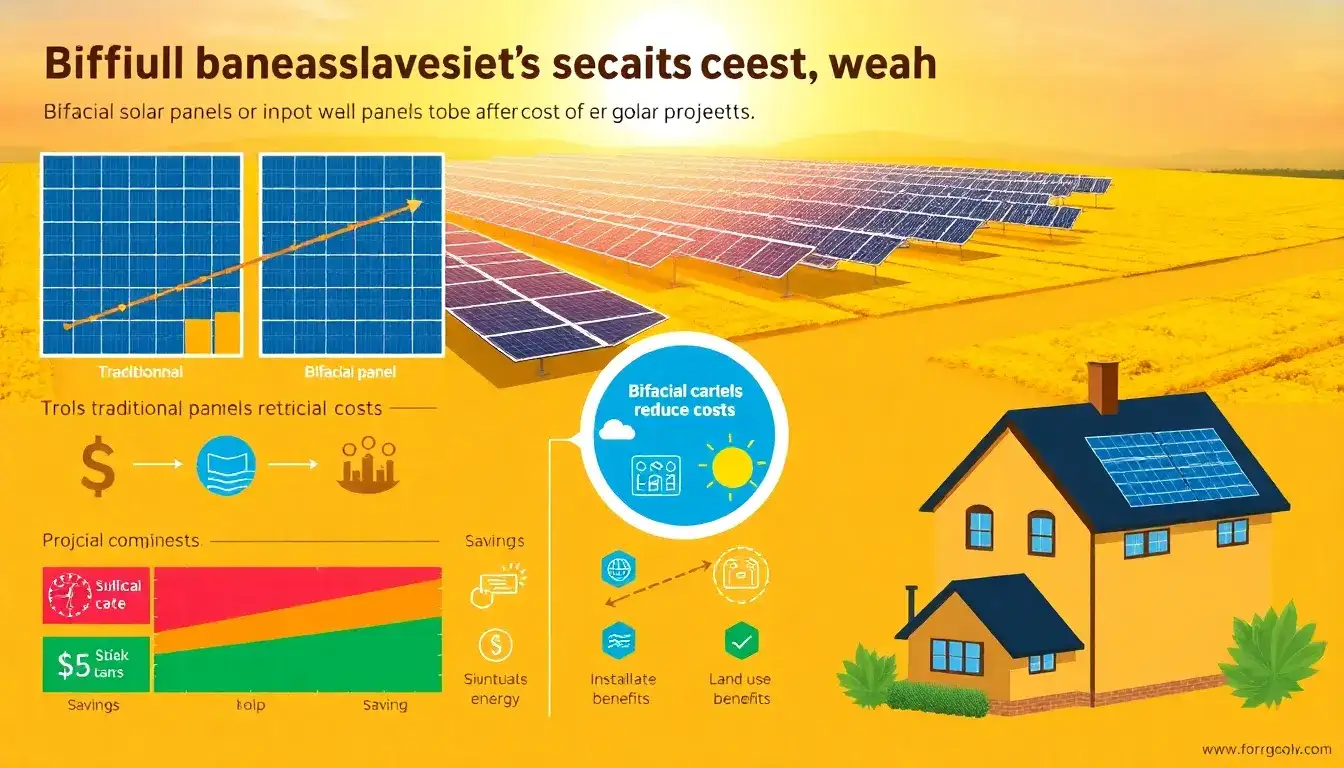
Bifacial solar panels impact the overall cost of solar energy projects by increasing the initial investment but potentially lowering the levelized cost of energy (LCOE) over time due to higher energy production and durability.
Higher Initial Costs
- Bifacial solar panels generally cost more upfront than traditional monofacial panels. The price premium can range from about 10% higher, translating to roughly $0.50 to $0.70 per watt, or $500 to $700 for a 1-kilowatt system, compared to standard panels.
- For large utility-scale projects, the cost difference may be smaller but still adds about 1 to 5 cents more per watt. Additional related costs can come from required installation adjustments such as ground mounts or solar tracking systems, which can add 10 to 20 cents per watt to the overall cost.
Increased Energy Yield and Efficiency
- Bifacial solar panels capture sunlight on both their front and back sides, allowing them to produce between 5% and up to 30% more energy than monofacial panels under optimal conditions.
- This increased energy yield improves the economics of a project, offsetting the higher upfront costs by producing more electricity over the panel’s lifespan.
- They perform better in low-light or diffuse light conditions and can extend operational hours, which further enhances energy output.
Impact on Long-Term Cost and Value
- Despite the higher initial price, bifacial panels’ greater energy production can lead to a lower LCOE, meaning the cost per unit of electricity over the project’s lifetime is reduced.
- The durable construction—usually involving double glass—improves lifespan and reduces degradation, resulting in longer warranties and fewer maintenance costs, contributing to long-term savings.
- Bifacial panels are especially cost-effective in large-scale commercial or utility solar projects where space limitations and reflected light surfaces can be optimized.
Installation and Balance of System (BOS) Costs
- Installation of bifacial panels is more complex, often requiring specialized mounting systems to maximize rear-side irradiance (reflection), which can increase balance of system (BOS) and labor costs.
- Some projects incorporate tracking systems or elevate panels to maximize performance, which adds to upfront costs but may enhance total energy yield significantly.
Market and Tariff Considerations
- Bifacial panels have been exempted from certain U.S. import tariffs that apply to traditional panels, which can make them more competitively priced and accessible for large projects.
- Costs for bifacial panels have dropped substantially over recent years and are predicted to decline further, making them increasingly attractive economically.
Summary Table: Cost Impact of Bifacial Solar Panels
| Aspect | Impact on Cost | Notes |
|---|---|---|
| Initial Panel Cost | Higher (approx. 10%+ premium) | $0.50 to $0.70/watt; more expensive than monofacial panels |
| Installation & BOS | Higher | More complex mounting; possible need for trackers or elevated racking |
| Energy Production | Significantly higher (5-30%) | Increased output offsets higher upfront costs over time |
| Durability & Maintenance | Lower | Double glass construction, longer warranties, less degradation |
| Levelized Cost of Energy (LCOE) | Potentially lower | Due to increased yield and lifespan |
| Tariff Impact | Favorable | Bifacial panels exempt from some tariffs, enhancing cost competitiveness |
Conclusion: While bifacial solar panels increase the upfront cost of solar projects due to higher equipment and installation expenses, their ability to generate significantly more energy and their enhanced durability generally improve the long-term economic return. This makes them particularly attractive for commercial and utility-scale projects, where the higher initial investment is offset by reduced LCOE and better project economics over the panels’ lifespan.
Original article by NenPower, If reposted, please credit the source: https://nenpower.com/blog/how-do-bifacial-solar-panels-affect-the-overall-cost-of-solar-energy-projects/

