

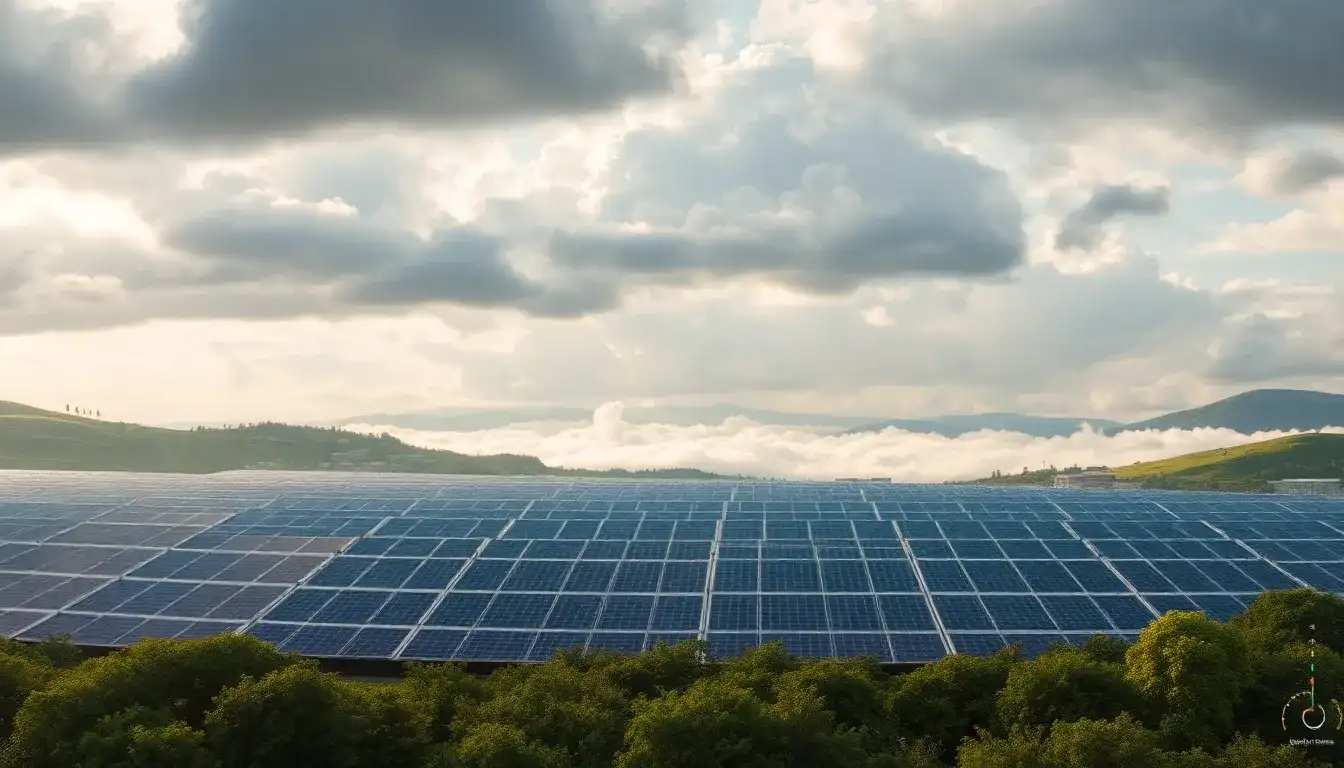
Bifacial solar panels perform well in regions with high cloud cover by capturing light from both the front and back sides of the panel. Here are some key points about their performance:
- Efficiency in Cloudy Conditions: Bifacial panels can increase energy production by 10-20% compared to traditional monofacial panels by capturing scattered and reflected light from the ground during cloudy conditions.
- Optimized Use: For maximum efficiency, bifacial panels are best positioned on reflective surfaces such as snow, sand, or grass, which can further enhance their ability to capture additional light.
- General Performance Improvement: In optimal conditions, bifacial panels can produce up to 25% more electricity than conventional PV modules, making them ideal for locations with frequent cloud cover.
Overall, while bifacial panels do not significantly mitigate the reduced power output inherent in cloudy conditions (since solar panels generally only generate 10-25% of their normal power output in such conditions), they are more efficient than traditional panels in these scenarios due to their ability to capture reflected light.
Original article by NenPower, If reposted, please credit the source: https://nenpower.com/blog/how-do-bifacial-panels-perform-in-regions-with-high-cloud-cover/

