

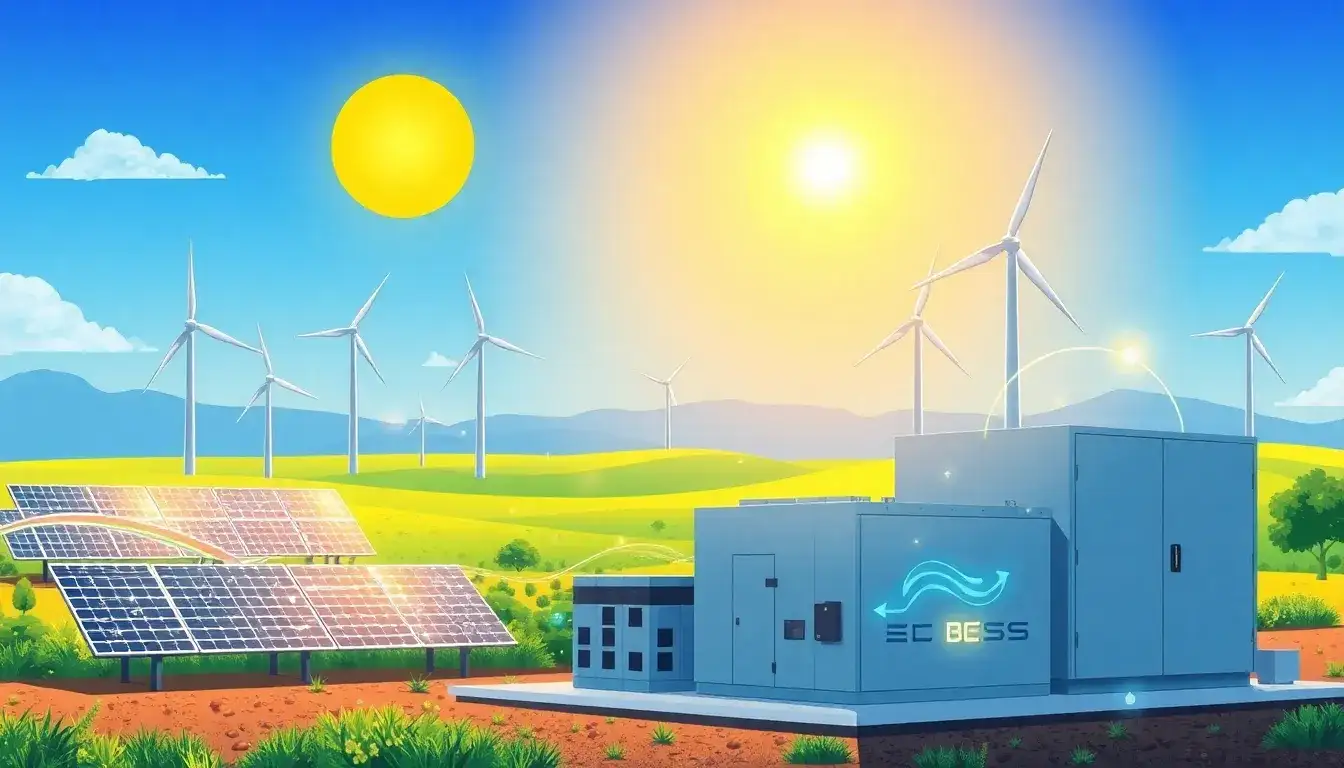
Battery Energy Storage Systems (BESS) play a crucial role in supporting the integration of renewable energy sources such as wind and solar power into the electricity grid by addressing the variability and intermittency of these energy sources. Here is how BESS support renewable energy integration:
Key Roles of BESS in Renewable Energy Integration
1. Managing Intermittency and Variability
Renewable energy sources like wind and solar are inherently variable—they generate electricity only when the wind blows or the sun shines. BESS enable excess energy produced during periods of high generation to be stored and then released during times when renewable output is low or demand is high, ensuring a steady and reliable electricity supply. For example, battery systems can store solar energy generated during the day and supply it in the evening when solar generation ceases.
2. Providing Grid Stability and Ancillary Services
BESS respond rapidly to fluctuations in power supply and demand, providing essential grid services such as frequency regulation, load following, and fast response to grid disturbances. This helps maintain the grid’s stability and reliability despite the variable nature of renewable generation.
3. Reducing Reliance on Fossil-Fuel Peaker Plants
Traditionally, fossil-fuel-fired plants have been used to meet peak electricity demand and balance the grid. BESS can partially replace these peaker plants by supplying stored renewable power during peak periods, reducing greenhouse gas emissions and operational costs.
4. Enabling More Renewable Capacity and Cost Savings
By facilitating better integration of renewables, BESS allow for increased deployment of solar and wind projects. This can increase renewable energy production value and potentially reduce costs across the energy system. For example, in the UK, battery storage technologies are estimated to save the energy system billions of pounds by 2050 while supporting net-zero goals.
5. Supporting Energy Arbitrage and Demand Management
BESS can charge when electricity prices are low (often when renewable generation is high) and discharge when prices are high (peak demand times), helping flatten demand peaks and optimize grid operations. This reduces the need for expensive grid upgrades and lowers energy costs for consumers and utilities.
6. Scalability and Flexibility Across Sectors
Battery storage systems are highly scalable, ranging from small residential units paired with rooftop solar to large front-of-the-meter utility-scale installations. This flexibility allows BESS to serve diverse applications including commercial buildings, industrial sites, mining operations, and remote communities, thus promoting wider renewable adoption.
Examples and Innovations
- The Beach Battery project in the Netherlands demonstrates how BESS integrated with solar panels can provide reliable power for community infrastructure by storing surplus solar energy for later use.
- Emerging technologies such as flow batteries, compressed air storage, and gravity-based systems are being developed to complement lithium-ion batteries and provide longer-duration storage solutions.
- Ongoing technology advances and supportive policies are expected to drive rapid growth in BESS deployment worldwide, further enhancing renewable energy integration.
In summary, BESS support renewable energy integration by storing excess renewable energy, stabilizing the grid, displacing fossil fuel use, reducing costs, and providing scalable solutions across sectors. This makes them indispensable for transitioning to a more sustainable, reliable, and clean energy system.
Original article by NenPower, If reposted, please credit the source: https://nenpower.com/blog/how-do-bess-systems-support-renewable-energy-integration/

