

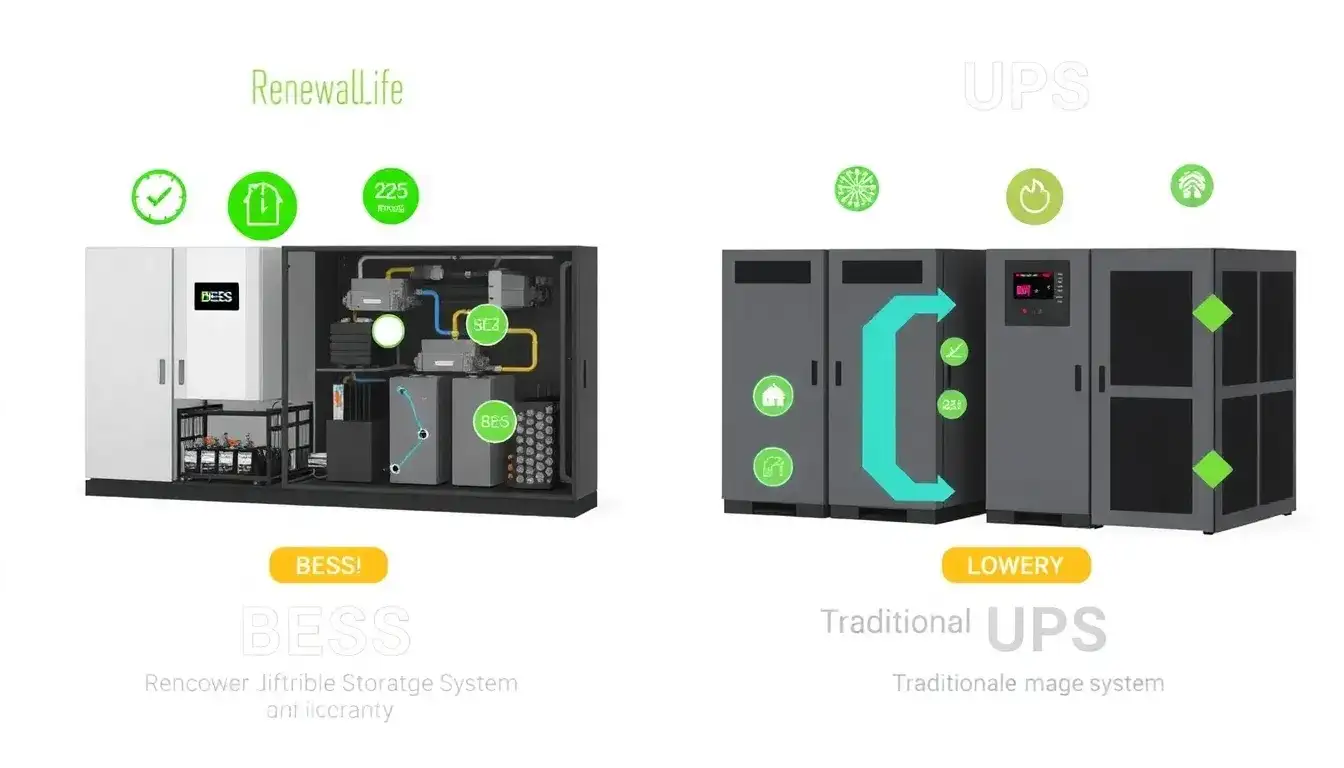
Efficiency Comparison: BESS vs. Traditional UPS Systems
Overview
Battery Energy Storage Systems (BESS) and Uninterruptible Power Supply (UPS) systems are both used for backup power, but they differ in efficiency, applications, and technology. Here’s a summary comparing their efficiency:
Efficiency Aspects
- Energy Storage Capacity and Efficiency:
- BESS: Offers higher energy storage capacity and better round-trip efficiency, meaning more of the stored energy is usable when needed. This allows for efficient use in long-term energy management and renewable energy integration.
- UPS: Designed for short-term power backup with limited capacity, UPS systems are efficient for immediate power supply during outages but might not be as efficient over longer periods due to constant power conversion processes.
- Power Conversion Efficiency:
- BESS: Typically uses advanced power conversion systems that optimize energy flow and minimize energy loss, making them more efficient over long durations.
- UPS: Traditional UPS systems, especially online models, convert AC to DC and back to AC continuously, which can lead to energy inefficiency and heat generation.
- Operating Costs and Sustainability:
- BESS: Often used with renewable energy sources, reducing reliance on fossil fuels and lowering operational costs due to lower maintenance needs.
- UPS: While reliable for critical applications, UPS systems may not offer the same level of sustainability or cost savings as BESS when considering long-term energy management.
Key Differences
| Feature | BESS | UPS |
|---|---|---|
| Energy Storage Capacity | High | Limited |
| Efficiency | Higher round-trip efficiency | Lower due to continuous conversion |
| Power Conversion Efficiency | Optimized with advanced systems | Less efficient due to dual conversion |
| Operating Costs | Lower with renewable integration | Higher maintenance compared to BESS |
| Sustainability | Greener with renewable energy | Less sustainable than BESS |
Conclusion
BESS systems generally offer higher efficiency in terms of energy storage capacity and utilization, especially when integrated with renewable energy sources. They provide a more sustainable and cost-effective solution for long-term energy management. In contrast, UPS systems excel in providing immediate power during outages with minimal latency, making them ideal for short-term backup needs in critical applications.
Original article by NenPower, If reposted, please credit the source: https://nenpower.com/blog/how-do-bess-systems-compare-to-traditional-ups-systems-in-terms-of-efficiency/

