

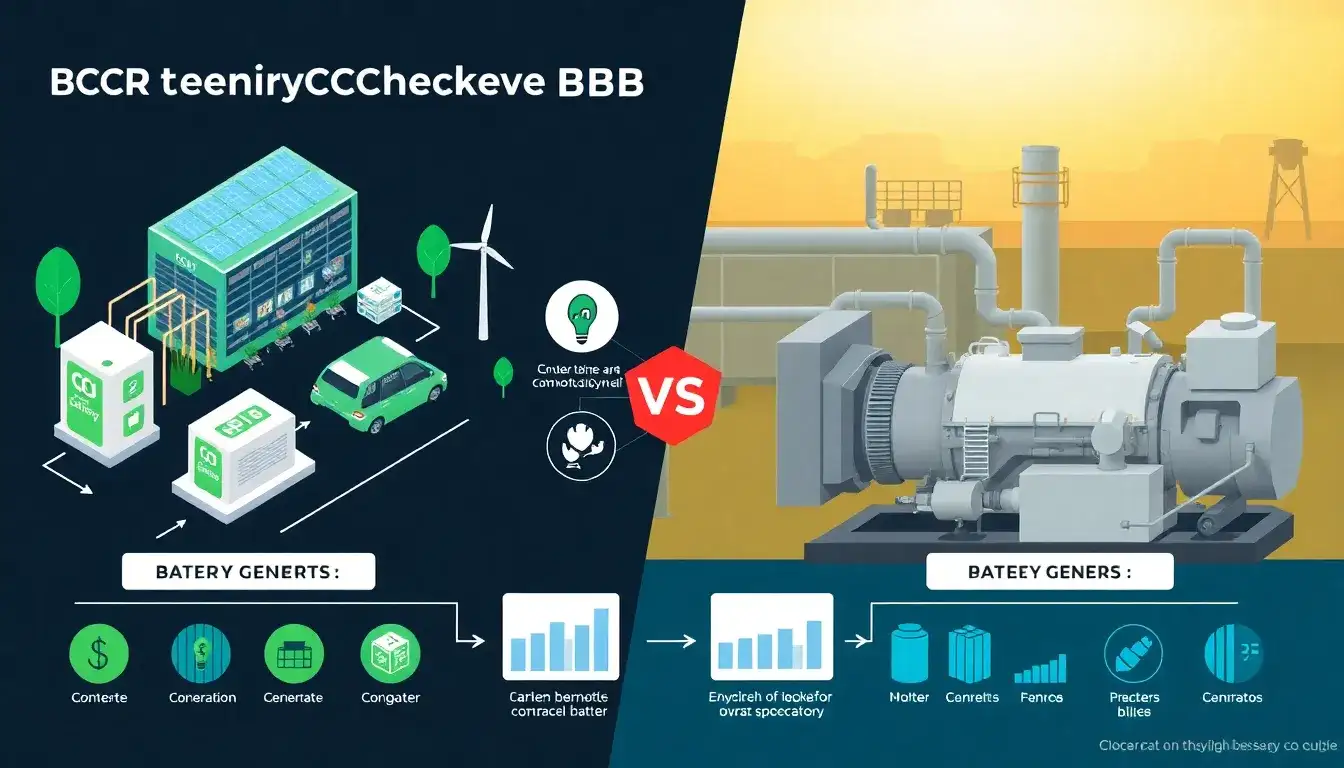
Bid Cost Recovery (BCR) payments differ significantly between batteries and traditional generators, largely due to the fundamental operational characteristics and market rules applied to each resource type.
BCR Payments Overview
- BCR payments are designed to compensate resources when their total market revenues for a day do not cover their bids or offer costs, ensuring financial viability for generators participating in electricity markets.
Differences in BCR Payments Between Batteries and Traditional Generators
- Traditional generators receive BCR payments only when total market revenues fail to cover their costs and generally are not eligible for BCR payments related to outages or derates caused by operational issues.
- Batteries, unlike traditional generators, have state-of-charge (SoC) limitations which affect their ability to deliver energy continuously. Current BCR rules, originally designed for traditional generators, do not adequately account for these SoC constraints or other physical characteristics of batteries.
- Because batteries can experience “outages” or limitations through their minimum or maximum stored energy limits without an actual megawatt derate, they may still qualify for BCR payments when traditional generators would not. This is because the existing rules do not exclude BCR recovery in these battery-specific scenarios.
- Batteries may also strategically restrict charging or discharging in earlier intervals to manage SoC for later intervals, potentially resulting in undeliverable day-ahead schedules and increased BCR payments. This can lead to inefficient market outcomes and potentially create gaming opportunities.
- In 2023, BCR payments to batteries increased by 16% compared to previous periods and represent about 7% of batteries’ total net market revenues, indicating a growing reliance on these payments by battery storage resources.
Implications
- The mismatch between BCR rules and battery operational realities means some BCR payments made to batteries might be inappropriate or excessive relative to the service they provide.
- Stakeholders have recommended updating BCR rules to better reflect battery state-of-charge limitations and their unique operational constraints, to ensure fair compensation and improve market efficiency.
Summary
| Aspect | Traditional Generators | Batteries |
|---|---|---|
| Basis for BCR eligibility | Revenues not covering bids; excludes outage-related costs | Revenues not covering bids; may include costs related to SoC “outages” |
| Treatment of outages | No BCR payments for derates/outages | May receive BCR payments due to SoC limits without actual derates |
| State-of-charge considerations | Not applicable | Current rules do not account adequately |
| Potential for gaming | Less likely due to clear outage rules | Possible due to SoC management strategies |
| Recent trend in BCR payments | Not specified | Increased by 16% in 2023; make up 7% of battery revenues |
In conclusion, BCR payments to batteries tend to be more complex and potentially higher due to rule gaps around state-of-charge limits and operational differences, whereas traditional generators have clearer and more restrictive criteria for BCR eligibility and payments.
Original article by NenPower, If reposted, please credit the source: https://nenpower.com/blog/how-do-bcr-payments-compare-between-batteries-and-traditional-generators/

